2018
Supervising the preparation of machinery for the season? Finding a good mechanic? Working out a strategy for developing the machinery fleet for the next 10 years? Chief engineers of agricultural companies can handle all of this. Their subordinates are «soldiers of the invisible front», on whom almost all processes on the farm depend. Their element is «iron horses», spare parts and fuels and lubricants.
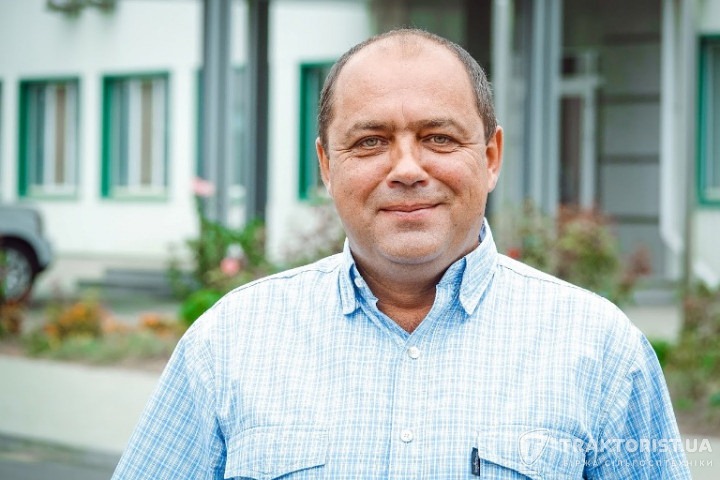
In our latest interview, the Traktorist.ua team spoke with Ivan Levchenko, chief engineer of LNZ Group. Find out how much the company spent on upgrading its fleet this year, why it does not trust trade-in, and why it keeps two tractors «in reserve».
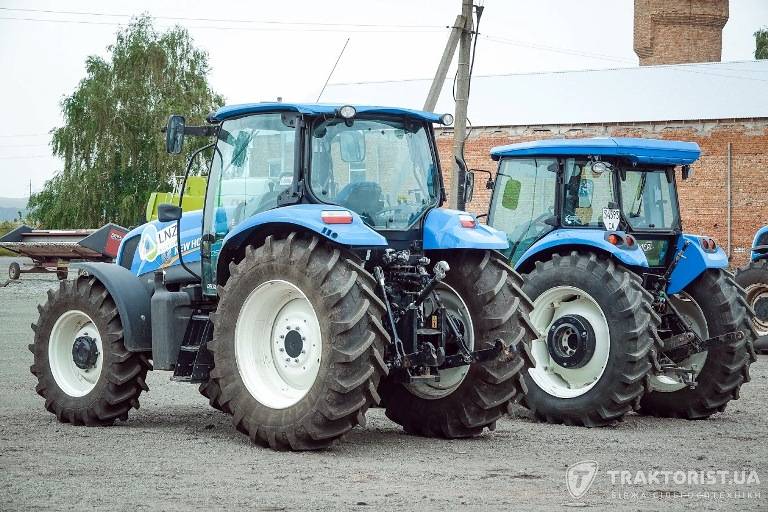
Ivan Levchenko: This year we bought a lot of New Holland and Bednar machinery. From New Holland, about 20 T8410C tractors, 9 T6050 tractors, plus a T7070 and a T7060. 30 units in total. We also bought New Holland cultivators.
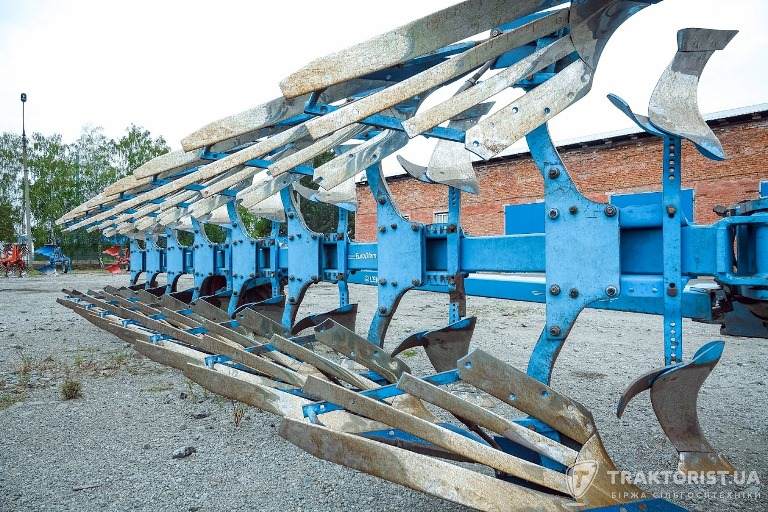
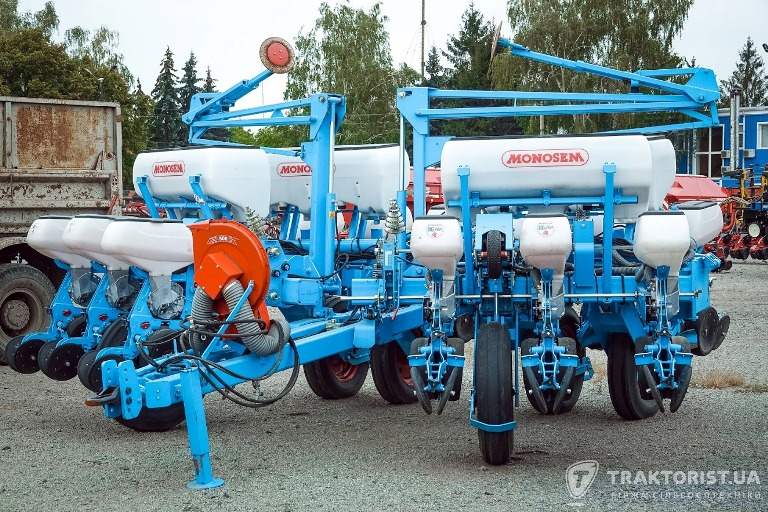
From Bednar, cultivators, disc harrows and subsoilers. Horsch and Quivogne, seed drills. Lemken, ploughs.
Traktorist.ua: And if it's not a secret, how much did you invest in machinery this year?
Ivan Levchenko: About $20 million.
Traktorist.ua: That's a serious investment. Do you renew your fleet like this every year?
Ivan Levchenko: Of course, 20 million is a serious investment. But we want to get maximum return from the machinery we have. And we don't want to get into complicated repairs, which is why we renew the fleet. We have developed the following scheme for ourselves: a heavy tractor works 8-9 thousand engine hours, after which we sell it. A sprayer, up to 4 thousand engine hours. Each type of machinery has its own criterion. The signal to replace a machine is its maximum operating time. For some farmer, such machinery will work longer because his workload isn't as heavy. But for us it's already difficult. It's better to replace it.
Traktorist.ua: Do you sell it yourselves, or do you use trade-in?
Ivan Levchenko: Trade-in somehow didn't work out for us. Say we put a New Holland T8390 tractor up for sale, whose real price is $60 thousand; under trade-in we are offered $30 thousand. That is, the valuation is underestimated, and quite significantly. At least by half. So we do everything ourselves. Sales used to be handled by the engineering service. Now there is a commercial department that deals with purchasing spare parts and selling machinery. We have a separate yard near the seed plant. We put the machinery there, hand it over to the commercial service, and they sell it.
Traktorist.ua: As for new machinery, how do you decide what to buy?
Ivan Levchenko: We select machinery jointly. There is the production director and several agronomists. We go with them to Field Days. We look at things in the context of our needs. If we like a machine, we bring it to our field for a demo. Why? The thing is, we have heavy soils. That is, not all machines that work well on light soils will work the same way on our fields. After testing the machinery, we decide on the quantity we need and submit a purchase request to the commercial department, paying attention to the possibility of getting the highest-quality service from the supplier.
In short, buying machinery requires a comprehensive approach. We already have a stable set of suppliers; we settled on it 3-4 years ago, as well as on the list of machinery we would like to have. And we are gradually modernizing the fleet.
Something new appears every day; the market doesn't stand still. And new is better in most cases, though not always. Competition among manufacturers is quite fierce, and innovations are constantly being introduced.
So choosing the best machinery is really difficult. On the one hand, we understand that nobody is going to change tractors or seed drills for us every year. On the other hand, things don't always work out the way we want. For example, machinery from America must be ordered six months or even a year in advance: to receive it in spring, I need to order it now.
Another situation: you've ordered machinery, then go to an exhibition and there's something newer, but you can't return the machinery you've ordered.
Traktorist.ua: Let's get back to the fleet. Apart from the brand-new New Hollands, what other tractors do you have?
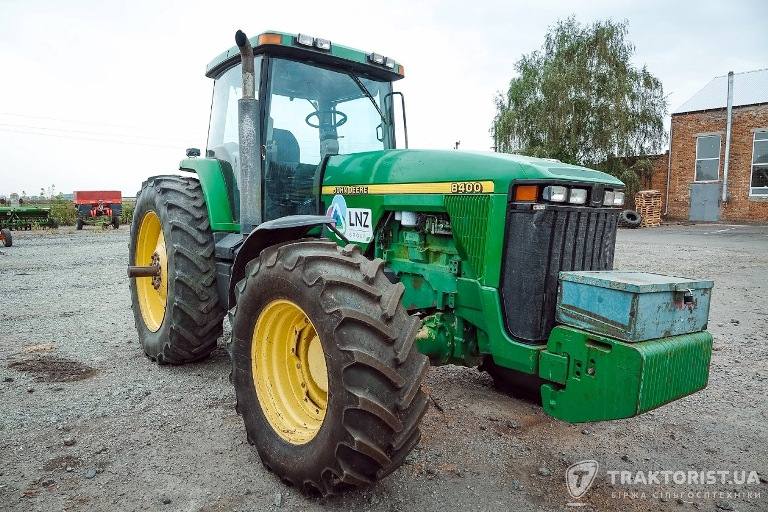
Ivan Levchenko: MTZ-82 and MTZ-1085. That's the tractor fleet on our livestock farms. Overall, the company has New Holland, MTZ and one John Deere tractor. The most powerful tractors are 340 hp. And we don't plan to go bigger. First, because of logistics and our wide «geography». Second, because our average field size is 56 ha.
We also have KhTZ tractors. A few are running. We can't give them up yet. KhTZ tractors are mainly used for general transport. They haul water to sprayers, for example. But we don't have many, 5-6 tractors, one of them new, three years old. Although its gearbox has already been repaired.
Traktorist.ua: And you don't plan to replace the MTZ «workhorses» with small New Hollands or «Chinese» tractors?
Ivan Levchenko: We already have small New Hollands in general production. MTZs remain only on the livestock farms and in the social sphere. And we have replaced about 80% of the production fleet. In production we have New Holland TD5.110 and T6050. We are satisfied with these tractors; we have no problems with them either in terms of power or breakdowns.
MTZ tractors are, after all, the last century. Although in price they are catching up with the same New Holland. A price difference of $3-4 thousand is insignificant. But a tractor driver will go to work on a New Holland because it is more comfortable. And on an MTZ he won't. Not even a new one.
Traktorist.ua: Let's move on to sprayers and tillage equipment. How many do you have and what kind?
Ivan Levchenko: Our sprayers are self-propelled Case IH-3330. Eight units, which is enough for us. We don't plan to expand the fleet, but this year we will replace 5-6 sprayers with new ones. We also have trailed sprayers, but only «as backup», in reserve.
Ploughs are Kuhn and Lemken. We used to have Quivogne subsoilers, but now we have bought Bednar machines with crumbler rollers and coulters. With them we work the field in a single pass. Our main crops are soybeans and corn. We do deep loosening for soybeans once every 3-4 years, so it will be interesting to see.
Harrows: several Horsch Jokers and also Bednar products, because they are equipped with aggressive discs. These are notched discs. Not the usual «daisy», but spherical discs similar to slotted coulter discs. We had 2-3 harrows with ordinary daisy discs. We bought aggressive discs for these harrows too, to please the agronomists.
We took Bednar for testing, and today we have no problems: dry or not, rain or no rain, the harrow works.
Our cultivators for primary tillage are New Holland and Case IH. They are practically identical. There is also Bednar, mainly for tillage before soybeans and hybrid corn. We have two Köckerling Vector cultivators. They are like a magic wand after poor ploughing or when there are a lot of plant residues in the fields. These cultivators cancel out all the sins and level the fields.
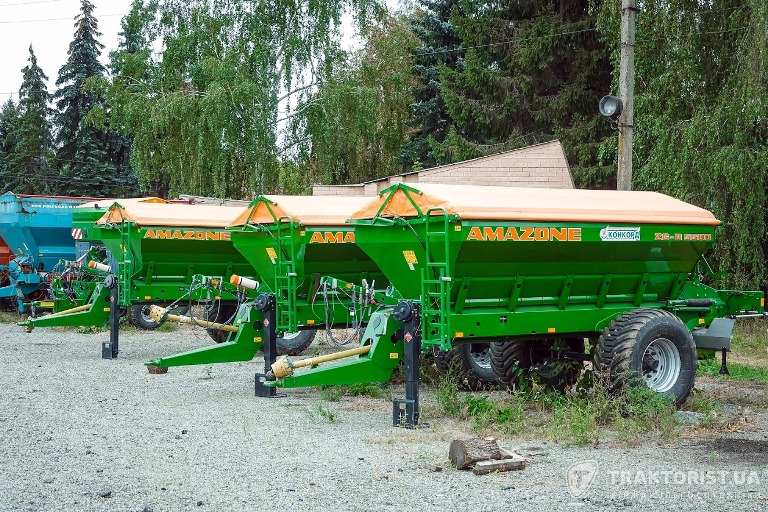
This year we bought Amazone fertilizer spreaders, and we are satisfied with them… Several trailed ones and one mounted, 3-tonne, fully equipped for precision farming.
We are now moving in this direction. We have created a whole department, started mapping fields, and will set up trials. Then, depending on the results, we will decide on further development, because precision farming machinery is expensive.
Traktorist.ua: Have you bought any other machines for precision farming?
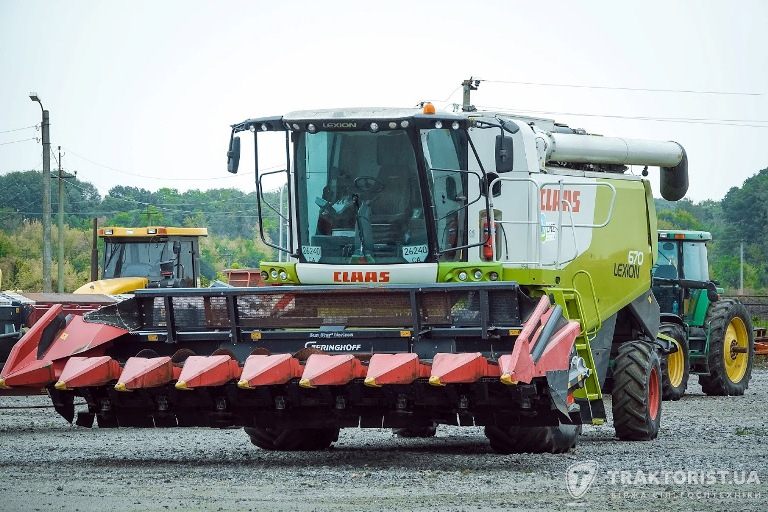
Ivan Levchenko: Nothing else. We can do yield mapping right away, and we have seed drills for sowing. We have 12-row corn flexi headers and a New Holland combine fleet. We now have 8 combines, and not in the basic configuration.
Traktorist.ua: Do you have specialized machinery for inter-row cultivation?
Ivan Levchenko: Domestic «Chervona Zirka» cultivators, 8- and 12-row. Modified, though. We fitted the devices for applying liquid fertilizers ourselves. And on the 12-row ones we reworked the hitch, shifting it by 35 cm, because without the modification the tractor cut out a row. We showed it to the designer and tried to convince him that it's a cultivator, not a seed drill. Factory representatives came to us and looked, but did nothing.
We, however, are satisfied with our modification. An imported 12-row cultivator costs €30 thousand or more. We bought the machines for €5-6 thousand, bought tanks, installed and mounted the equipment, and selected American pumps. And now we have no issues with the cultivators. They have been working well for 3 years already.
Traktorist.ua: Overall, how well are your divisions equipped with machinery? Is there anything you dream of buying?
Ivan Levchenko: Today the level of provision is 99%, but for next year the owner has set a requirement to complete sowing in 10 days. And if our share of winter crops doesn't change, which is 10-15%, since everything else is spring crops, we will simply expand the fleet and buy more tractors and tillage equipment.
We also plan to buy 8 trucks, and we are currently developing the concept of buying a truck with a removable crane. So that it's «three in one». We are finalizing the technical part with the plant and the manufacturers of cranes and bodies, because it is not a cheap pleasure. I think in two or three months we will launch this project together with Volvo Trucks.
Cranes are needed right now, in autumn, when we apply fertilizers, and also in spring during sowing. Currently our KamAZ trucks are equipped with stationary cranes. That's two tonnes of weight. And the truck carries those two tonnes all year round. A removable one can be taken off in 10 minutes and left standing. And the truck does its own job.
Traktorist.ua: How much time does it take you to fix machinery breakdowns at the height of field work?
Ivan Levchenko: I don't know, maybe someone else does this too, but we have our own secret. We have formed a reserve fleet of two Case IH tractors. These are tractors that have already worked 10 thousand engine hours each. Of course, they could be sold for $40-45 thousand, but for the company that is not much money. But if in spring a tractor drops out of field work with a serious breakdown, that's a problem. We are insured against such losses because we have reserve tractors. Although last spring we had no major breakdowns, only «teething problems». We spend 2-3 hours on such breakdowns, as we have our own service, after which the tractors are «back on track».
Traktorist.ua: Isn't it too much to keep two reserve tractors all the time?
Ivan Levchenko: I don't think so. There's a saying: a spring day feeds the whole year. In the busy season a tractor sows 250-300 ha per day. And when a complex breakdown happens, an axle, gearbox or engine, realistically that's at least 7-8 days of repairs.
We convinced the owner, he supported us, so today having a reserve fully pays for itself.
We had a case where the rear axle of a New Holland 410 broke, and it stood idle for a month. Because dismantling the axle is only half the job. You also have to wait for spare parts… And in a week a tractor sows 2 thousand ha.
This way, you fuel up the reserve Case IH and off it goes to work. Especially since Case IH and New Holland are 95% identical.
Traktorist.ua: Is all your machinery your own, or do you hire some?
Ivan Levchenko: Yes, we hire. We harvest early grains practically on our own, and late grains with the help of outsourcing. This season we hired about 25 combines. And we will hire in the following seasons too. The market is saturated. You can choose. And these are inexpensive services, in my opinion.
There is no point in keeping so many combines in our own fleet. Because we need all of them only 3-4 weeks a year, when corn, soybeans and sunflower are harvested at the same time. After harvesting soybeans, we let the hired combines go and harvest corn on our own. Overall, everything depends on the crop structure.
Traktorist.ua: Do you hire trucks as well?
Ivan Levchenko: We hire them for autumn. Today our fleet has 11 Scanias, 13-14 KamAZ trucks, as well as GAZ and ZIL. Their main task is to cover the sowing campaign, delivering seed and fertilizers.
In autumn there is always a need for hired trucks. There's no way around it. You can't take the harvest from the field in railway wagons.
Traktorist.ua: Do you bring in used machinery from abroad?
Ivan Levchenko: Yes, we went to the Netherlands and brought back JCB front loaders with a 12-metre boom, and excavators. Here such a new loader costs €110-120 thousand, while in Holland a loader with 800 to 2 thousand engine hours of «mileage» costs €60 thousand, including customs clearance and delivery. That is, half the price. We brought 5 or 6 units from Europe.
This year we also bought new JCBs, three of them. Whatever the case, new is always better.
Traktorist.ua: How did you find the Dutch machinery?
Ivan Levchenko: Through an online ad. Then we went to see it in person. We signed a contract, paid the money, and a month later the cleared machinery was already standing in our garage.
So buying decent used machinery isn't difficult. In terms of paperwork and delivery from abroad, the procedure isn't complicated either. It just takes time; you have to go and check it yourself.
Traktorist.ua: Do you plan to carry out more such experiments?
Ivan Levchenko: With used machinery? If needed, we will experiment.
Traktorist.ua: And the last question. Do you often have to travel abroad, to exhibitions and farms?
Ivan Levchenko: To exhibitions, yes. But now there are more opportunities in Ukraine too. Previously a dealer would bring one New Holland tractor to Ukraine, or the same Fendt, and that was it. Today the full New Holland tractor range is on the market. You can buy any of them.
Still, our market is young, so we have to travel abroad. Last year we went to Poland several times. This year, also to Poland and Bulgaria. We want to see different manufacturers and decide what is better. Unfortunately, in Ukraine it is not yet always possible to bring two or three different, newly designed ploughs to your field and watch them at work.
Look out for the second part of the interview on our website soon.