2023
When soybeans were first grown in Ukraine, there were no problems with them, and the cultivation technology for this crop was much simpler. But growing demand for soybeans led to crop rotations becoming saturated with the crop, and hence the emergence of diseases and pests.
«Soybean is a rather «delicate» grain legume which, when the cultivation technology is not followed, is affected by various phytopathogens that harm the crop at different stages of organogenesis, significantly reducing the quantity and quality of the yield», noted Vitalii Lapchynskyi, agrotechnology development manager at LNZ Group.
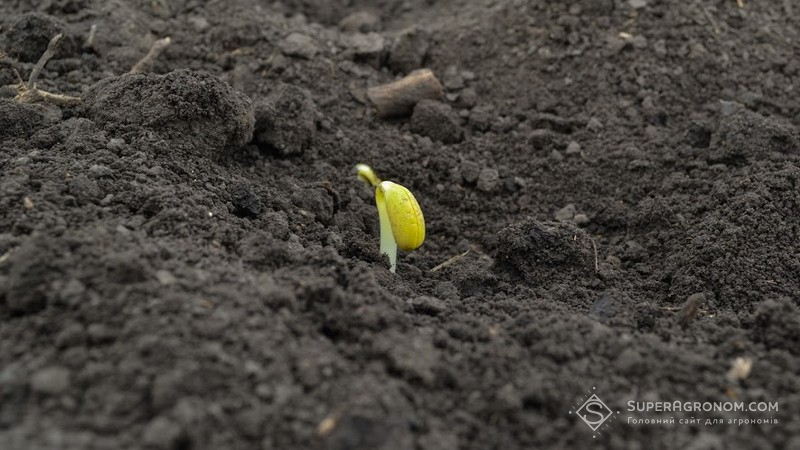 He added that, depending on the degree of seed infection, the field germination of soybean seeds can decrease by 25-40% from standard values.
Seed diseases pose a particular danger, as they often cannot be detected with the naked eye, and when detected, cannot be correctly identified. It is these diseases that in some years lead to significant thinning of seedlings and, as a result, reduced yields.
Such pathogens include the fungi: Fusarium Link, which causes seedling fusarium blight, Sclerotinia Libertiana (the causal agent of white rot), Ascochyta sojaecola (ascochyta blight), alternaria blight (Alternaria alternata), Erysiphe communis f. glycine (powdery mildew). Fusarium root rots are the most harmful to soybeans. Less often, soybeans are affected by bacterial pathogens.
How to recognize soybean seed diseases?
Some soybean seed diseases can be recognized with the naked eye. For example, cercospora, which is characterized by a purple-violet coloration of the seed spreading from the hilum. The seeds are also not sufficiently filled. If, in addition, small depressions are observed, this indicates phomopsis.
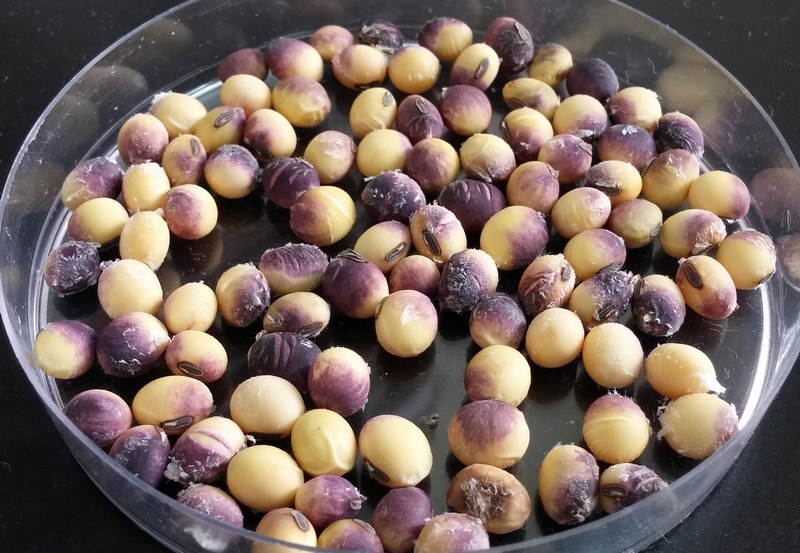 Bacterial diseases are harder to identify.
«Characteristic signs of seed infection by bacterial pathogens are swelling and sliming of the seed surface, the appearance of oily light-yellow and brown spots, and lesions on the cotyledons. Heavily infected seeds, as a rule, do not germinate but rot», said Vitalii Lapchynskyi.
When do soybean seed diseases occur?
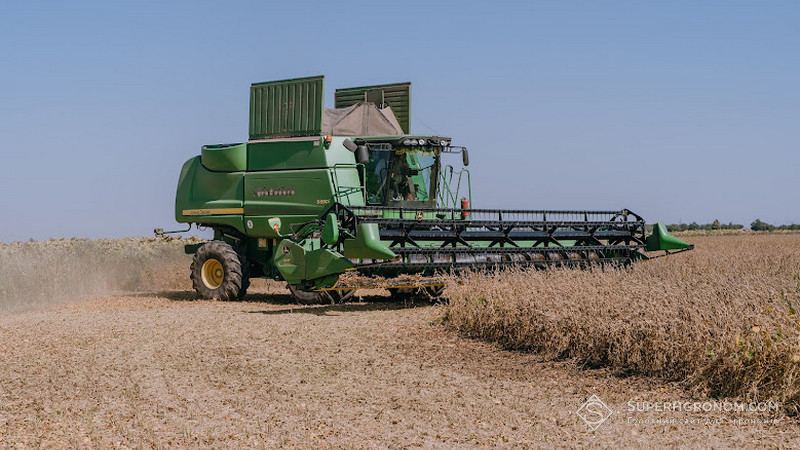 The vast majority of soybean pathogens overwinter on non-mineralized plant residues and infect soybeans in wet years, mainly through raindrops. Diseases most often occur when soybeans are sown after soybeans and when there are heavy downpours during the growing season. If these two factors coincide, a peak in disease incidence occurs.
When seeds are harvested late, when they have stood too long in the field and we harvest them after rains, there is a risk of mold fungi — Aspergillus, Penicillium.
The impact of seed diseases on germination and plant growth
With minor bacterial infection and favorable weather conditions for soybeans, plants may lag in growth at the beginning of the growing season, but then develop without visible signs of infection.
Seed infection by fungal pathogens manifests itself both during seed germination and emergence and throughout the entire growing season.
The presence of fungal pathogens on seeds can cause them to rot during germination. At the beginning of the growing season, pathogens can cause root rots, cotyledon necrosis and death of the growing point. Later in the season, in weakly and lately infected plants, the etiology of disease development varies, most often in the form of plant wilting, leaf spots, and stem and pod rot.
For example, alternaria blight — a disease of overstanding crops — usually appears during soybean ripening, when plants begin to dry out. The disease manifests en masse on the outer surface of yellowed pods. Late harvesting of soybeans leads to sporulation of the fungus on the outer surface of the seeds. Worse still, the fungus Alternaria alternata produces mycotoxins, the consumption of which by animals and humans can lead to death.
In addition, the alternaria pathogen produces the phytohormone tentoxin, which, with heavy fungal sporulation on the seeds, can significantly worsen their germination during storage. For example, when seeds are placed in storage, germination may be 90%, but by spring it may drop to 60-50%.
Measures to protect against soybean seed diseases
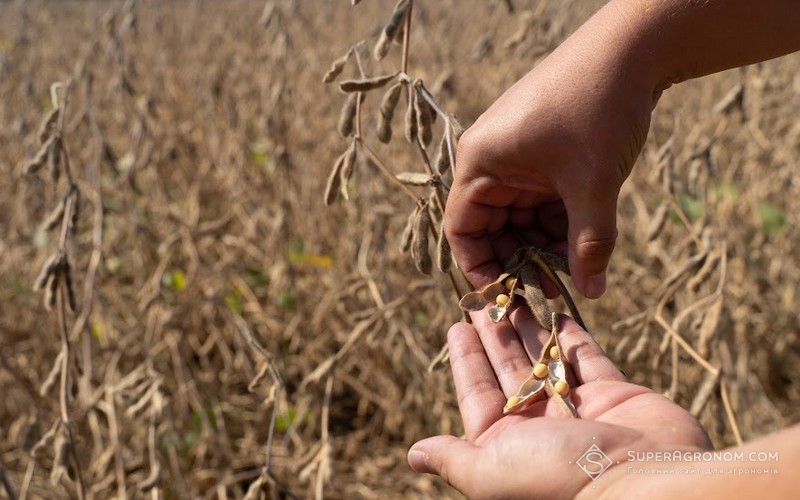 Seed infection often occurs already in the field, where there is monoculture, fungicide treatment was not carried out on time or at all, and there is no tillage.
Crop rotation solves the problem of disease accumulation, but there is a nuance. Pathogens affecting soybeans can often affect other crops too, and vice versa. This applies, in particular, to the above-mentioned alternaria pathogen Alternaria alternata and fungi of the genus Fusarium, which, in addition to soybeans, can parasitize wheat and corn. Avoiding these crops in a modern rotation is almost impossible. But the situation is not hopeless: forewarned is forearmed.
- Crop rotation is a good means of containing phomopsis, cercospora and even septoria.
These are diseases whose pathogens overwinter on plant residues that have not mineralized. With this in mind, tillage is also a good tool for burying spores. If the farm does not practice tillage, stubble destructors will come in handy.
- Seed treatment is an important component of the soybean protection system
«Even with high-quality seed material, it is advisable to treat it properly before sowing to protect it from diseases and soil pests, — advises Vitalii Lapchynskyi. — As an effective insecticidal seed treatment with extended activity against a complex of soybean pests, we recommend using the insecticidal seed treatment METAKSA, FS (1.3-1.7 l/t)»
The expert recommends carrying out seed treatment together with an inoculant and micronutrients such as DEFENDA seeds, so that in the initial phases of organogenesis, in addition to protecting young sprouts, root system growth is stimulated and the efficiency of atmospheric nitrogen fixation is subsequently increased.
- Fungicide protection
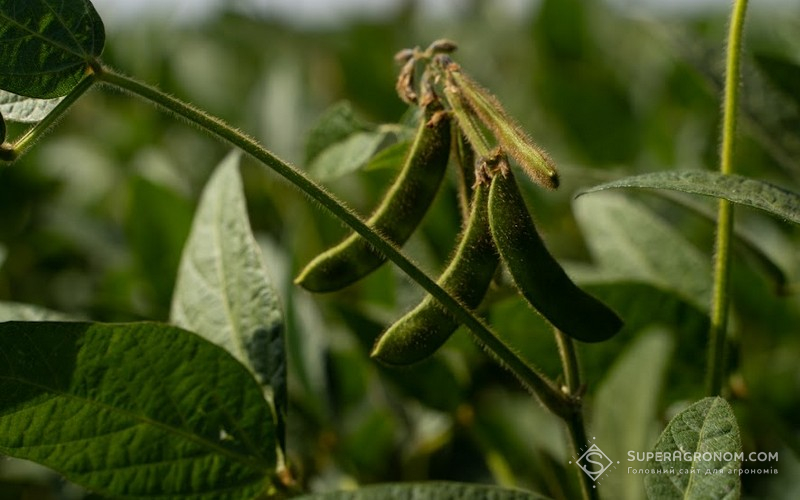 Fungicide protection of soybeans should include a mandatory treatment on pods during the growing season. Especially when it comes to alternaria blight. A later autumn seed treatment will not save the situation.
If we are talking about internal seed infections such as fusarium, the systemic active ingredient tebuconazole should be chosen for protection. For example, to control fusarium and alternaria blight there is the product Taler (tebuconazole, 250 g/l).
Take weather conditions into account when treating: if there is insufficient moisture, the number of fungicide treatments can be reduced.
- Protection against sucking pests, aphids and thrips
Pests such as thrips are often vectors of viruses. Virus particles can persist in their bodies for a long time. Therefore, if thrips infestation of the crop is noted, it is worth controlling them with systemic insecticides with the active ingredients thiamethoxam and acetamiprid, such as Oktant (thiamethoxam, 250 g/l) and Atik(acetamiprid, 200 g/l).
- Crop desiccation
Alternaria blight on soybeans can be prevented by desiccation. However, the main factor of successful protection against the disease remains timely harvesting.
- Timely soybean harvesting will protect against the risk of spreading bacterial diseases and alternaria blight due to precipitation and increased air humidity.
«Harvesting soybeans with increased pod moisture and long-term storage of the grain in the warehouse in an uncleaned and wet state will certainly lead to the spread of diseases», emphasized Vitalii Lapchynskyi.
In the case of monoculture, there should be more fungicide treatments than with a normal crop rotation. Some experts insist on three fungicide treatments. But one must rely on the climatic conditions of the growing zone, for example, whether there is enough precipitation to «feed» the pathogens and allow them to overwinter. Correct and timely decisions will help avoid yield losses.