2026
"Save 10-20 $/ha," the owner of an agricultural enterprise says to the agronomist. And what to do in such a situation? Cut costs in the technological map or defend decisions that affect the harvest and the result?
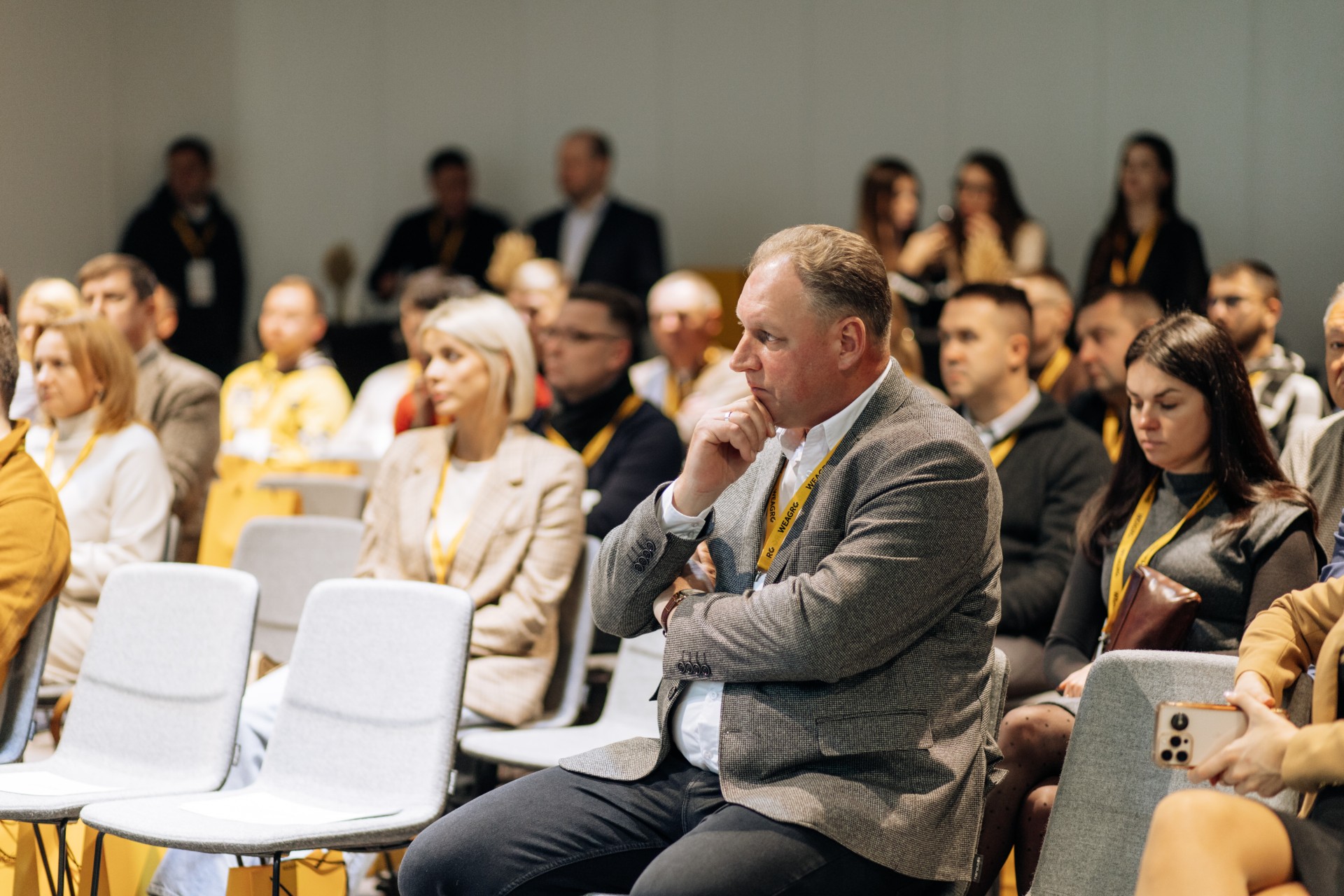
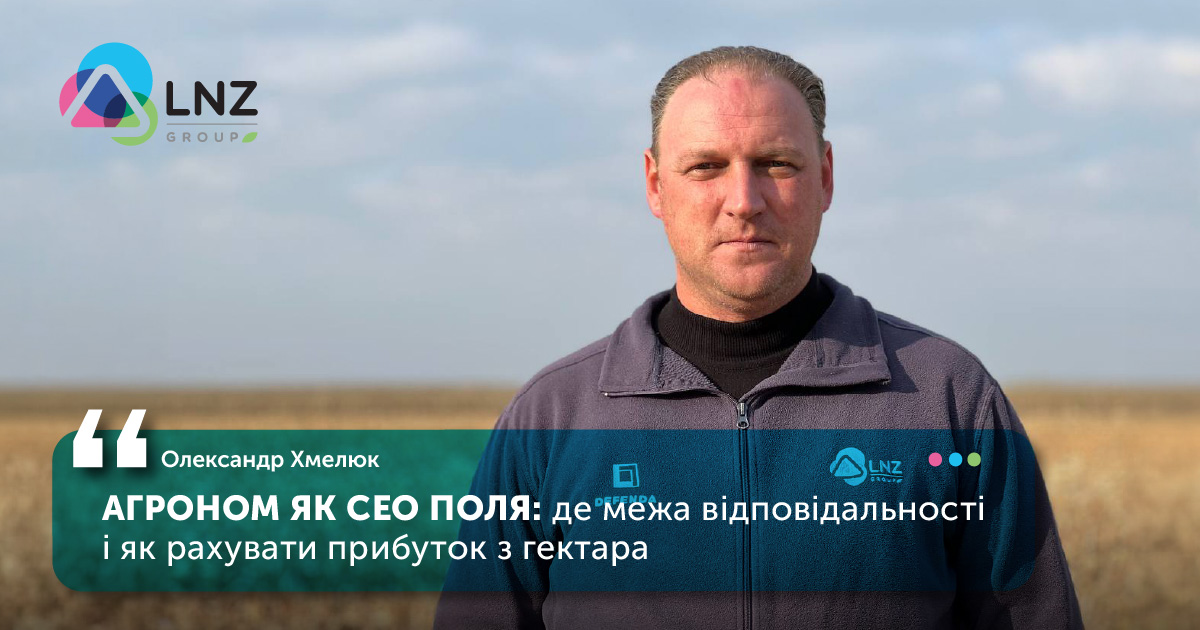 Economy must be reasonable, and it is precisely the agronomist who is responsible for this balance, is convinced Oleksandr Khmeliuk, head of the Agro Department of LNZ Group. Oleksandr Khmeliuk shared his thoughts on when errors most often arise in the "agronomist — owner" interaction, where the boundary of the agronomist's responsibility lies, how to find a balance between technology and economics, and why a modern agronomist is not only about a clean field, but also about managing risks and profit, during the "Agronomist as CEO of the field" conference organised by Activitis Education and WEAGRO.
Where the agronomist's boundary of responsibility lies
In agribusiness we constantly live in one and the same dilemma — a kind of "system of equations". On the one hand, the agronomist works not with their own capital — they operate with the owner's money. And it is quite natural that in such a role a temptation arises to choose the better: more expensive seed, more fertiliser, more expensive crop protection products. After all, they are responsible for the technology and the result, but do not bear the direct financial risk.
On the other hand, the agronomist is a specialist who creates added value. It is precisely they who turn the invested resources into a harvest, and the harvest into profit. Their expertise directly affects the economics of the enterprise or holding.
Therefore it is important to find a healthy balance. By it I mean the owner's readiness to delegate decision-making authority and the level of the agronomist themselves — their ability to forecast risks, think economically and understand a simple thing: every hryvnia invested must bring more than was invested.
 There is no universal model here. You cannot clearly delineate that here the decision is made only by the owner, and here — only by the agronomist. Everything depends on the people: their experience, character, level of trust and professionalism. Personally, I am probably more of an advocate for agronomists. Simply because I myself went through this path and understand well how production thinks from the inside.
Where economy is actually sought
If we greatly simplify the economics of an agricultural enterprise, then costs can be divided into several large blocks:
- production (seed, fertiliser, crop protection products, fuel, wages, logistics);
- land rent;
- administrative;
- social.
And here an important nuance: most of these costs are almost impossible to reduce. And since agricultural production is a business aimed at profit, the owner naturally turns to the agronomist with a simple request: "Save me 10-20 $/ha." Because where else to look for reserves? Reducing wages under conditions of a staff shortage is unrealistic. Reducing rent — also. In the end the owner in fact turns to the only flexible element of the system — the technological map.
But economy should not mean "buy less fertiliser, for example" or "take what is cheaper". This is not a strategy — it is a direct risk of losing the harvest.
Real efficiency lies in the agronomist's expertise. In their ability to correctly assess the field's potential, select the appropriate seed varieties or hybrids, form an optimal protection system and not spend unnecessarily where it does not pay off. After all, the potential of each field is different. What works in Bessarabia may not work in the Ternopil region, and vice versa. Likewise, we can often observe many different differences within the fields of one locality, or even one field. And it is precisely the agronomist who must know this and take it into account in every decision.
There is a plan. But reality changes every day
Another illusion is that the technological map is something constant. In reality it is only a starting point. The agronomist draws up the plan in autumn or winter, when there is time to calculate everything. But the season never goes according to plan. Weather conditions, the market, the state of the crops — everything changes. And last year, for example, became one of the most difficult for many.
There is a simple rule that I always repeat: future income and profit are events that will happen in the future. We do not know what the harvest will be, what the price will be. And therefore every extra hryvnia spent today without a clear understanding of the return is potentially lost profit tomorrow. Therefore, even having a budget, a plan and a technological map, you cannot work "by inertia".
The agronomist must respond to changes every day, and it is precisely this flexibility together with expertise that today determines whether the company will earn.
The ideal model: not control, but dialogue
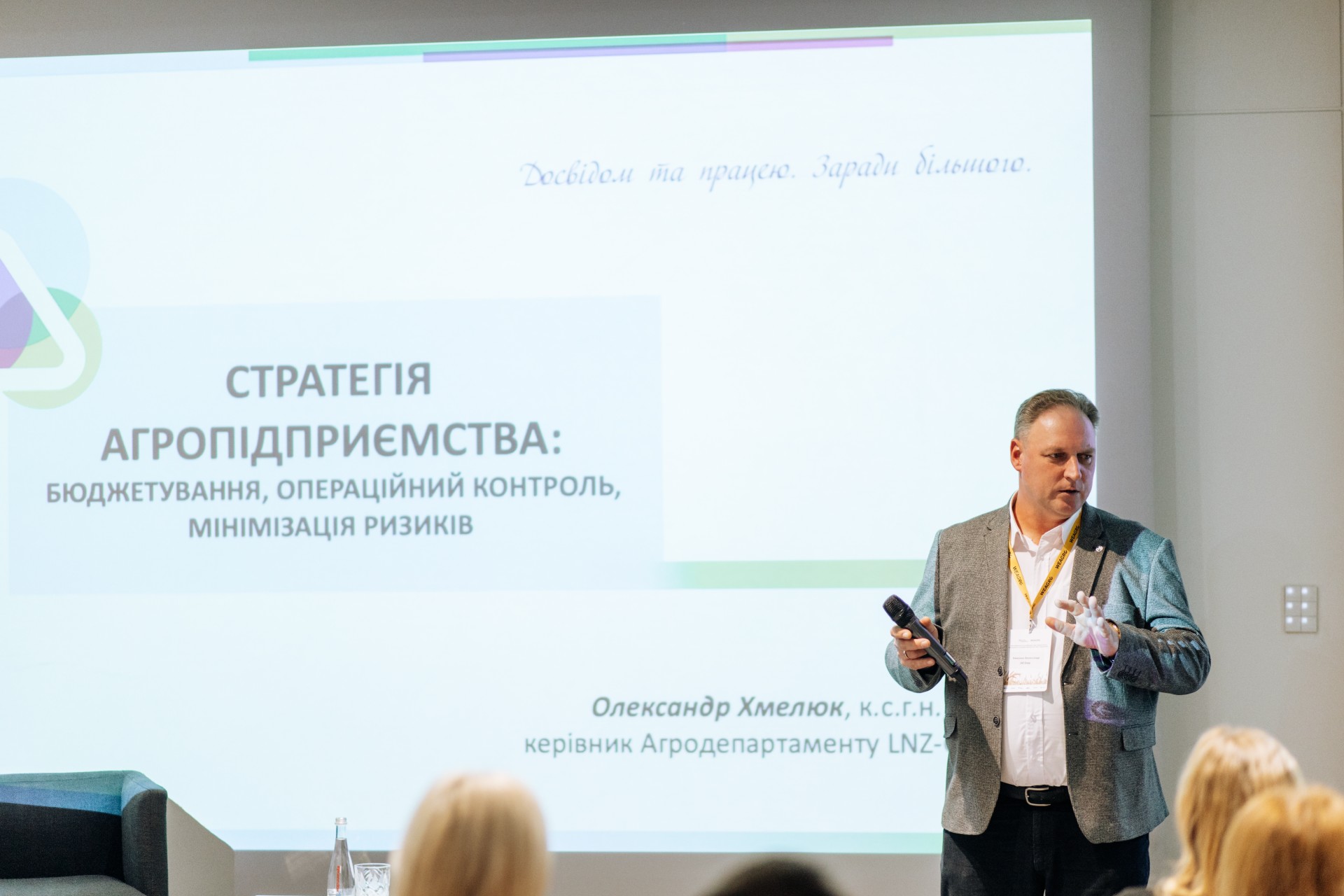 In short — an effective model of cooperation between the agronomist and the owner is built on three things: dialogue, trust, openness. The agronomist should not be afraid to say that something went wrong, that there are risks, or even that a decision was mistaken. Because mistakes are part of the process. Only those who do nothing make no mistakes.
But if there is fear — information is hidden, decisions become worse. And then the system begins to fail. In contrast, when there is space for an honest conversation, the agronomist both learns faster, and makes better decisions, and takes responsibility. And the owner gets not just a performer, but a partner.
How to measure the agronomist's efficiency
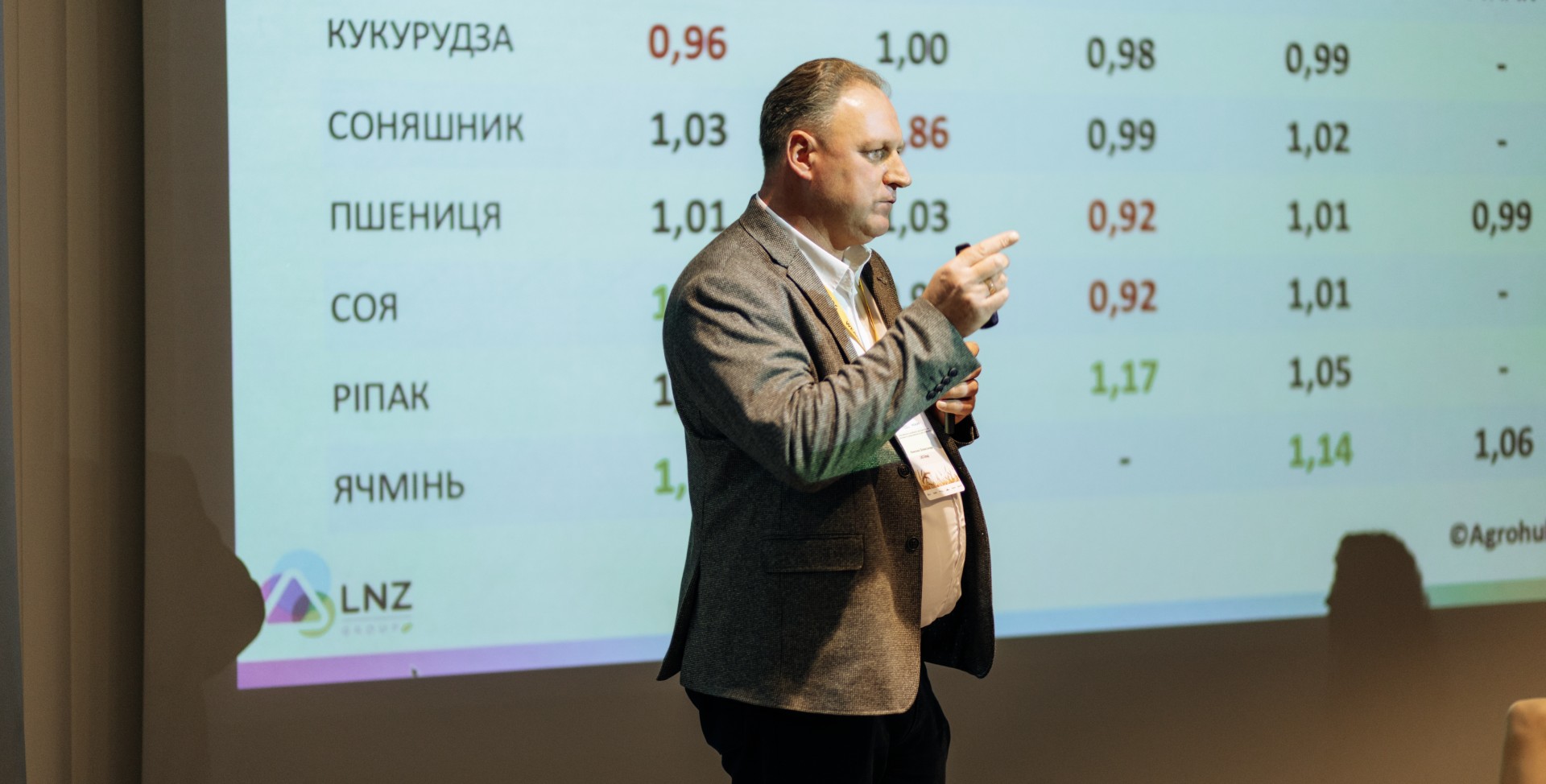 One of the most difficult questions is how to assess the agronomist's work at all. In reality there is no universal metric. You cannot simply say that if the winter wheat yield is half a tonne higher than the neighbour's, then the agronomist is doing well and deserves a bonus. In real life everything is much more complex.
I have seen very different approaches to the criteria for assessing agronomists. The simplest, and, to be honest, quite primitive one — is a "clean field". The owner drives along the field road and wants to see that there are no weeds. And often no one cares at what price this was achieved: how many treatments were done and how much money was spent. This is an extreme.
Another, more mature model is when efficiency is measured through profitability per hectare. And this, in my opinion, is a much better approach from a business point of view. Because business exists not for the sake of yield records, but for the sake of profit. And therefore the agronomist should be assessed not only by tonnes, but also in money. Although in practice most agricultural enterprises are still guided precisely by yield as the main indicator.
Where to get a "strong" agronomist
Another frequent question: where to get a good agronomist? And here I will give an unpopular answer — ready-made ones almost do not exist. You should not count on a university graduate immediately closing all tasks. It does not work that way.
The most reliable path is to grow a specialist for yourself. It is long. It is difficult. And it does not always work out. But if you need not just a performer, but a like-minded person — this is one of the few options.
From my experience, to form an agronomist you need at least 2-3 seasons, and often more. I myself went through this path and even retrained people with an economic education into agronomists. There are successful cases, but it is always an investment of time and resources.
How to choose if you are looking on the market
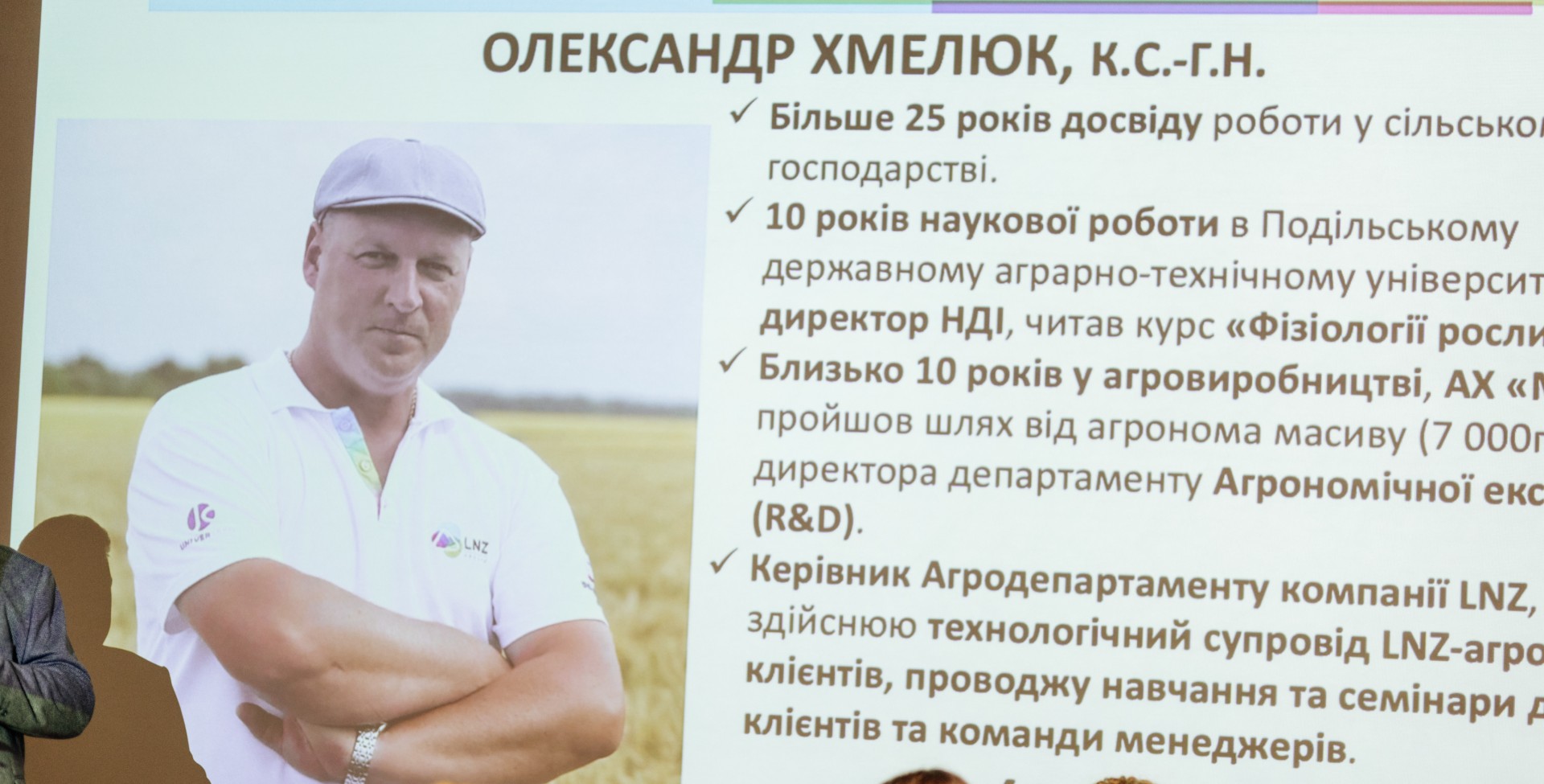 If, however, you are looking for a person on the market, I would advise paying attention to two things.
The first — relevant experience. Not just general length of service, but specifically experience in that role, with the competencies you need.
The second — development dynamics. Look at how the person moved up the career ladder, whether they took on greater responsibility. If a specialist works in a position for 2-3 years, then grows and again takes a new level — this is a good signal. Such consistency often says more than any references.
At the same time, you cannot do without a "field test". Even an ideal CV guarantees nothing. The human factor has not been cancelled: character, communication, the ability to work in a team. Therefore it is practically impossible to do without a trial period. You need to give yourself time to understand whether this is your person, and the specialist — to prove themselves. And yes, intuition in selecting people also matters.
Many large companies try to solve the staffing issue through their own agro-schools. I myself was involved in such a project when I worked at the agri-holding Mriya. There one of the first internal agro-schools operated: we selected motivated people, paid stipends, provided housing, taught with the involvement of Ukrainian and international experts — gave both theory and practice. It would seem an ideal model. But even under such conditions a significant part of the people did not stay in the profession.
The reason is at the same time simple and complex: rural life does not suit everyone. Young people are often not ready for such a rhythm due to the remoteness from the city, the absence of the usual pace of life, a different social dynamic. And this is a problem that cannot be solved only by a large salary or housing.
So a strong agronomist is always a combination of three things: experience, thinking and the ability to make decisions under conditions of uncertainty. They cannot be assessed by a single figure. They are difficult to quickly "buy" on the market and definitely impossible to form in one season.
But it is precisely on this person that the main thing depends: whether the resources invested in the field will turn into profit.
What the agronomist is actually responsible for
If we briefly describe the agronomist's main areas of responsibility, then they are much wider than just "sow and harvest". I would single out several basic things:
- planning and adjusting technological maps;
- organising and controlling the execution of field operations;
- monitoring fields and the state of crops; yield forecast;
- and, of course, crop rotation.
And each of these points is not just a functional duty, it is a point of influence on the enterprise's economics. Crop rotation — one of the agronomist's fundamental competencies. But here a dilemma arises again. On the one hand, we are taught that crop rotation is a scientifically substantiated alternation of crops. And this is true, because there are natural laws that cannot be ignored. On the other hand, there is economics. There are more marginal and less marginal crops.
So what is crop rotation in practice? It is a balance between a scientifically and economically substantiated approach. If you go only into science — you can immediately lose profit. If you go only into economics — in a few years the system will "break": costs will grow, problems with the soil, diseases, yield will appear. That is precisely why crop rotation is a strategy. And it must be planned not for one season, but for at least 3-5 years.
The next point — control of field operations. Sowing depth, seeding rate, dates — it would seem these are basic things, routine. But the truth is that the quality of execution of technological operations shapes at least 50% of the yield potential. In agronomy there is a very strict rule: there is no going back. If today you made a mistake — tomorrow you will no longer fix it. There is no product or agronomic measure that will even out uneven emergence, no one will come and "lay out" the plants evenly.
Monitoring — this is not just a "walk in the field". Today there are many tools for monitoring, and it is not necessary to walk the field diagonally or in an envelope pattern on foot every day, as before. But the essence has not changed. Monitoring is, first of all, forecasting risks, assessing potential and the basis for making decisions.
Yield forecast. Speaking of this point, it is important for both the agronomist and the owner to understand that the crop's potential is not constant. For example, in winter you planned a corn yield of 8 t/ha and calculated the entire technology for this. But the amount of moisture is insufficient, the emergence was damaged by late frosts and the like, the real potential drops to 5-6 t/ha. What does this mean? That the costs need to be reconsidered. Because investing further in a harvest that will no longer be there is a direct loss. But it also happens the other way around. Rains came in a critical period and the potential grew. So it makes sense to additionally invest in feeding to realise this potential. And it is precisely here that the agronomist's role is manifested — to see this in time and make a decision.
That is, the agronomist's main function is not just to carry out the plan of technological operations. It is to constantly compare the plan, the actual state of the crops, and the economics. And also to respond quickly to changes. Because in agribusiness it is not the one with the perfect plan who wins, but the one who knows how to competently change it.
Source: latifundist.com