2026
 Sunflower remains one of the main highly profitable technical crops for farmers. To ensure an appropriate phytosanitary state of the crops, sunflower should be sown on the same field no earlier than every 5-7 years. Instead, in modern realities this crop is rotated every year or two; some farms have a specific 4-field rotation: sunflower – sunflower – sunflower – winter wheat.
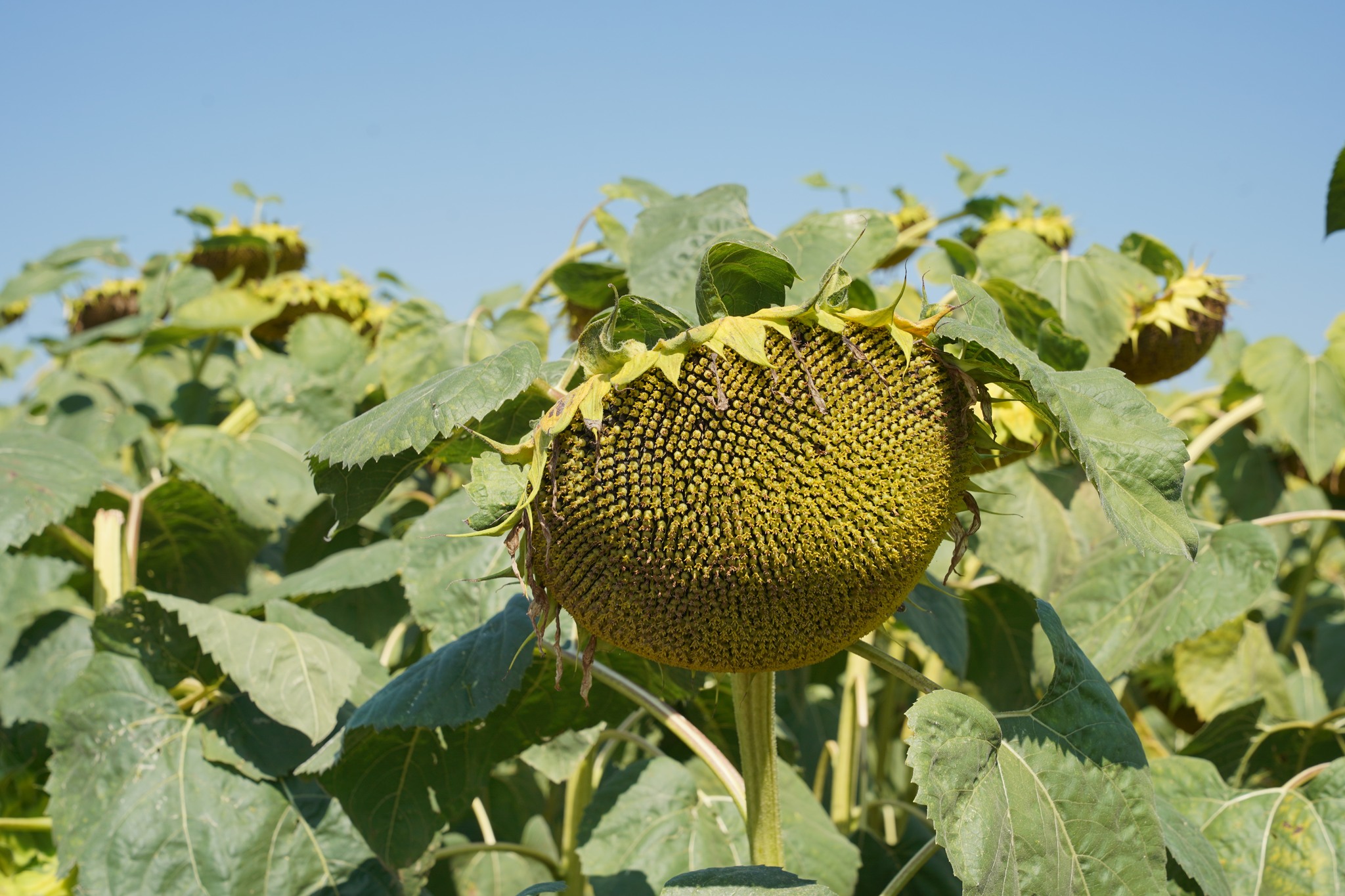 More frequent cultivation of sunflower, for example every 3 years, leads to the accumulation of diseases (broomrape, phoma), rapid soil depletion, moisture deficit and yield loss.
The weather conditions that develop each spring — such as rising air temperature during the day and falling at night, and changes in air humidity — create favourable conditions for the development of a complex of diseases. During the growing season, the greatest damage to crops is caused by such diseases as: septoria, alternaria, downy mildew, powdery mildew, phoma, phomopsis, rust, white and grey mould, etc. The spread and development of fungal diseases lead to a reduction in the crop's leaf surface and a decrease in the oil content of the seeds. Total yield losses due to diseases can amount to about 50%, and in some years more.
To control and protect sunflower from the aforementioned diseases, you need to work with fungicides ahead of the curve and approach the choice of products with special responsibility. The number of fungicide treatments may vary: in traditional sunflower-growing regions there may be three, and in regions that have taken up its cultivation in recent years — only one. The DEFENDA trademark offers farmers a powerful line of highly effective single- and two-component fungicides for sunflower protection.
The powerful fungicide Ultralin, WG (cymoxanil, 300 g/kg + azoxystrobin, 250 g/kg), whose rapid penetration into the plant ensures excellent control of fungal diseases, in particular downy mildew, grey and white mould, phoma, phomopsis, alternaria.
Velas, SC (fermentation product of the fungus Streptomyces kasugaensis, 60 g/l) — a unique product for controlling bacterioses in sunflower crops.
Radical Neo, SC (azoxystrobin, 250 g/l + boscalid, 150 g/l) — effective action against a wide spectrum of pathogens, long-lasting protective action with no resistance. Control of alternaria, phoma, septoria, phomopsis, rust, powdery mildew, grey and white mould.
Sigma, SC (azoxystrobin, 200 g/l + cyproconazole, 80 g/l) — reliable protection against a complex of diseases with a long protective effect against phoma, alternaria, septoria, phomopsis, rust, downy mildew.
Split Duo, SC (difenoconazole, 125 g/l + azoxystrobin, 125 g/l) — acts on all stages of disease development with high efficacy and long protective action, especially against alternaria.
At the same time, one should not forget the effective classics in fighting diseases in sunflower crops. These are the products Absolut, SC (carbendazim, 500 g/l), Paracels, SC (flutriafol, 250 g/l), Dot, EC (cyproconazole, 80 g/l + propiconazole, 250 g/l) and Stark (azoxystrobin, 250 g/l).
True professional agronomists, based on the aforementioned DEFENDA trademark products, will provide reliable protection to the "sunny flower" crops from harmful fungi and pathogens, which will accordingly provide the farm with a significant yield increase and additional profit.
The most typical schemes for using DEFENDA products at the 2-8 leaf stage and the "star" stage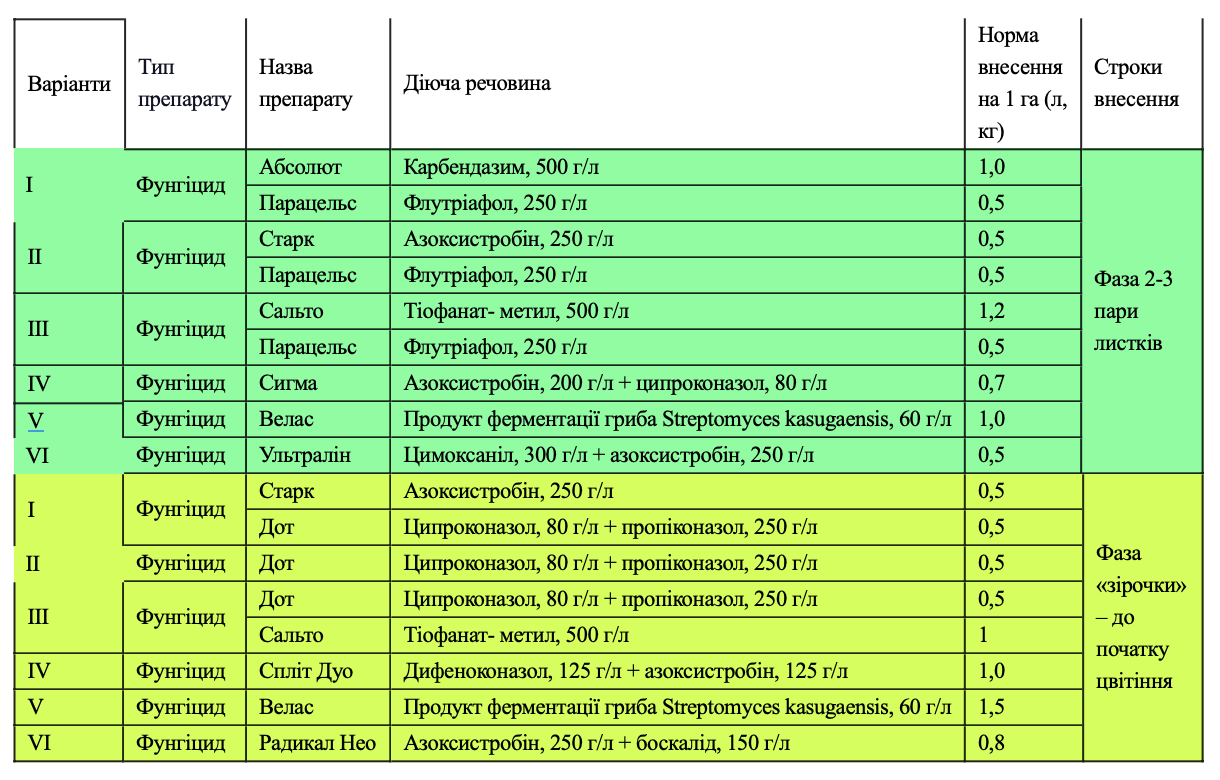
Yurii Zherebko, PhD in Agricultural Sciences, agri-technology manager for crop protection products of the DEFENDA brand