2019

Spring root top dressing with nitrogen in the form of ammonium nitrate and UAN.
With the arrival of spring, winter crops begin to resume their vegetation. During this period, the availability of nutrients from the soil, primarily nitrogen, is important for winter crops. Winter wheat plants intensively consume nitrogen from the end of tillering to the end of grain filling. Its deficiency slows down growth processes, which negatively affects the future yield. With sufficient nitrogen supply, plants regrow quickly and tiller productively in spring and ensure high realization of their potential in the subsequent period of vegetation.
The first early spring nitrogen top dressing is carried out on frozen-thawed soil or at the resumption of vegetation, when tillering is actively taking place, the leaf apparatus is being restored and growing, and, in terms of ontogenesis, the number of ear segments is being laid down.
The next nitrogen top dressing is carried out at the end of tillering and the beginning of stem elongation, when the most important elements of productivity – the flowers and spikelets of the ear – are formed. This requires additional enhanced nitrogen nutrition. It also boosts growth processes during the stem elongation stage.
The third root top dressing with nitrogen fertilizers, in small doses, should be carried out in the period from the flag leaf emergence stage to heading, but only if there is moisture in the soil. This extends the duration of active functioning of the upper (flag) leaf and, accordingly, affects both the improvement of grain quality and the yield.
The effectiveness of applying nitrogen fertilizers to winter wheat in spring is inversely related to the reserves of mineral nitrogen in the root layer of the soil. Regardless of soil and climatic conditions, the average standard reserve of mineral nitrogen in spring in the 0-60 cm soil layer under winter wheat should be at least 110-130 kg/ha.
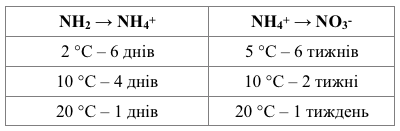
In addition to urea, which, as we already know, is effective only on frozen-thawed soil, ammonium nitrate and UAN are often used in spring. Ammonium nitrate (NH4NO3) contains approximately 50 % nitrate and 50 % ammonium nitrogen. After ammonium nitrate is applied to the soil, ammonium (NН4+) is absorbed by the soil absorption complex, which reduces its mobility, and only through nitrification does it turn, within 2-6 weeks, into the nitrate form most available to plants. The nitrate form of nitrogen (NО3-) forms soluble salts that are easily absorbed by winter wheat plants; however, its uptake requires an active root system, otherwise it will be leached by moisture into the lower soil horizons below the root layer.
UAN (NH4NO3-(NH2)2CO-H2O) contains approximately 50 % amide nitrogen, 25 % ammonium and 25 % nitrate nitrogen. The amide form in UAN is already dissolved in water and moves easily in the soil at a rate of 1.3-1.9 cm/day. However, within 2-4 days, under the influence of chemical reactions, root exudates and microflora activity, it is converted into the ammonium form, which binds to soil colloids and provides prolonged nitrogen nutrition as a result of gradual nitrification converting it into the nitrate form.
Therefore, root top dressing with UAN and ammonium nitrate should be carried out in the period when the root system has begun to supply plants with nutrients from the soil, in order to avoid leaching of the nitrate form of nitrogen. At the same time, the higher effectiveness of ammonium nitrate and UAN in root application compared to other types of nitrogen fertilizers is due to the fact that the upper soil layer in spring is depleted specifically of nitrate forms of nitrogen, and plants respond better to its application. Ammonium fertilizers, on the other hand, are localized directly at the places of application, are less available after the resumption of vegetation and provide prolonged nitrogen nutrition until later stages (heading–grain filling).
Table. Rate of conversion of nitrogen forms in the soil depending on soil temperature.