2026
 Over the last 3 years, drought has been raging in the south-east of Ukraine. Because of which, in spring 2025 many producers abandoned the application of soil herbicides to spring crops. Sowing is early, because every millimetre of moisture must be caught. However, they later regretted this decision.
The crops began to overgrow with weeds and it was necessary to work with post-emergence herbicides. But because the sprayers were already busy on winter wheat, not everyone managed to apply crop protection products in time. Serhii Korniushenko, agri-technology development manager for the Southern region of LNZ Group, spoke about the difficulties that producers of the south-eastern region face and how to adapt the crop growing technology. Working in the Dnipropetrovsk, Donetsk, Zaporizhzhia and Kharkiv regions, he noted three main trends affecting yield results in the region:
- the survival of pests after wintering is increasing, and their species composition is changing,
- preventive control of alternaria and septoria is a must-have under the region's conditions,
- the presence of resistant fat hen and ragweed resistant to Clearfield technology.
We present the most interesting of his points in direct speech.
The strategy of abandoning soil protection was wrong
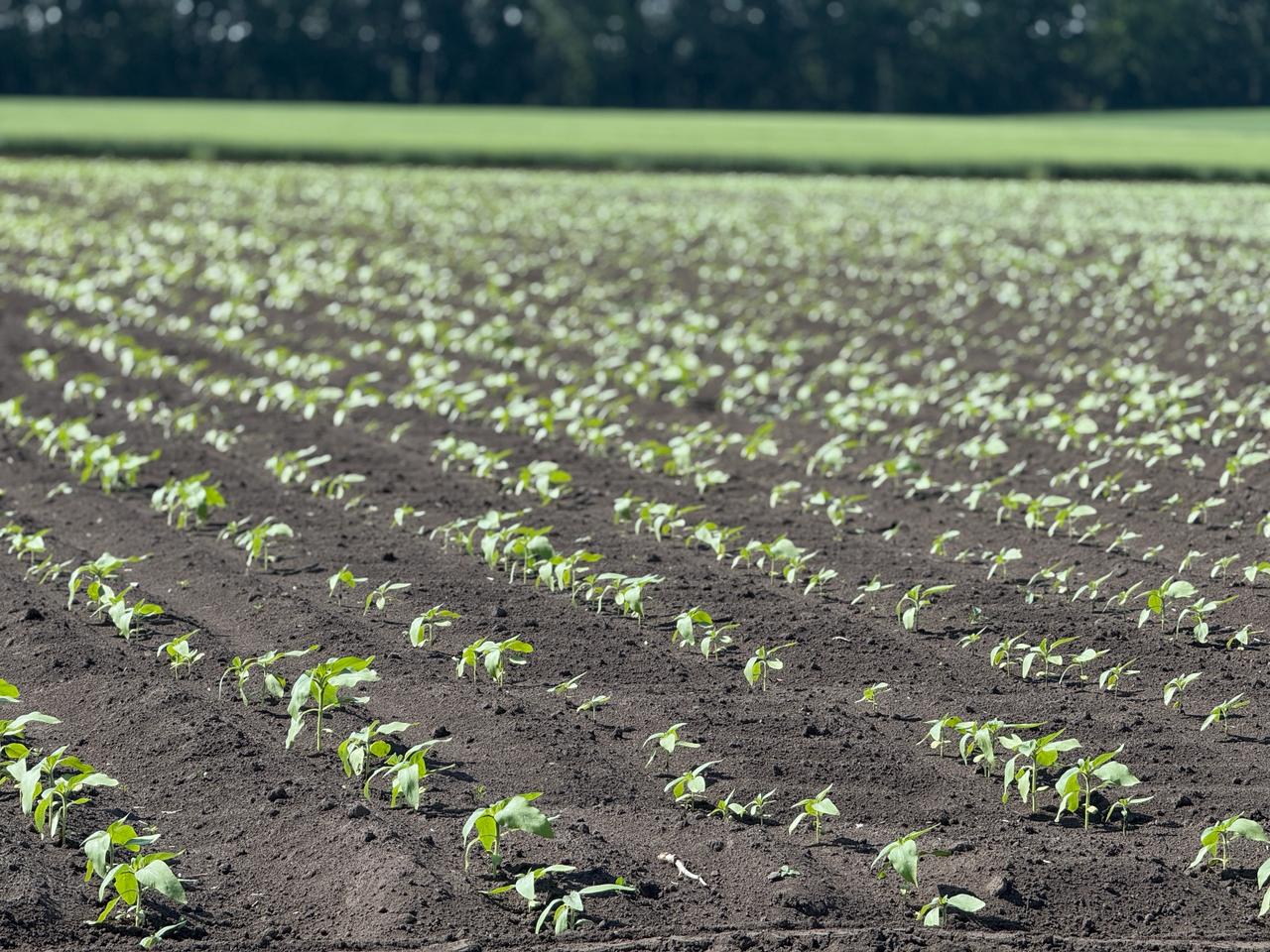 The first reason for abandoning the soil herbicide was an insufficient amount of moisture in the soil, the second — there were large temperature swings.
Soil protection under the conditions of the south-east must absolutely be present to protect plants in the early development phases. So that at least the first 20 days the emergence is clean. Although everyone understands that the duration of action of the active ingredients under unfavourable conditions will be reduced, we will still obtain uniform emergence and then will not have to play with choosing the best moment for applying post-emergence herbicides. After all, the application period, when we can enter the field, will stretch out for us. Because usually the application of herbicides on wheat coincides with their application on sunflower. This is a period when all the machinery is engaged. In addition, there are other threats.
Weeds appeared that are difficult to control with standard herbicide schemes
In the south-east, resistant fat hen appeared, ragweed resistant to Euro-Lightning. These are weeds whose control should not be delayed, otherwise, when overgrown, no herbicide will help.
Plus, we have had common milkweed appear. And because the areas under corn in the region are decreasing, controlling it is becoming increasingly difficult. Because it cannot be got rid of in a year or two by standard methods. If, however, there is corn in the crop rotation, then in 2-3 years the milkweed can be destroyed. Whereas in sunflower crops it is practically impossible to fight. The herbicides used on sunflower and wheat practically do not affect milkweed. It is either introducing corn into the crop rotation, or introducing fallow, which is currently unprofitable for producers.
For uniform emergence of corn and sunflower it is best to apply soil products. In this case soil protection is simply necessary. Two-component products such as Starlent work well. It is good in that it combines two active ingredients — propisochlor and terbuthylazine. Propisochlor controls grass weed emergence very well, and terbuthylazine controls broadleaf weeds well. The product controls ragweed well. And if you apply Starlent in sunflower and corn crops, it removes the wave of ragweed at the first stage, which allows us to obtain emergence, or, if it is chemical (Clearfield) sunflower, to bring it to the phase that we can then cover with a post-emergence herbicide.
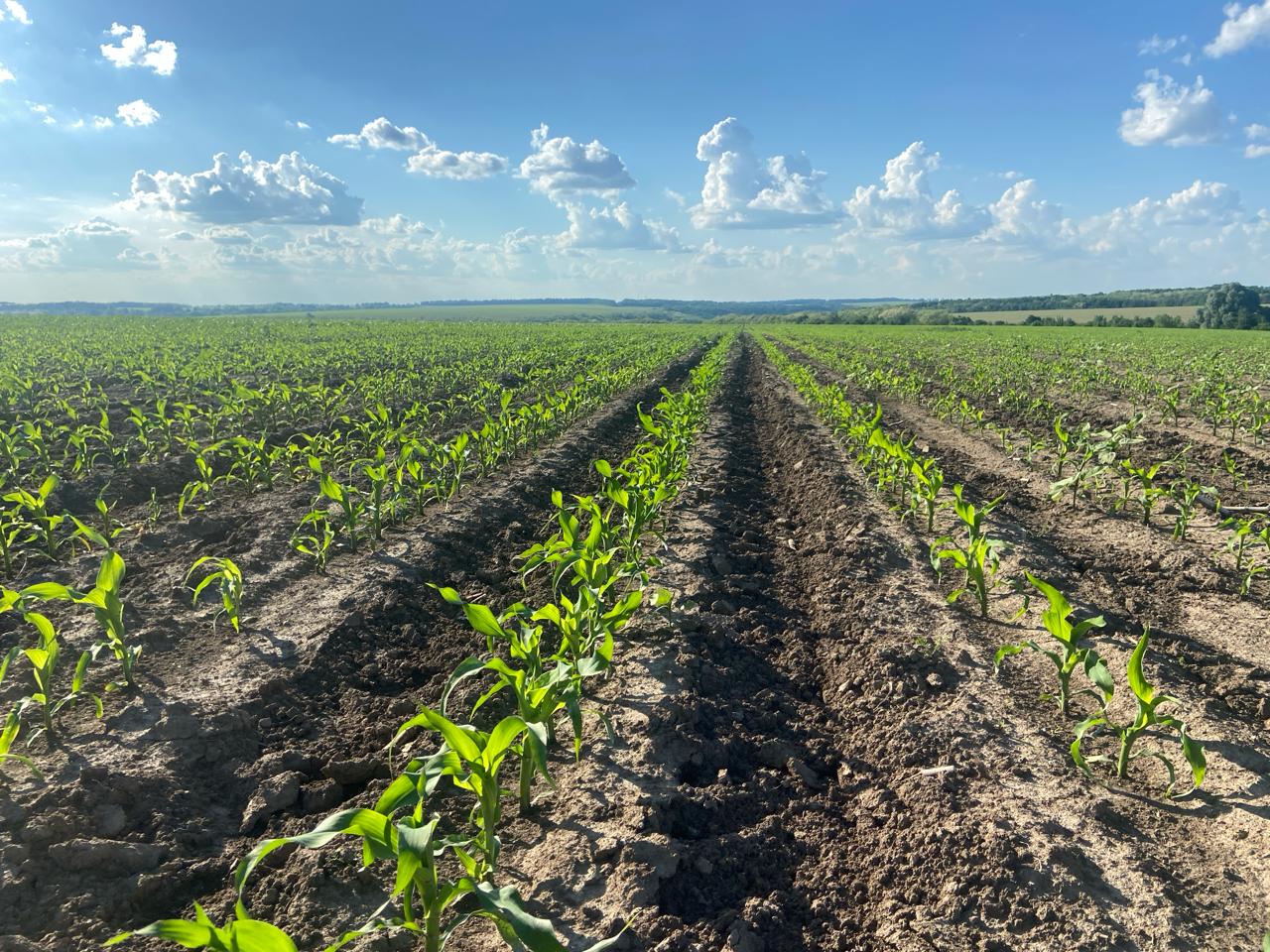 Moreover, in our zone the product is applied without incorporation, because even with minimal moisture it controls weeds well. For a couple of weeks after application we can afford not to look into the field. Another plus of Starlent is that it can be applied on sandy soils, adjusting the application rate. And considering that on some farms sunflower occupies from 30 to 50%, this product will definitely come in handy. Enterprises that bought Starlent are satisfied. They noted that the product can compete with the originals, but is much cheaper.
I believe that Starlent is appropriate to apply even on sulfo- and Clearfield sunflower at the start and only then work on the second-third waves of weeds with the post-emergence herbicides defined for these technologies (Granstar or imidazolinones). Because, no matter how hard we try, our sowing windows are stretched out: they start in mid-April and end at the end of June. During this entire period we have different reserves of soil moisture, but the need to obtain uniform emergence remains.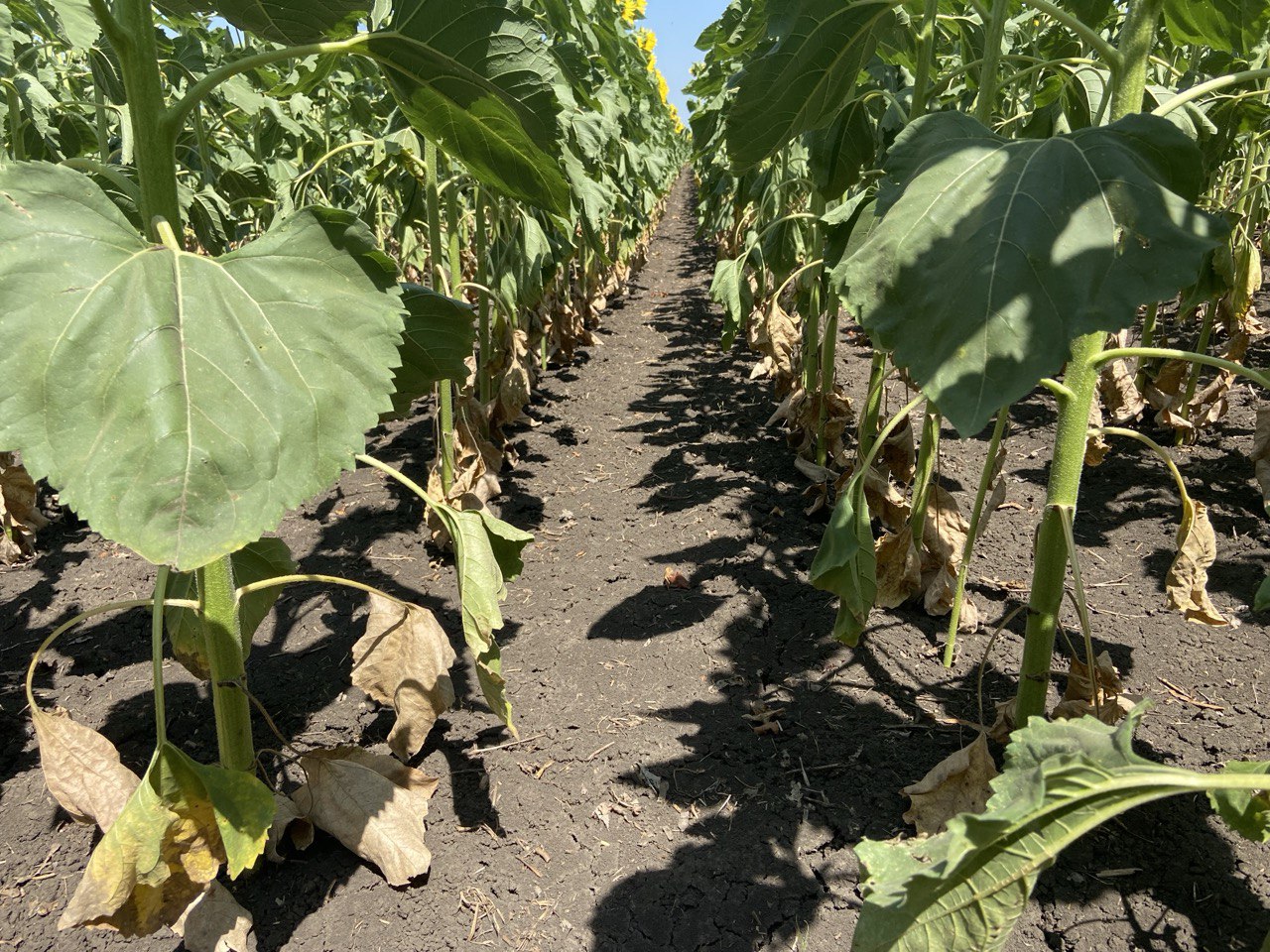
Photo: the result of Starlent's work
Not all post-emergence herbicides work equally effectively on the flag leaf
If it happens that temperature fluctuations do not allow the post-emergence herbicide on wheat to be applied on time, the treatment can be postponed to the flag-leaf phase. In this case you need to select herbicides or herbicide mixtures to control a specific weed species.
The herbicides Sheriff, Aksakal and Sheriff Max, which can be used on the flag leaf, remove a wide spectrum of weeds, including sunflower volunteers, in particular sulfo- and IMI ones.
Will the frosts kill the pests?
As soon as frosts hit in January, hope appeared that they would work as pest control. As it used to be. However, I would not count on this. I think most pests will overwinter in the forest belts, because there is still a small snow cover, and the frosts are not as terrible as expected. In our south-east the frosts are up to -13°C, -14°C in strength, and the snow cover is about 10 cm. This is not a big threat to the overwintering of the cotton bollworm, the winter cutworm, the meadow moth, moths. All of them will appear this season, plus one should also expect grass flies. Unless the frost intensifies to -40°C and there is bare ground.
As for the sunn pest, I am not ready to forecast. This pest, by the way, was not the biggest problem last year.
The presence of the spider mite has increased, the tobacco thrips has appeared
Over the last two years, various species of cutworms and moths have plagued producers in the south-eastern region. The tobacco thrips has also appeared, which quite seriously damages sunflower emergence, and the spider mite on soybean. In the early phases of winter cereals, grass flies harm the crops, winter rapeseed — the diamondback moth. In contrast, the number of the sunn pest last season was lower.
For example, last year we had practically no winter cutworm in the early development phases of corn and sunflower, but if it had been there, we would have had to spray immediately. There was a cutworm outbreak on peas, the strongest during pod set, and those who did not apply crop protection products lost up to 30% of the harvest. Usually in our region we only fight the bruchus. During rapeseed flowering there were strong outbreaks of the diamondback moth. And those who applied an insecticide in time managed to save 0.5 t/ha of harvest.
Last year during sunflower flowering Prosens helped us out a lot. This is an insecticide that should be in every agronomist's portfolio. It controls Lepidoptera — cutworms, moths and the diamondback moth. The product needs only 250 g/ha for a guaranteed result. It acts quickly, plus it can be combined with other insecticide and acaricide products in a tank mix.
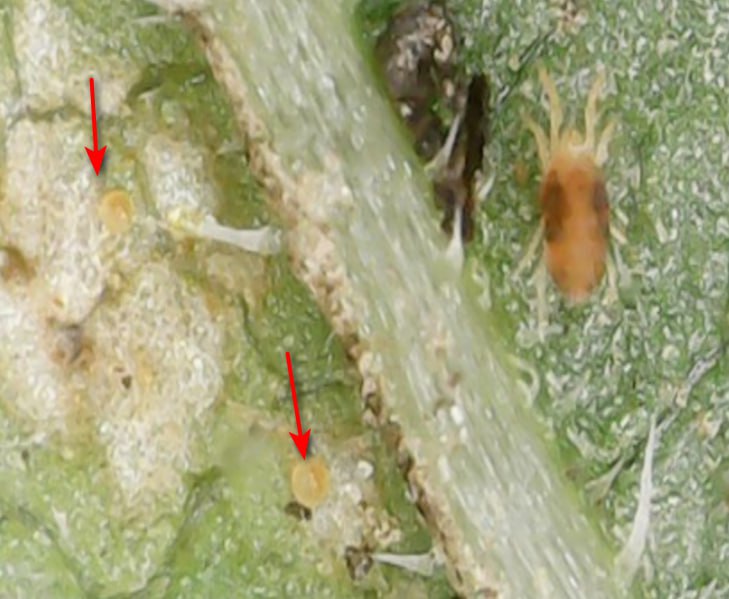 We mixed it with the anti-mite product Miralda. This way we managed to quickly work on cutworms and mites at the same time.
The speed of action is ensured by the specifics of the active ingredients of these products — emamectin benzoate (Prosens) and fenpyroximate (Miralda). Emamectin benzoate has an ovicidal effect which, penetrating into the plant, forms reservoirs with the active ingredient and remains resistant to rain wash-off already after two hours. Whereas fenpyroximate acts by contact and has a quick "knockout" effect, affecting all mobile development stages of the mite (larva, nymph and adult).
The mechanism of action of the product Prosens has contact and stomach activity. When it gets on the pest, it blocks the central nervous system, the muscle cells stop contracting, after 1-3 hours the caterpillars stop feeding and after 1-2 days die. When it gets on an egg clutch, the active ingredient penetrates through the egg shell and the larva dies.
Whereas Miralda combines two processes:
- inhibition of mitochondrial ATP synthesis, which causes the interruption of the mites' normal metabolism and respiration;
- inhibition of monoamine oxidase, which interrupts the electron-transport function of the nervous system.
To contain the damage, one needs to work with Prosens as soon as adult Lepidoptera appear. For example, if it is the meadow moth in the initial phases of corn development or it is various species of cutworms on sunflower, the diamondback moth on rapeseed, etc.
With simple products we do not remove the problems that have been present with us for the last 5 years, related to the emergence of cutworms, moths, the meadow moth and the diamondback moth, because their efficacy is only 20-30%.
The problem with the winter cutworm is so big for us that once we sowed sunflower and got no emergence. The winter cutworm literally ate our crops. Plus, in the last two years they and the moths cause damage during sunflower flowering, when it is the busiest period. Farmers notice the presence of the cutworm when it has already managed to damage the head and as a result created conditions for the development of rot pathogens. On corn this is control of the corn borer. On rapeseed — the diamondback moth. This year I observed a case where the diamondback moth completely ate the entire leaf apparatus at the end of the crop's flowering. As a result the farm got half-empty pods.
Areas under no-till, strip-till are growing and increasing the pests' chances of survival
No-till and strip-till technologies have many advantages in terms of preserving moisture in the soil and accumulating nutrients in it. The disadvantage is the leaving of post-harvest residues, which serve as a comfortable reservoir for the overwintering of pests.
For the emergence of pests a certain sum of temperatures is needed, which can easily be calculated. This will make it possible to forecast the periods of appearance of one or another pest in the field. At the first signs (flight, egg-laying, appearance of adults) one needs to work against it immediately.
What diseases to expect in the 2026 season?
Under dry conditions rust appears on winter crops, under wet ones — alternaria and septoria. Although on winter wheat and rapeseed I recorded septoria as early as autumn. Therefore, one should expect that in the initial development phases after the resumption of vegetation it will appear.
On winter cereals I would work against septoria preventively already on the ear with the product Taler Max. Since it is intended precisely for the control of septoria on the ear. However, one should not work on an already affected ear, since the efficacy of the treatment will be no higher than 50%.
Overall, I view Taler Max as an indispensable product for controlling alternaria and septoria regardless of the crop. Taler Max works well both on its own and in tank mixes. It is a product that controls the primary infection.
Speaking of winter rapeseed, on it you need to work from autumn at the 6-8 leaf phase. If, however, the rapeseed did not branch out in the autumn period, then it is acceptable to work in spring. On soybean — when one trifoliate leaf has appeared.
The precipitation that 2026 brought inspires hope for better harvests
Since the beginning of 2026 the weather has been pleasing. As the agronomist told me, more than 200 mm of precipitation has already fallen on the farm. If the precipitation continues, then the area under corn can be increased a little. Because if we take last year into account, then on 1 April our moisture reserve in the metre layer was at the level of from 110 to 180 mm. And the corn yield in the region was harvested at from 0.5 t/ha to 2 t/ha, sunflower — from 0.3 to 1.5 t/ha, which is very little compared with the 2024 season indicators. Then up to 5 t/ha of corn and 1.5-2 t/ha of sunflower were harvested.
So, if this year we reach a reserve of 250 mm at the start of the season, then things will be more cheerful with the harvest.
Source:superagronom.com