2025
 According to the head of the Agro Department of LNZ Group, Oleksandr Khmeliuk, no matter how technologies are improved, no matter how many new inventions of satellite monitoring and artificial intelligence there are, weather conditions have the greatest impact on the final result, on yield. And this key factor cannot be influenced or changed.
"If we take the territory of Ukraine as a whole, and it is quite large and with significant differences, then over the last 50 years we have a reduction in the average annual amount of precipitation already by 30-40%. The smallest reduction is observed in the southern regions: the Mykolaiv, Kherson, Odesa, Zaporizhzhia regions, possibly Dnipropetrovsk. In these regions the amount of precipitation was historically lower, and, accordingly, its reduction is not so significant. The amount of precipitation decreased most in the Vinnytsia and Zhytomyr regions," said Oleksandr Khmeliuk during an online event by the WEAGRO service.
He added that the amount of precipitation has decreased, and at the same time the nature of its distribution throughout the year has changed sharply. If precipitation does fall, then it is unproductive (2-5 mm) or torrential.
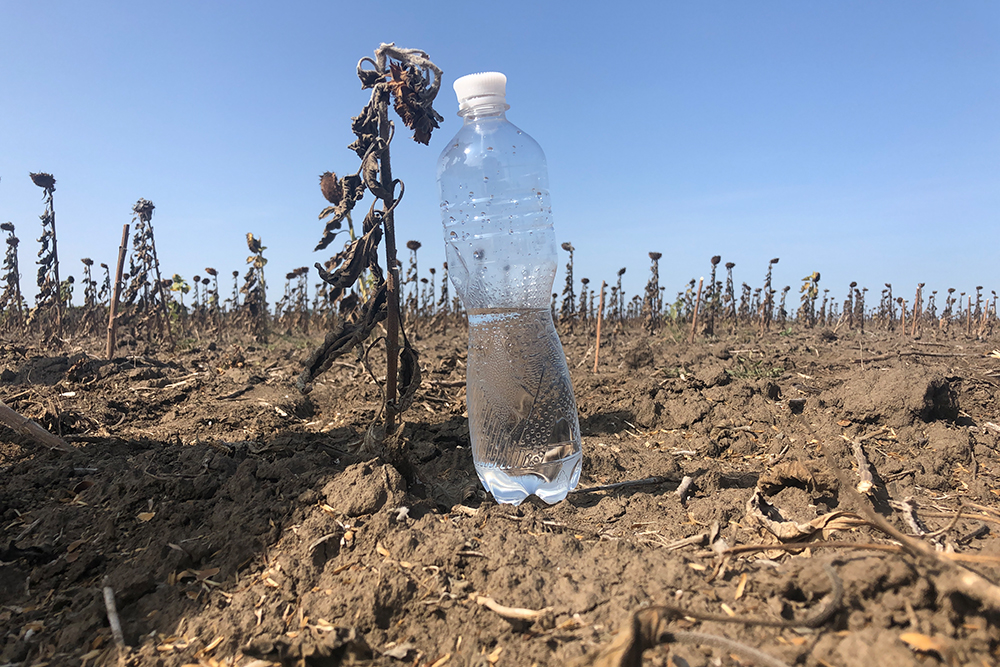 According to the expert's forecasts, such distribution will lead to an ever-smaller percentage of effective moisture that will accumulate in the soil and be used by plants in the future. In parallel, since 2021, temperature records have been registered practically every month. This year January, February and April were warmer than last year. The growth of the average annual temperature was by more than 2°C, which is quite significant.
As a rule, we have July and August quite dry, with high temperatures and low air humidity, which very negatively affects the yield formation of late crops — sunflower, corn, soybean. After all, the flowering and start of grain filling of these crops are among the most critical in terms of weather conditions. And, accordingly, even if the crop developed well in May-June, when flowering begins the temperature rises sharply, often reaching above 40°C, this is already critical. The crops, accordingly, do not form a sufficient amount of harvest.
That is, the margin of late crops (sunflower, soybean, corn) depends on the weather conditions in July-August. The expert notes that at the end of July - the beginning of August, in the central, western and northern parts of the country rains passed, and accordingly the yield there was higher: soybean — 3-3.5 t/ha, sunflower — from 1.5-2 to 2.5-3 t/ha. These are quite high indicators. But in the south (Mykolaiv, Kherson, Dnipropetrovsk regions), where there was no precipitation, everything dried up, burned. There farmers either re-disced these crops, or harvested a minimum of 100 kg/ha of sunflower.
According to Oleksandr Khmeliuk, the decrease in temperature in April-May led to a reduction in the yield potential of all crops, but most negatively affected soybean. This concerned sunflower less, since it has the lowest biological minimum among late crops — at the level of 5-6°C. In soybean this indicator is 10-12°C. Moreover, these crops in most regions suffered already in July-August, where there was an insufficient amount of precipitation in these months. And this is the flowering period, the start of grain filling — the most important in terms of moisture consumption.
In view of climate change, Oleksandr Khmeliuk forecasts that soybean will move north and west of Ukraine.
After all, even under the conditions of the Cherkasy region soybean is becoming quite a risky crop. And here there will be the biggest reduction of plantings. Plus, in addition — the economic component, export duties, a low price that will not rise in the near future. And even in the west many farmers who had 80-90% soybean in the crop rotation structure say that next year they plan to reduce areas under soybean and increase cereal plantings, in particular corn.
He also adds that areas under sunflower in the south are decreasing due to the absence of moisture.
"I practically no longer encounter in the southern regions a crop rotation of sunflower after sunflower for 2-3 years in a row. This was the main crop of the southern region, which made the economics for all agricultural enterprises. Now, even alternating sunflower with wheat every other year, farmers cannot obtain a sunflower harvest. The Odesa region, especially Bessarabia, the eastern districts beyond the Dniester — there already, probably, 80% of the areas are sown with winter wheat and barley," says Oleksandr Khmeliuk.