2025
At the LNZ Group test site in Shpylianka, Cherkasy region, a multi-year experiment was carried out with different seeding rates and sowing methods of winter wheat. The aim of the trial was to determine how the yield forms depending on the stand density and the sowing method.
"Many years of trials show that the genetics of varieties affect the yield by only 15–20%, while the key role is played by the seeding rate, the sowing method and weed control," notes the Head of the LNZ Group Agro Department Oleksandr Khmeliuk.
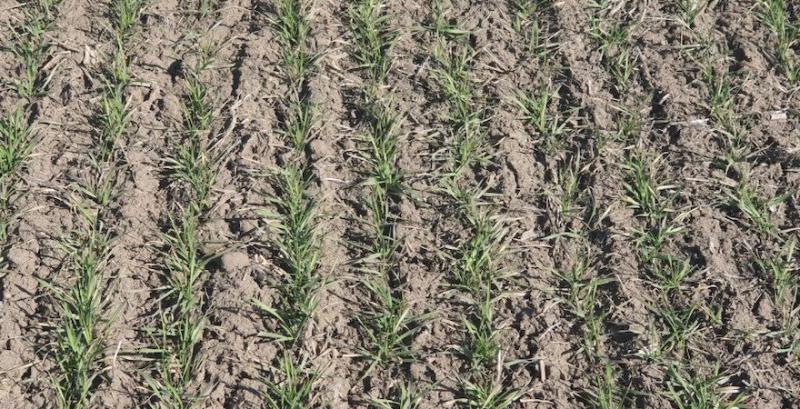 The study showed that with wide-row sowing at a rate of 2 million stems per hectare and a row spacing of 30 cm, the emphasis of yield formation shifts from the number of stems to the number of ears and grains per ear. Even at a lower plant density it is possible to obtain more productive ears. According to Oleksandr Khmeliuk, the optimal stand for the Cherkasy region is 5–6 million productive stems per hectare, depending on the soil moisture reserves and precipitation during the growing season.
In wet years the number of stems can reach 6–7 million per hectare, whereas in dry periods the sowing density should be reduced. The trial also showed that plant tillering and additional stems form from different nodes of the mother stem, and not from one, which affects the ear structure and yield.