2025
Downy mildew is already appearing in the fields — it cannot be ignored. This disease is capable of destroying up to 50% of the harvest and leaving the heads empty. The farms of the Forest-Steppe and Steppe are most at risk, where the disease is especially actively spread.
This was related by Yurii Baranchuk, agri-technology development manager in the Central region of LNZ Group. The causative agent is the fungus Plasmopara helianthi.
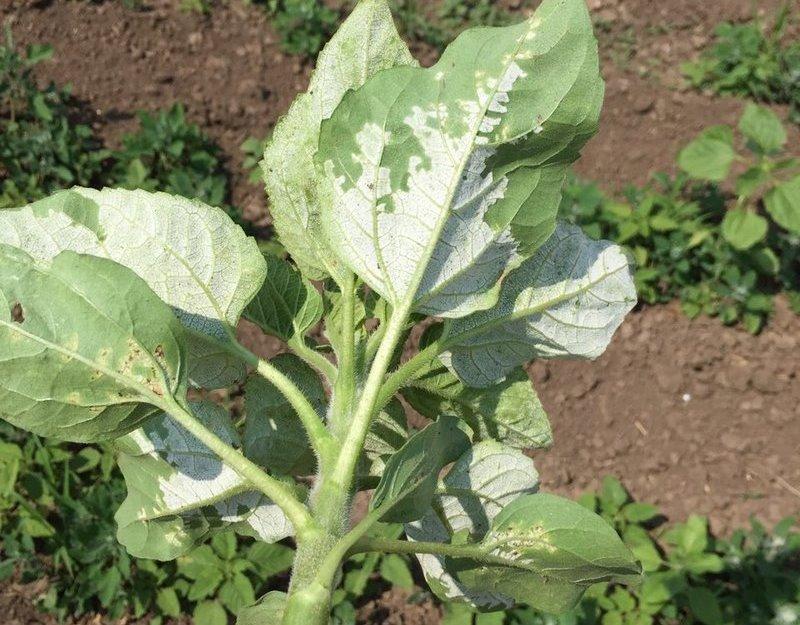 The disease develops throughout the entire sunflower growing season. In the 2-6 pairs of leaves phase the affected plants are distinguished by a thin stem, small leaves and chlorotic spots. These plants usually die or produce small empty heads. At later stages of plant growth, the disease damage leads to underdevelopment, limited seed formation and the appearance of large light-green spots on the leaves. Secondary infection occurs only under conditions of high air humidity during the plant growing period and is carried out by the transfer of zoospores, which form in mass on the affected plants, by rain, wind, insects and runoff water over large distances. The zoospores penetrate into healthy plants through the leaf stomata, causing local damage.
At present the spread of downy mildew has been detected in the Kyiv, Chernihiv, Cherkasy, Kharkiv, Dnipropetrovsk, Poltava regions, and the spread of the disease is also possible in other regions.
Yurii Baranchuk emphasised that the main measures for protection against downy mildew of sunflower are:
- growing resistant varieties and hybrids;
- sowing treated seed;
- destruction of volunteers, which are a reservoir of infection;
- growing sunflower in a crop rotation with a return to the same field no earlier than after 8 years, observing spatial isolation (no less than 1 km) of sunflower crops from fields where it was grown in previous years;
- preventing soil compaction;
- using during the growing season a fungicide of systemic and curative action.
"In the portfolio of the DEFENDA brand, for the prevention and limitation of spread there are fungicides for application during the growing season. This is Ultralin (cymoxanil, 300 g/kg, + azoxystrobin, 250 g/kg) — application rate 0.3-0.5 kg/ha," noted the specialist.