2025
In the south-eastern regions the 2025 season is turning out to be quite difficult. Three waves of spring frosts and a moisture deficit will have negative consequences for the future harvest. Quite a few areas will have to be resown, and the harvest of some fruit and berry crops can no longer be saved this year.
According to him, both spring and winter crops "got it". In some regions the temperature dropped to -6 °C. And there in the vast majority the winter rapeseed crops were completely damaged and they will be resown.
"It was exactly during those frosts that the flowering period of the rapeseed occurred, and the frost damaged both the lower tier and the upper one somewhere. So there will definitely be a complete loss of the flower and one need not hope for a harvest," related the specialist.
 He noted that first of all such a phenomenon was observed in river lowlands, gullies and on hills where it is quite windy. The situation is aggravated by the absence of protective shelterbelts in these regions. Already now it is obvious that many winter rapeseed crops in the region will be resown.
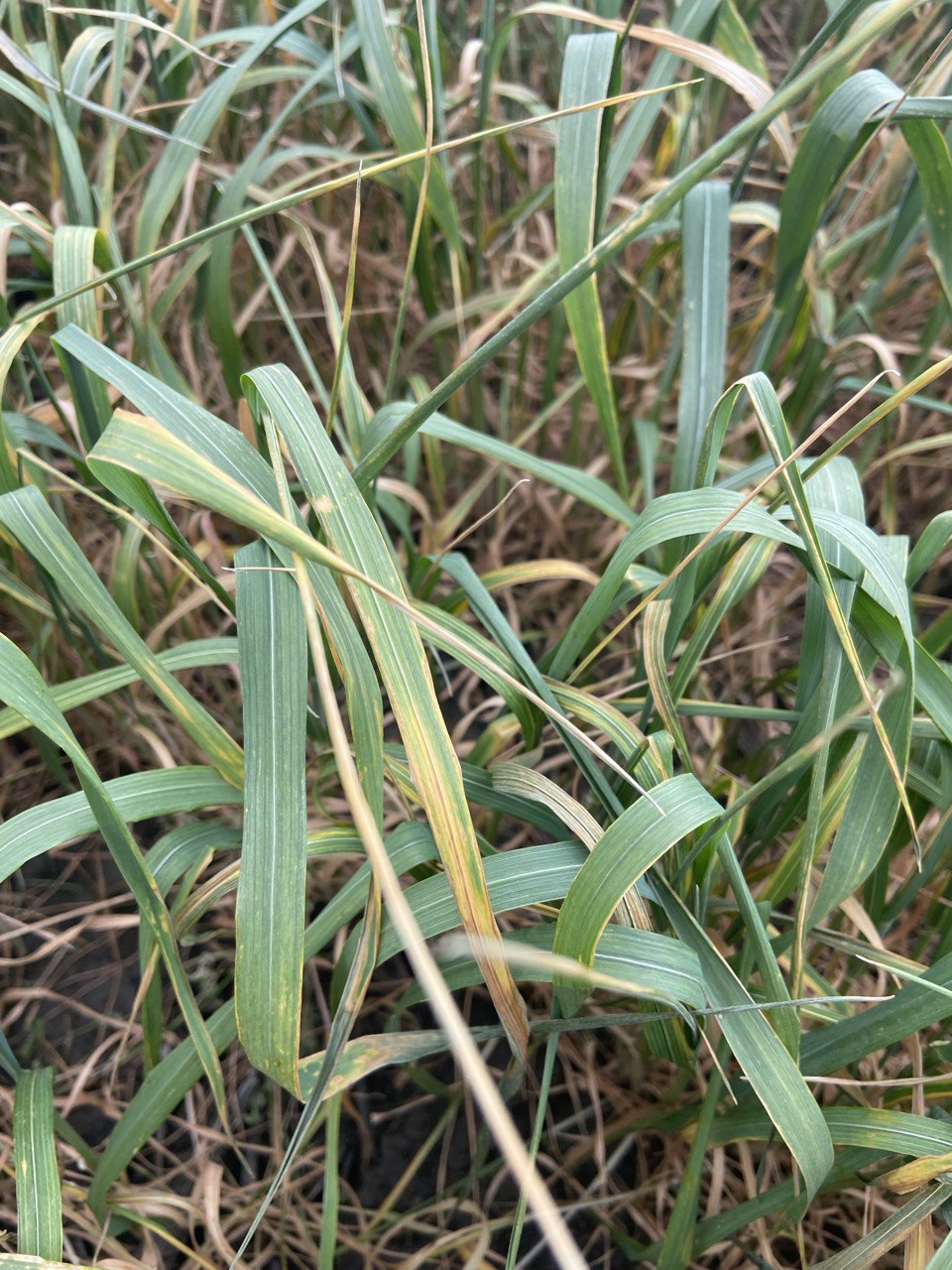
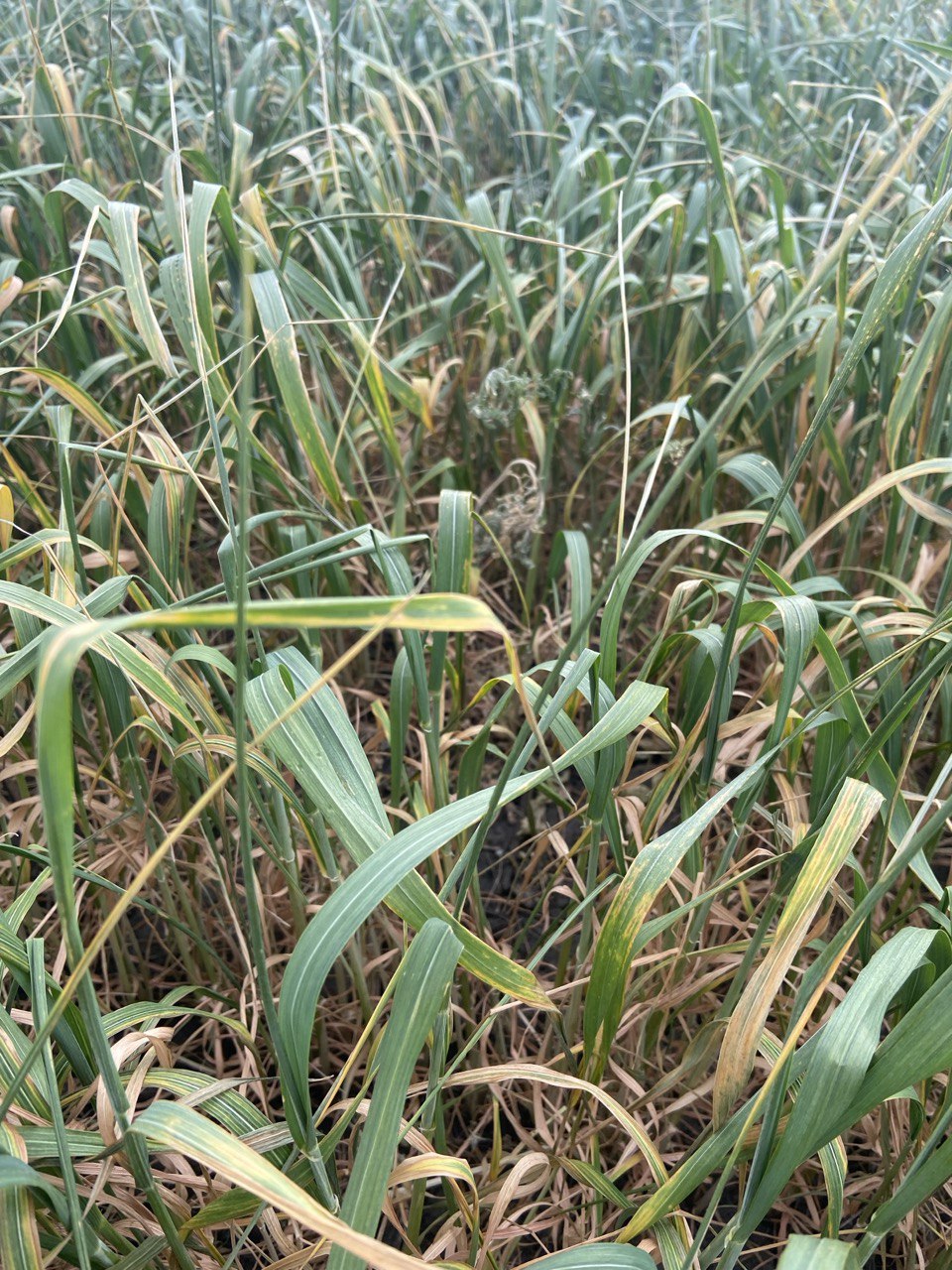
But besides this, says Serhii Korniushenko, he saw fields where winter wheat too was damaged by the frosts. In particular in the Synelnykove and Prydniprovskyi districts of the Dnipropetrovsk region.
"Because of the frosts the wheat halted its growth, in places even the lower leaves were completely damaged, died off. It had already put out the flag leaf and was soon to head, but the frost suppressed it," says the expert.
 Early maize crops were also damaged, in particular in the Dnipropetrovsk, Kharkiv, Zaporizhzhia regions. Where the plants were already in the 2-3 leaves phase, they froze and curled up, although the growing point for the most part remained alive. Such maize will recover, but it is clear that the planned harvest will not be achieved. In Serhii Korniushenko's opinion, the decrease in yield in such maize crops can reach 20-30%.
According to him, on sunflower those plants that had already put out 2-3 true leaves were also damaged more. True, the growing point is also mostly alive, although he saw at least one field where the sunflower froze out completely and it will have to be resown.
"And I also observed such consequences of the frosts on sunflower: where the cotyledons had only just emerged from the soil and the frosts hit, they simply received stress and did not open. What will happen next with such crops — is so far unknown," related the specialist.
In general, the farmers of the south-eastern regions who have not yet sown the later spring crops now have a dilemma. On the one hand the soil is warmed up, but there is a threat of frosts. On the other hand — the traditional shortage of precipitation and moisture, but rains are promised in the coming days. Therefore many are now taking the risk and sowing, in order to make it before the rains. Although the forecasters again predict that in the coming days there will be a cooling and again down to frosts.
According to Serhii Korniushenko, maize in the region has already in fact been sown by all farms. Sunflower at present is somewhere at 50% of the planned areas. So there is still a chance for those farms that give preference to late sowings, in particular at the end of May. But here there is another threat — the already mentioned drought. "
Today I visited several farms in the Dnipropetrovsk region. We inspected the crops and the fields prepared for sowing. There is moisture only at a depth of 8-10 cm. If in the near future there is no productive precipitation, then even if one sows deeper, then when that grain will germinate — is unknown," he says.
The expert also adds that a no less difficult situation is for those who grow fruit and berry and vegetable crops.
"I was recently at such a farm, and they completely froze out 200 ha of sweet cherry. Apricots also perished, partly sour cherry. Only the apples 'slipped through' this period. Also at another farmer the crops of early cucumbers completely died, they will have to plant seedlings again. They also planted watermelons, so here the plants seemingly survived the frosts, but how they will develop further — is so far in question," he related.