2025
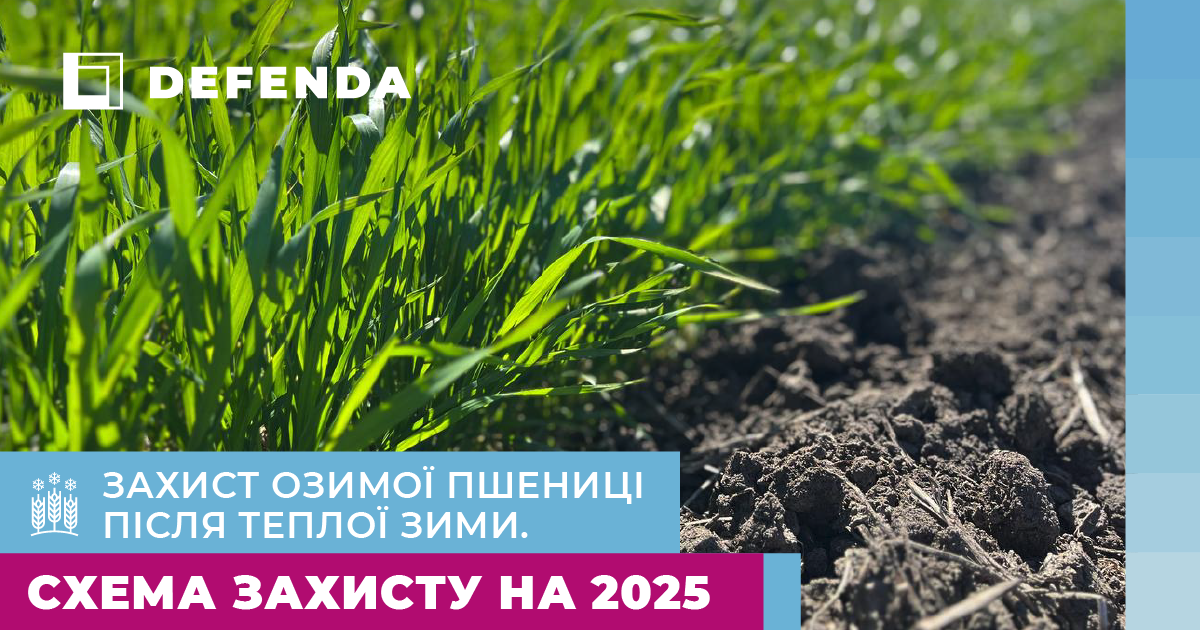 This season the winter more resembled early spring. The mild weather quickly awakened not only the plants, but also a whole army of pests and diseases, which are already lying in wait in the winter wheat fields. How to protect the future harvest and when do the most important moments in the development of winter wheat set in, which require your special attention? We figure it out together with Serhii Korniushenko, agri-technology development manager for the Southern region of LNZ Group.
Critical periods of winter wheat development
Development stages of winter wheat when one should be especially vigilant:
- At present most wheat crops are in one of the important stages — the tillering phase. At this time one needs to protect the plants from weeds, the pathogens of various diseases and pests. Taking into account the natural factors and taking into account the state of the field, we understand that the better the tillering goes, the more chances there are of obtaining a good harvest.
- A no less important development stage of winter wheat is the flag leaf phase.
"Everyone understands that the longer the flag leaf remains green, the larger the harvest can be. At this time one needs to protect it from diseases and pests," relates Serhii Korniushenko.
In the flowering and ear-filling phases many pests appear, which can spoil the already formed harvest. It is exactly in this period that one of the common diseases can appear — fusarium head blight. Therefore one must not miss the moment and protect the harvest in time from pests and diseases.
"It is clear that throughout the entire growing period of winter wheat one must certainly care for it, but in the above-listed phases the monitoring should preferably be intensified," adds the specialist.
Threats in winter wheat fields
Fungal pathogens exist in the soil and on plant residues every year. But for the development of one or another fungus special conditions are needed, such as temperature, the presence or absence of moisture in the upper soil layer and droplet moisture in the air, and so on.
"Now we already notice signs of septoria on the leaves of winter wheat. Later on wheat alternaria, tan spot, fusarium, powdery mildew and rust may manifest themselves. Experienced agronomists know a simple truth — it is better to work with fungal pathogens preventively than to then carry out treatment of the plants," notes Serhii Korniushenko.
The mild winter also influenced the fact that most pests feel good and will trouble farmers throughout the whole season.
"In the near future we may notice frit flies, aphids, and later — various types of cutworms, thrips and the harmful sunn pest," adds the specialist.
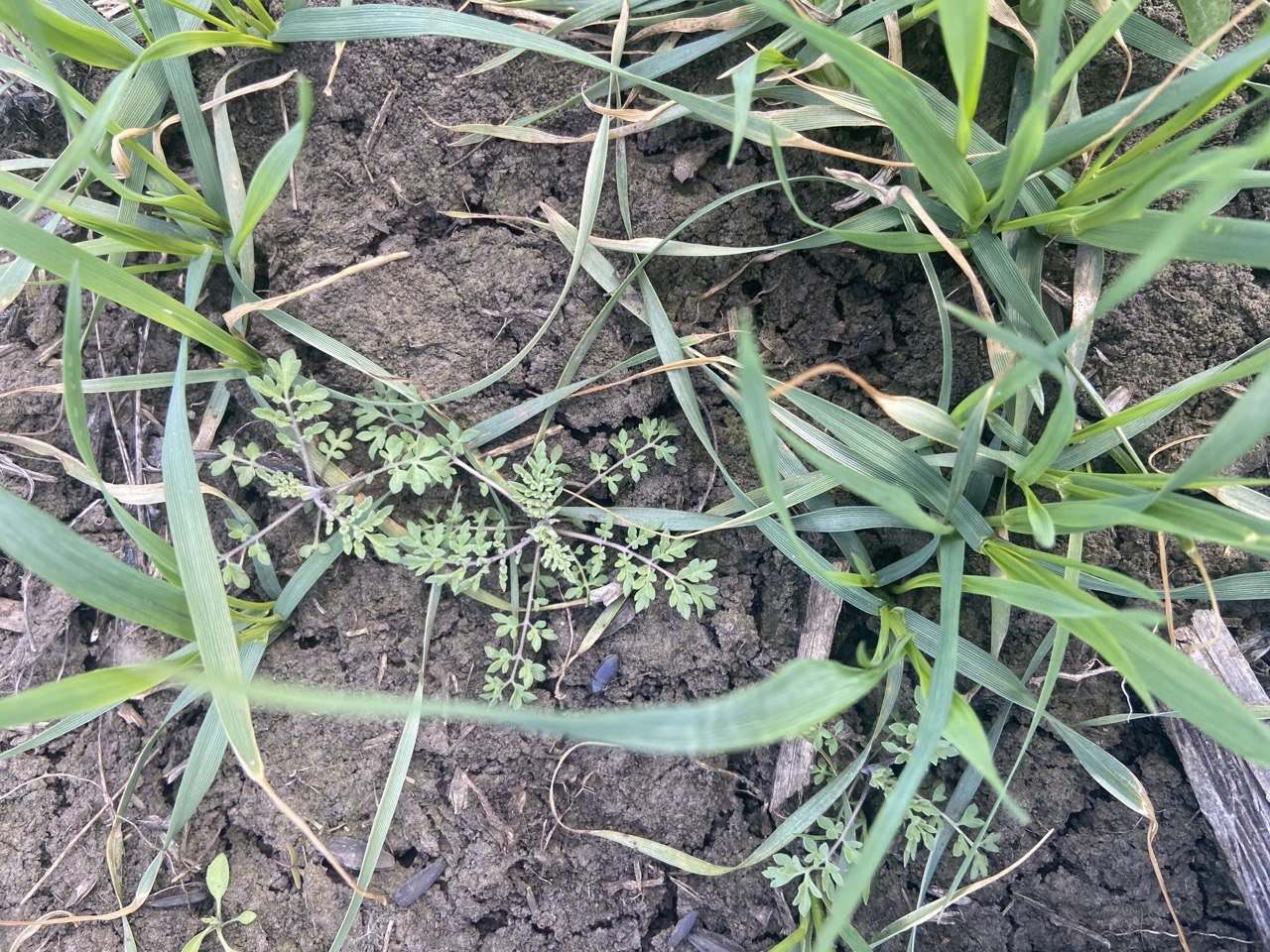 Already today in some fields one can see the presence of overwintering weeds. In the main bulk the weed-infested fields are those where the preceding crop was winter rapeseed. These are also fields with sparse winter wheat emergence.
"In weed-infested fields herbicide treatment should be carried out in the near future. Protection from such weeds as ragweed, sow thistle or sunflower volunteers should be carried out at later development phases of winter wheat, including the flag leaf development phase," notes the company's manager.
Winter wheat protection scheme
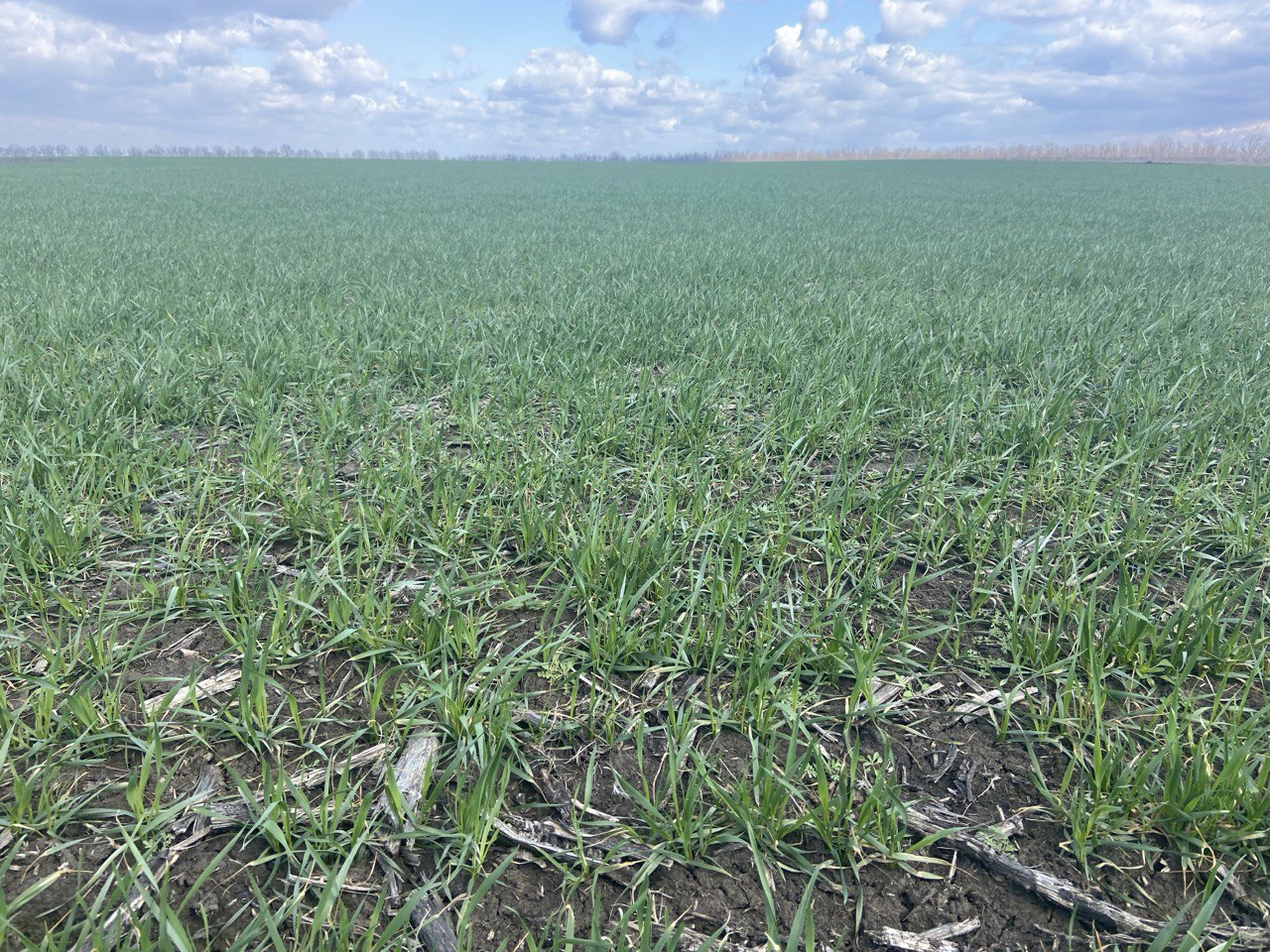 Let us design one of the winter wheat protection schemes on the example of a field in the Dnipropetrovsk region. At present the development phase of the winter wheat is 2-3 leaves, the preceding crop is sunflower, overwintering weeds are in the field and the first signs of septoria are noticeable. The average temperature is +15 ℃.
First application. State of the wheat — resumption of growth — fungicides Salto 1.2 l/ha + Paracelsus 0.5 l/ha + herbicide Primus 0.5 l/ha + insecticide Octant Turbo 0.25 l/ha.
Second application. Phase up to the flag leaf — fungicide Sigma 0.75 l/ha + herbicides Sheriff 0.025 kg/ha + Aksakal 0.02 kg/ha + adjuvant Macho 0.2 l/ha + insecticide Octant Turbo 0.25 l/ha
Third application. Phase — flowering — Taler 0.8 l/ha + insecticide Cyrkul 0.2 l/ha.
"In fact this protection system makes it possible to protect the winter wheat crops throughout the entire growing season. By changing the rates and combining in one sequence or another, we can apply these products separately or in a mix, considering the state of the field and the development of diseases, pests and weeds," relates Serhii.
The cost of the protection scheme
When we calculate all the costs of growing winter wheat, then the protection scheme will account for from 5 to 10% of the costs, depending on the growing technology.
"For all farms I would not recommend economising on plant protection products. Working with the complex we can preserve from 10 to 30% of the harvest. The only thing, one can exclude the third treatment if you see that your wheat is very weak and the harvest potential will not exceed 3 t/ha," says Serhii.
However, it is worth remembering that even the purchase of expensive products will not safeguard you from mistakes.
The first — is the application of a herbicide at minimal rates on overgrown weeds. The effectiveness of herbicides decreases several times over in such circumstances, after some time the weed begins to vegetate again and the effectiveness equals zero.
The second — is the incorrect selection of insecticides against one or another pest. For example, the use of the pyrethroid group of insecticides against lepidopterans, insects that have a piercing-sucking mouthpart, lead a concealed way of life. Most often they are used by farmers who want to economise on funds, but everything happens the other way round and one has to do another spraying with insecticides.
The third mistake — is the incorrect use of active ingredients against one or another pathogenic fungus. This is when an active ingredient is applied that is weak or does not work at all against the given type of fungi.
What should be done in the fields right now?
The snowless winter promoted the fact that in the shelterbelts under the leaves many pests accumulated, which already from early spring began to work on the crops. Besides this, overwintering weeds have resumed vegetation, pathogens such as septoria are recorded.
And the conclusion is simple — the first treatment of winter wheat will have to be done in a complex. To correctly combine fungicides and insecticides one needs to observe the order of mixing pesticides by their formulation types.
"Let us consider a specific example. One needs to combine three products — the fungicide Taler EC, the insecticide Octant Turbo SC and the micro-fertiliser DEFENDA Micro. That is, first into the tank mix we add the micro-fertiliser, second — the liquid product in the form of a suspension, and last we add the product that has a formulation of an emulsifiable concentrate. That is, in our example — DEFENDA Micro + Octant Turbo + Taler," explains the LNZ Group representative.