2025
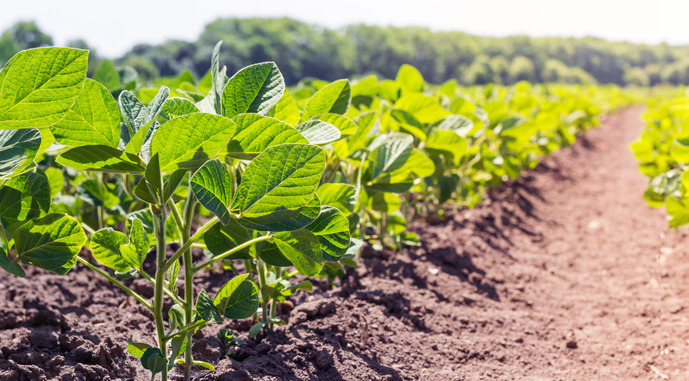 Soybean actively uses the nutrients accumulated in the cotyledons at the first stages of development. Later, up to the moment of flowering, the crop receives from the soil only 5-15% of the total need for macro- and microelements. The main consumption occurs at the beginning of flowering until the grain filling phase. It is exactly in this period that soybean needs all the nutrient elements.
This was related to AgroPortal.ua by the agri-technology development manager in the Central region of the company LNZ Group Serhii Ivaniuk.
"The need for individual nutrient elements changes in accordance with the climate, the soil type, the features of the crop variety, the target yield and the agronomic practices. The basis of soybean nutrition is made up of the following macroelements: nitrogen, phosphorus, potassium, sulphur, calcium and magnesium."
The specialist relates that nitrogen is key for yield formation. Potassium affects photosynthesis, water balance, plant immunity, promotes the formation of nodules, increases yield, seed weight and protein content. Phosphorus, although needed in smaller doses than nitrogen and potassium, is nevertheless critically necessary at the early stages. Sulphur is necessary throughout the entire growing season, especially in the first half, it improves the uptake of nitrogen. Magnesium activates photosynthesis, metabolism, the movement of phosphorus, respiration, and also protein synthesis. Calcium is important for the formation of the root system, the structure of the stems, prolongs the seed filling phases and ensures pollen germination.
"Among the microelements a special role is played by: boron — necessary from the beginning to the end of the growing season. Its deficiency slows root growth. Manganese activates redox processes, improves the uptake of nitrate and molecular nitrogen, photosynthesis and root development. Molybdenum is needed for the formation of chlorophyll, the synthesis of proteins and vitamins, and also for effective nitrogen fixation. Its shortage manifests itself in the dying-off of the lower leaves, the halting of growth and the reddening of young plants. Cobalt ensures the uptake of nitrogen, activates respiratory and energy processes, and also has a positive effect on the development of nodule bacteria. Its deficiency is more often observed on sandy and peat soils. Zinc is especially relevant for light, low-humus soils with a high pH," explained Serhii Ivaniuk.
In the phase of initial plant development it will be advisable to apply the biostimulant DEFENDA Asko Humate (0.5–1.0 l/ha). This is a liquid highly concentrated product of a broad spectrum of action. The unique biochemical components of the fertiliser improve the plants' resistance to stress conditions, stimulate the growth of roots and vegetative mass, improve moisture supply and the uptake of nutrients.
At the budding stage or at the beginning of flowering, to ensure full-fledged growth and stable development of the plants, the nutrition should be adjusted with the help of the complex: DEFENDA Boron (1.0 l/ha) + DEFENDA Micro (0.5 l/ha) + DEFENDA Amino (1.0 l/ha).