2025
The berry business has been becoming popular in the last decade, and especially the raspberry business. The whole point is that the demand for the berry in Ukraine is met a little more than by half, from which one can boldly say: the raspberry business is quite promising, at least for the next few decades.
The question immediately arises: how to grow quality raspberry? Here the company LNZ Group can help, which has 20 years of experience growing raspberry plantations in the fields. The business diversified into its own brand of frozen berries, vegetables and fruit, which has a modern plant for freezing products of the Tevitta brand. At the company they know exactly which diseases are most often encountered on raspberry during growing, and by what method one can fight them. The secrets of care were shared by the associate professor of the department of horticulture and viticulture of the "Podillia State University", candidate of agricultural sciences Vitalii Lapchynskyi.
The spring intensive growth of raspberry attracts a multitude of pests that parasitise on it, and the prolonged growing of the crop in one place often leads to depletion of the soil, accumulation of pathogens and the appearance of dangerous diseases. Correct planting and care of raspberry strengthen the plant's resistance.
Yellowing of raspberry leaves. If this occurs in the second half of summer, then most likely it is an early-fruiting variety preparing to shed its leaves, but if the raspberry yellows in spring or summer, this is a sign of disease. There are several causes of this phenomenon, and one of them is the bacterial disease of raspberry — crown gall. The symptoms of this disease in raspberry most often manifest themselves in areas with slightly alkaline or neutral soil. On the roots of the plant growths in the form of tubers form, the growth of the shoots stops, the raspberry's leaves yellow, and the berries lose their sweet taste. To avoid infection with crown gall, seedlings before planting should be carefully inspected and if swelling is detected on the roots, such planting material is rejected or the affected part of the rhizome is removed, and the cut is treated with a one-percent solution of copper sulphate.
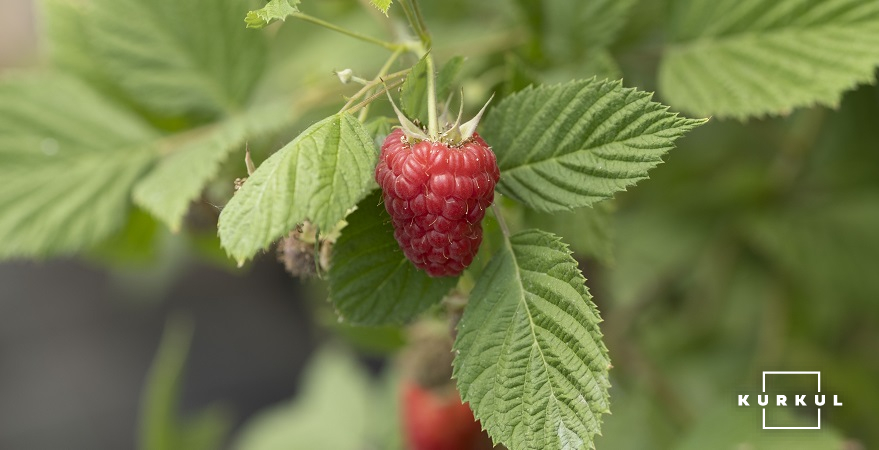
A few more fairly common diseases that can be brought into the berry plantation together with the planting material and insects are: plant dwarfing, verticillium wilt, leaf curl and "witch's broom" (the atypical formation of a multitude of shoots on the bush for plants).
The pathogens of viral diseases, which penetrate into the tissues through mechanical damage, can also cause yellowing of raspberry leaves. The carriers of the viruses are insects — nematodes, mites or aphids, which provoke the appearance of the disease. Too wet soil and its increased acidity further intensify the development of chlorosis. If the disease of the raspberry plantation is of a mass nature, it is advisable to destroy the plantation and plant in another place.
Sometimes in May dark spots appear on the reverse side of the leaf, the raspberry leaves dry and fall off, brown-coloured ulcers appear on the stems. The cause of such an etiology is fungal diseases of raspberry, most often this is rust. Diseased shoots should preferably be destroyed, since curing them this season is already impossible.
Spring and autumn treatment of the raspberry plantation with a one-percent solution of Bordeaux mixture will protect the bushes from affection by this fungus.
In a rainy summer often in the berry plantation the above-ground parts of the plants become covered with a white loose coating, the affected leaves and berries deform. The cause of this is the dangerous fungal disease — powdery mildew. When the disease is detected in the raspberry plantation, immediately after harvesting chemical fighting of the disease is carried out.
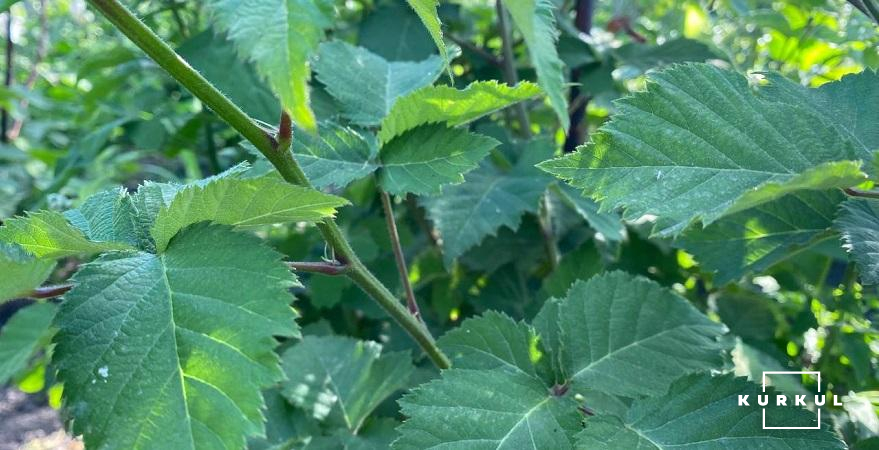
Increased humidity and moderate temperature promote the spread in berry plantations of grey mould, which is caused by the fungus Botrytis cinerea. The fungus, which is preserved in the soil on plant residues, besides raspberry affects strawberry, vegetable and ornamental plants. Grey mould causes the most damage to dense plantations of berry crops that are clogged with last year's plant residues. The spores of the fungus are carried by the wind, insects and infect the berries. The mycelium of the fungus quickly spreads in the tissues of the flesh, causing its decomposition. The berry becomes soft, watery, loses its aroma, taste and colour. The disease causes trouble not only in plantations but also during the transport and storage of the berries.
The fungicide Kitch, WG from DEFENDA – active ingredients (cyprodinil, 375 g/kg + fludioxonil, 250 g/kg), they belong to the anilinopyrimidine chemical group and possess a contact-penetrating effect, which provides a quick stop-effect and has a powerful curative action. Treatment of berry plantations is carried out during the growing season and until harvesting. The first spraying – in the first phase of flowering, the second – after flowering. Not phytotoxic. Kitch WG is registered in Ukraine on strawberry against grey mould, brown spot, white spot and powdery mildew. Registration on raspberry and blackberry against grey mould. Permitted for use in fruit and grape plantations and vegetable growing. The consumption rate of the fungicide is 0.75-1.0 kg/ha (10 g/5 l of water). The waiting period after treatment is 10-30 days. The number of treatments is 2.
It is worth remembering that raspberry is an extremely vulnerable crop. One can protect the raspberry plantation only with proper care of the plant. If there were problems earlier associated with the parasitising of any pest or disease, then one should treat pointwise, for the preventive protection of the raspberry.
The grown products can be delivered to the Tevitta frozen-berry plant, which is located in the Cherkasy region. But products are accepted from all over Ukraine. At the production they freeze berries, vegetables and fruit by the shock-freezing technology, so the frozen berry has all the same properties as fresh.