2025
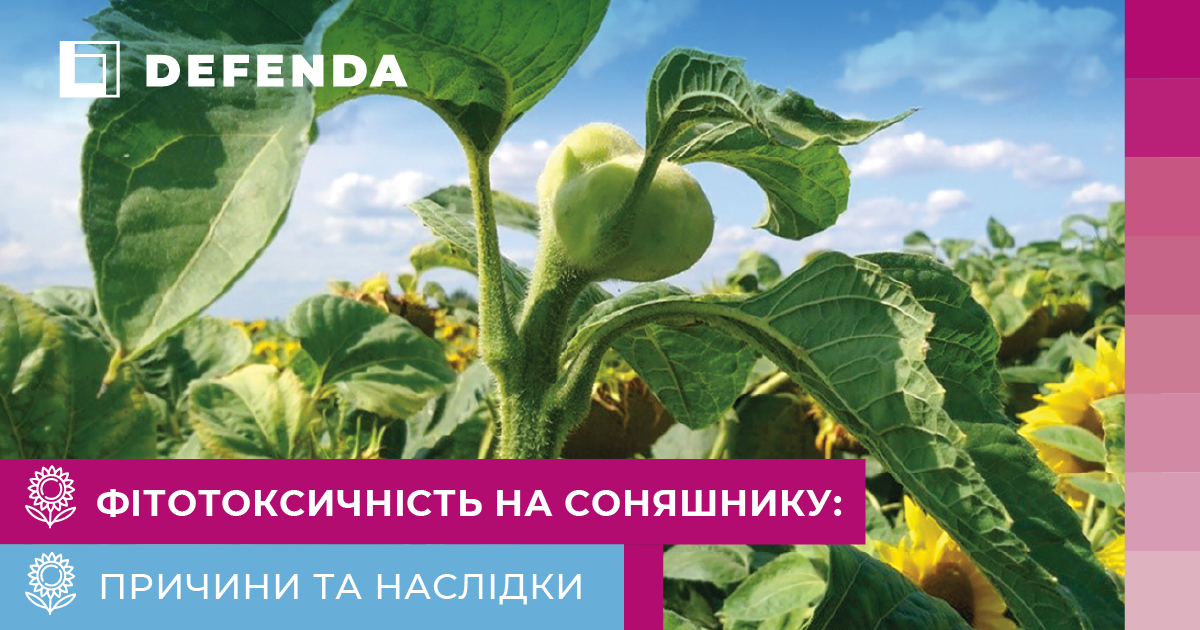 Growing more profitable crops, including sunflower, which is one of the leaders by this indicator, leads to a reduction of the set of agricultural crops in the crop rotation. This causes the accumulation in the soil of various active ingredients of plant protection products, which can have a phytotoxic action on the following crop. In particular, on sunflower itself.
 Therefore, as Serhii Uvarov, agri-technology development manager for the north-eastern and western region of LNZ Group, emphasises, when planning to sow sunflower, one needs to pay attention to the history of the specific field over the previous years: what was sown and which products were applied.
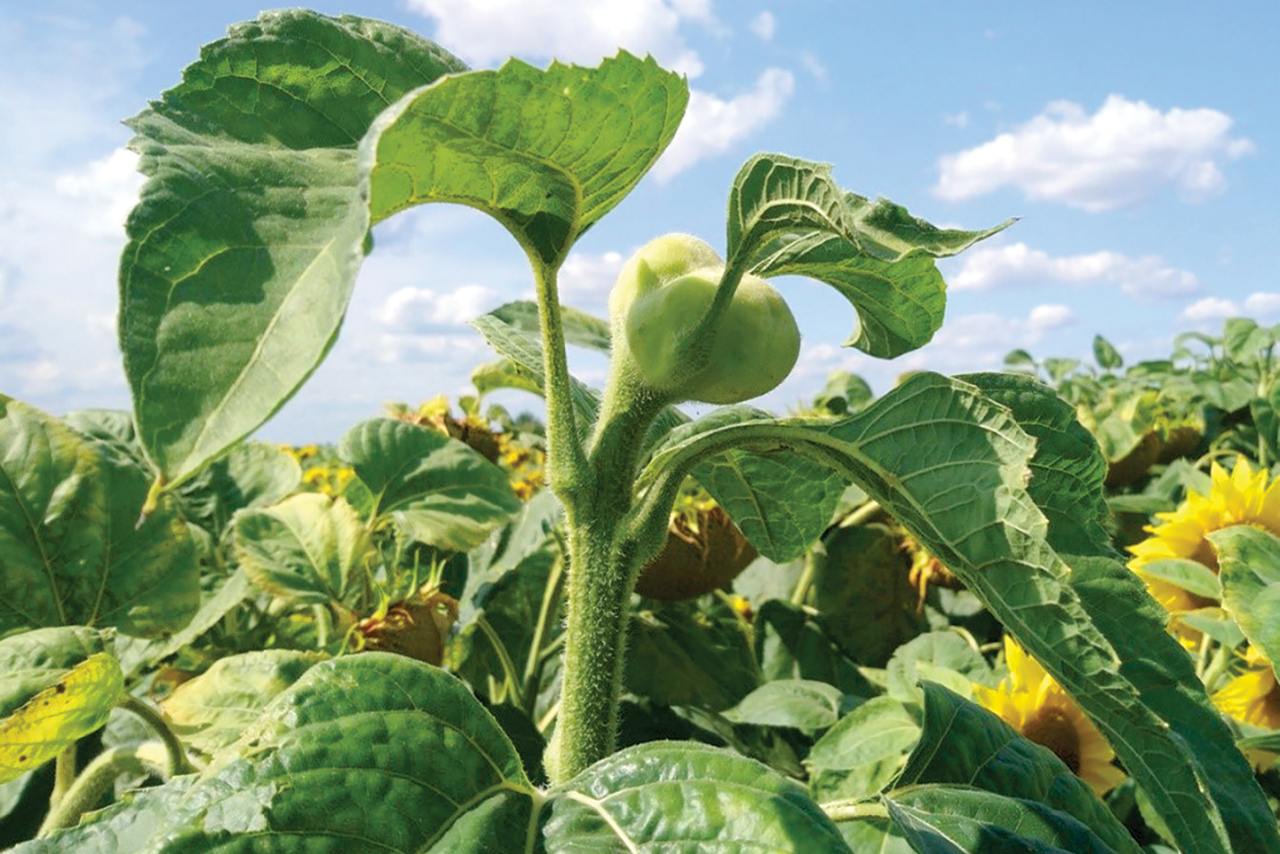
"There are a number of products that have crop-rotation restrictions, but even this does not always stop an agricultural producer from sowing sunflower. It is sown, and then, during the growing season, phytotoxicity is observed on the plants, which manifests itself in the form of deformation and twisting of the leaves, the plants halt in growth or complete dying-off of the plants can occur altogether," emphasises the expert.
According to him, another of the most common causes of the appearance of phytotoxicity on sunflower is the use of plant protection products outside the regulations of their application. This most concerns herbicides. Since their incorrect application can have a negative influence on the crop plant, suppression of growth and development occurs, which in the future affects the quantity and quality of the harvest obtained.
"When planning the herbicide protection of sunflower, the soil and climatic conditions of growing should also be taken into account. This factor will first of all affect the choice of soil herbicides. Depending on the moisture supply of the growing region and the granulometric composition of the soil, the effectiveness of the work of the chosen active ingredient is determined, thereby levelling out the phytotoxic influence on the sunflower. For example, the products of the DEFENDA brand, which are represented for the most part by single-component products, make it possible to choose a list of effective active ingredients in accordance with the growing zone," says Serhii Uvarov.
Thus, according to him, the product Sahara (a.i. acetochlor, 900 g/l) has gained popularity in the southern regions of the country. Here, at a low level of moisture, it exhibits its high effectiveness of weed control and reduces the level of phytotoxic influence on the crop plant. Whereas in cool weather and high soil moisture it can exhibit a phytotoxic action on the crop.
Also, quite often a phytotoxic influence on sunflower plants is observed from the application of post-emergence herbicides, says the expert. The main cause of the appearance of this negative influence is the incorrect regulations of application of the chosen products, namely when the sunflower plants overgrow the phases in which one could work. To a large extent this concerns the application of graminicides — post-emergence products for the control of grass weeds.
"Usually, plant protection product manufacturing companies do not indicate in the descriptions of graminicides in which exact phases to apply the products, but recommend spraying the crops regardless of the crop's development phase. From my own experience and the experience of most agricultural producers, it has been established that the application of graminicides at late phases leads to a strong phytotoxic influence on sunflower — a small number of flowers forms in the head, it is deformed or is not laid down at all. Therefore the most effective use of these products is in the 2-4 pairs of true leaves phase at an air temperature at the moment of application of from +10 °C to +25 °C and a sufficient amount of moisture in the soil. Alongside this, given the current weather deviations, the optimal conditions for the application of graminicides arise quite rarely, but one still needs to look at the development phase of the sunflower plants, so that they are not under stress, and observe the temperature regime during application. Also, a frequent cause of phytotoxic manifestations of the action of graminicides on sunflower is the failure to observe the time intervals between applications of graminicides with herbicides against dicotyledonous weeds, fungicides and micro-fertilisers. Even if we did not mix them into one tank mix, such mixing can already occur in the sunflower plant," emphasises the specialist.
So, he emphasises, to avoid a phytotoxic action on sunflower plants, and this most often occurs after the application of herbicides, it is necessary to observe the regulations of application of the products. Since the correctness of the actions performed is the guarantee of a positive influence on the future harvest.