2025
Because of weeds, diseases or pests a farmer can lose from 10 to 50% of the rapeseed harvest. But a correct protection scheme, on the contrary, can provide from 10 to 30% of a yield gain. But in agriculture there is nothing stable — every year brings us new challenges in the fields. And every year farmers need to adapt their technological charts and approaches to the challenges of the weather or other conditions. And today we will consider what conditions are forming for rapeseed in the 2025 season and what protection can be used.
 Critical periods in the development of rapeseed
Rapeseed is a crop that requires constant care. From obtaining the emergence to harvesting one needs to constantly carry out inspection of the fields for the presence of weeds, pests and diseases. Every year makes its own corrections to the protection system.
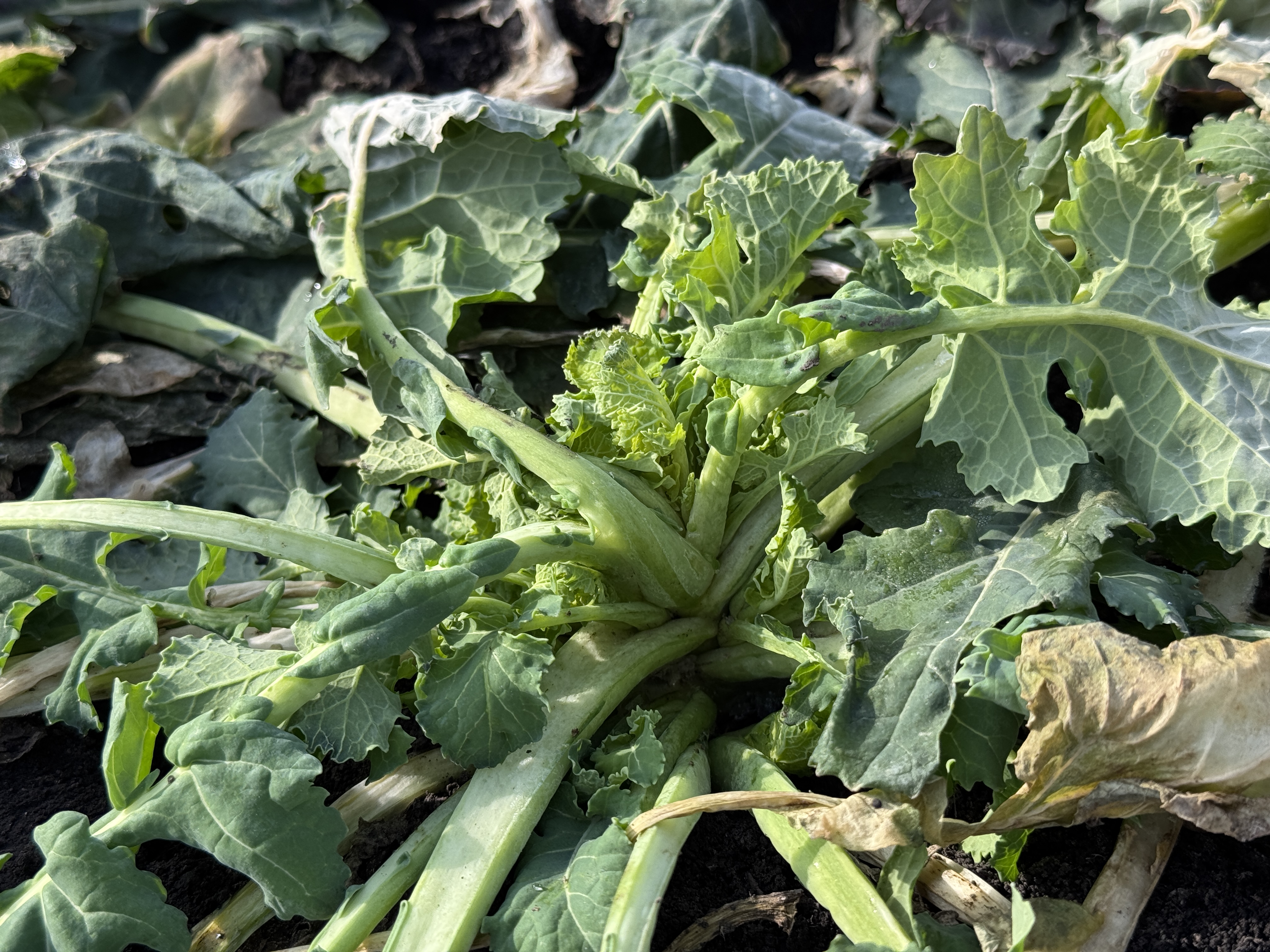
"I already see now in the rapeseed fields the presence of overwintering dicotyledonous weeds, the absence of lower leaves on the rapeseed and a weak root system. The development phase as of the second decade of February is 4-5 leaves," relates Serhii Korniushenko, agri-technology development manager for the Southern region of "LNZ Group".
 In his opinion, farmers should pay attention to the following development stages of the crop:
- in the first two leaves phase — on the fight against pests, preserving the maximum density;
- in the 3-5 leaves phase — on the formation of the root system and protection from diseases;
- in the stem-elongation phase — on the fight against pests and diseases, the formation of side shoots;
- during budding — on the fight against pests and diseases, since the laying-down of the future harvest occurs;
- during flowering — on the fight against pests, the insecticides must be safe for bees;
- during the formation of pods and ripening — on the fight against pests, we protect the already formed harvest.
The pests are already in the field — the rapeseed protection scheme
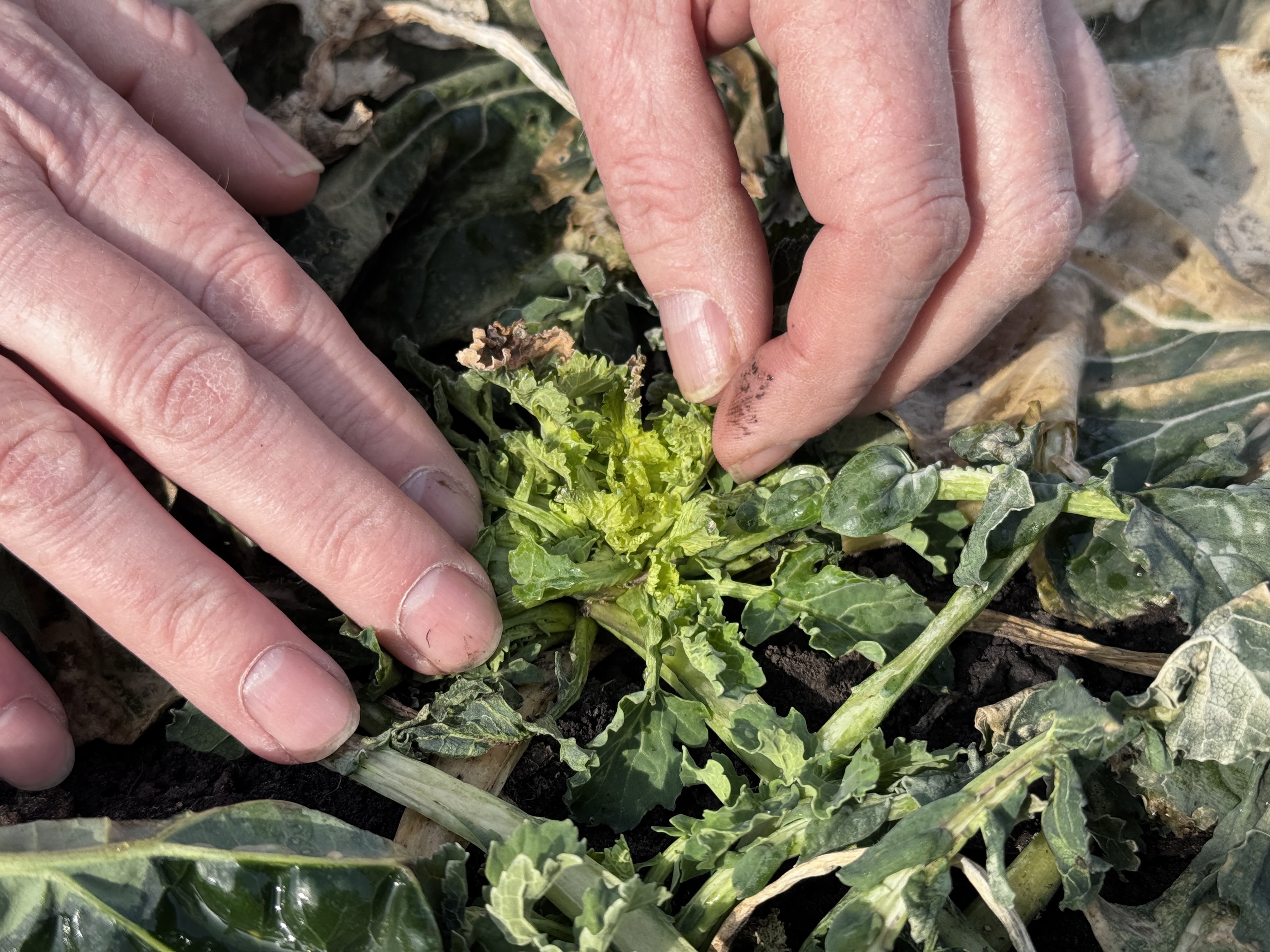 In connection with the warm and dry winter, already at the beginning of the resumption of plant growth farmers may encounter such pests as the cabbage stem weevil or the large rapeseed stem weevil. So after the winter one should not delay with protection and monitoring of the fields.
Serhii Korniushenko recommends the following protection scheme:
The first application after the resumption of growth — fungicide Absolut (0.8 l/ha) + insecticide Octant Turbo (0.25 l/ha). By this method one can remove the problem of the stem weevil and a number of plant diseases after overwintering.
The second application — herbicide Piramida (0.4-0.6 l/ha) against some biennial weeds. Then the fungicide Taler (1 l/ha) — for better rooting of the rapeseed and the fight against diseases.
In the period of stem elongation a problem with grass weeds may arise. Against them the herbicide Blade (0.8-1.8 l/ha) is effective.
In the budding phase for prophylaxis — fungicide Split Duo (0.7-0.8 l/ha) + insecticide Octant Turbo (0.25 l/ha). In this way one can protect the rapeseed from a broad spectrum of pathogens and pests.
In the flowering phase – pod formation — grain filling many pests appear. However, at this time bees are working, so insecticides are needed that are safe for the beneficial insects, but easily neutralise the pests. For example, in the portfolio of the DEFENDA brand for treatment during rapeseed flowering there are the insecticides Atik (0.1-0.12 l/ha) and Synerid (0.3-0.4 l/ha), which quite effectively solve problems with pests. When cutworms appear on rapeseed one can apply the insecticide Kairos (0.1-0.15 l/ha).
Desiccation — for rapeseed Diquavan Max (0.8-1.2 l/ha) is recommended
"This is only one of the possible rapeseed protection schemes. For each field it can vary, depending on the region, the state of the plants, the weather conditions and other things," says the "LNZ Group" manager.
How to correctly combine the products with each other?
One should observe the order of mixing pesticides by their formulation types:
Water conditioners and micro-fertilisers → Dry formulations in WSP → Dry formulations without WSP → Liquid formulations in the form of suspensions → Suspoemulsions → Emulsifiable concentrates → Dry water-soluble concentrates → Liquid dry water-soluble concentrates → Adjuvants (surfactants).
In accordance with this scheme, as an example one can give two variants of mixes:
- BORON + insecticide Octant Turbo WG (0.25 l/ha) + fungicide Absolut (0.8 l/ha)
- insecticide Octant Turbo (0.25 l/ha) + fungicide Split Duo (0.7-0.8 l/ha) + surfactant Super Macho.
The economic effectiveness of rapeseed protection
The costs of crop protection products in growing rapeseed amount to 10-12% of all costs. The economics of growing rapeseed in the previous season looked in general as follows:
- the average rapeseed yield in the east of Ukraine – 2 t/ha;
- the average price for rapeseed — 22,000 UAH/t or 44,000 UAH/ha;
- the average costs of growing – 25,000 UAH/ha;
- the average costs of crop protection products — 3000 UAH/ha.
"Because of weeds, diseases or pests a farmer can lose from 10 to 50% of the rapeseed harvest. With minimal yield losses of 10%, 0.2 t of rapeseed per 1 ha or 4400 UAH is lost. So is it worth economising those 3000 UAH/ha on crop protection products in order to risk losing significantly more?" notes Serhii Korniushenko.
Which pests to expect this season?
"In 2024 there were mass colonisations of rapeseed fields by such pests as tobacco thrips and various species of mites. The winter turned out to be mild and almost without precipitation, so this year we can expect a repeat of the situation," says the "LNZ Group" representative.
In the portfolio of the DEFENDA brand for the fight against thrips there are the insecticides Bombardier Duo (0.2-0.25 l/ha) and Octant Turbo (0.25 l/ha), and against mites — the acaricide Mirald at an application rate of 0.8-1.15 l/ha.
When applying crop protection products one should also take into account:
- the state of development of the crop,
- the preceding crop,
- the moisture of the soil and air,
- the temperature and other things.
Thus in dry regions the fungicide load may be lower than in more moisture-supplied regions, but the insecticide load — on the contrary.
"For example, that year in the East many farms made do with one fungicide treatment instead of the three planned ones, but with an insecticide they carried out an additional 1-2 treatments. So take your own features into account. Bountiful harvests to you, peaceful skies!" added Serhii Korniushenko.