2025
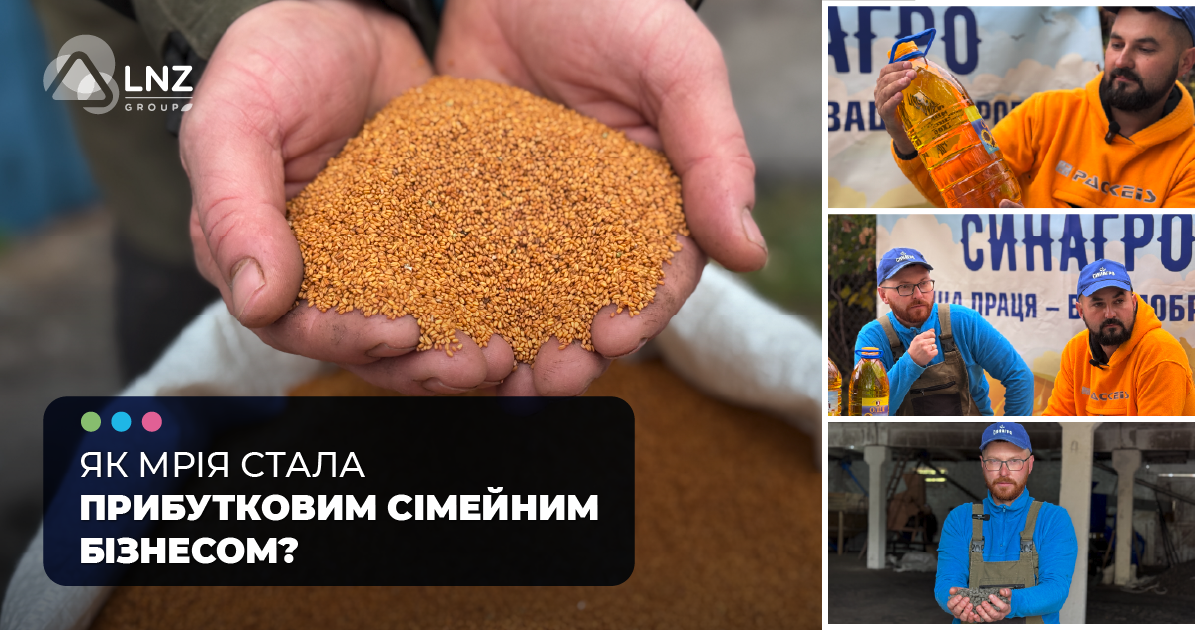 In the Pryluky district of the Chernihiv region, the "SYNAHRO" farm has already been operating actively for 7 years despite all the risks that the region is exposed to today. A small enterprise that started with 7 ha now cultivates over 100 ha of land. They grow all the main crops and even niche and melon crops, and are engaged in oilseed processing.
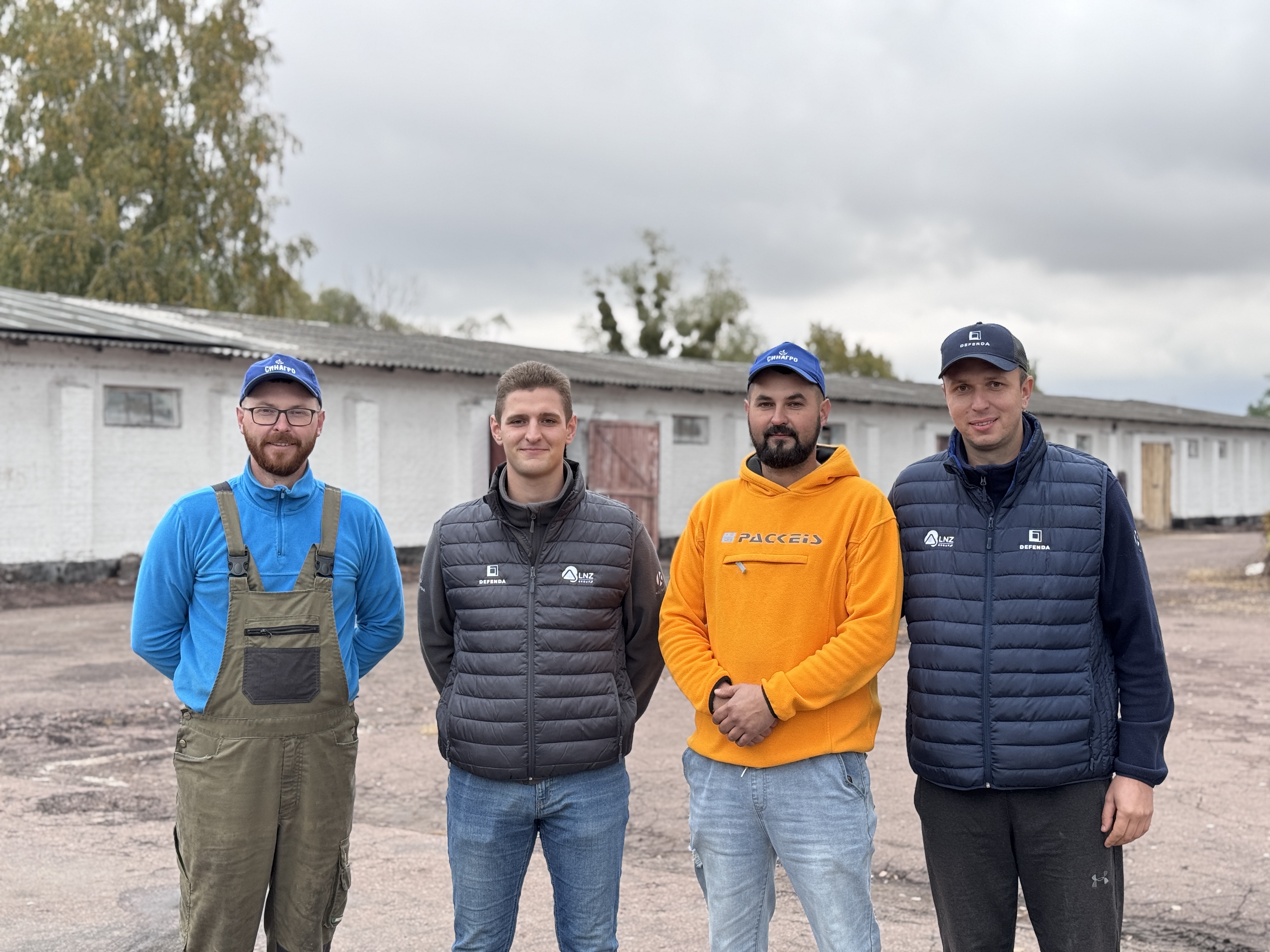 Two brothers, Dmytro and Serhii, and their father Oleksandr Mykolayovych Synenko work every day on improving their achievements. They constantly develop and learn new things. The owners are convinced that the approach to any business must be as efficient as possible, then the result too will be corresponding. The head of the "SYNAHRO" farm Dmytro Synenko told AgroPortal.ua about the ups and downs of the enterprise.
You have a family business. Tell us how and who founded the farm? When did you join the business?
Dmytro Synenko: I started working in 2016 together with my father Oleksandr Mykolayovych Synenko and my brother Serhii. Father took two land shares from an agroholding, we wanted to give them to a neighbouring farmer, we agreed with him, but he let us down somewhat. It was already May, and something had to be done with the land: to plough, disc, cultivate. The farmer told us that he could not manage, and asked whether we could help him plough the field, and we agreed. Next it was necessary to cultivate, to seal in the moisture, we did that too. And it turns out that it is already the end of May — one has to sow. We sowed, then thought that all that was left was to harvest the crop, so what sense is there in giving the field away? We are grateful to that farmer for giving us the push to start our own business.
At first not everything worked out, but we invested effort and money, gradually learned and later were already getting results.
We started with 7 ha of land, later were already cultivating 14 ha and gradually reached larger volumes of growing various crops. We liked agriculture, we wanted to work, we dreamed of buying our own tractor. We decided to officially set up a small farm. Serhii suggested the name "SYNAHRO" farm, and my father and I supported it. From the start we wanted to work honestly and sell the harvest with VAT. In the autumn of 2019, when we harvested the maize, we took out our first dollar loan at very significant interest in order to buy machinery. We did not know many things, so we learned from our mistakes. We began to pay off debts, and at the same time we acquired shareholders who believed in us and leased us their land. We work with them to this day and continue the lease agreements. They made the right choice then, and we now repay them with high rent and various bonuses! Many of the lands were overgrown with forest, we cleared them over three years. All this time we paid people money, until the full-scale war began. It became financially difficult for us, in 2022 we carried out the sowing late, because military operations were partly taking place on our lands, so we could not enter the fields. As a result of the late sowing the crops did not ripen, the harvest was poor, so we sold the grain very cheaply. We lacked the funds to settle with the shareholders, but we constantly communicated with the people, explained the situation, some treated it with understanding, some — on the contrary. Over the two years of the full-scale war we tried to resolve the problematic issue and finally in 2024 we fully settled for the land shares for all the years.
In our region we pay the highest price for land rent, moreover we help people and the community, we arrange amenities. We repaired the beach area for summer recreation, in winter we clear snow, we support the local house of culture, provide machinery, help to supply the population with firewood. People are satisfied, they thank us.
How are the duties distributed between you, your brother and your father?
Dmytro Synenko: Last year we consulted with Serhii and decided to divide the responsibilities so that it would be easier to work and control the processes. At first each of us thought about everything at once, everyone had all the pressing issues that should be resolved on the farm spinning around in their head.
Today Serhii is engaged in the oil mill, watches over the territory, the amenities of all the premises. For we bought the territory where we work a week before the start of the war, so there is a lot of work, everything was neglected. Serhii is putting everything in order.
I got the lands and everything connected with sowing, harvesting, storing the crop, as well as maintenance of the machinery, repairs, provision of services, working with people.
And father controls our work, comes every morning, gives advice on how to do this or that correctly, guides us, so to speak, onto the right path.
What crops do you grow, how much land do you cultivate?
Dmytro Synenko: At present we cultivate over 100 ha of land. We grow all the main crops: sunflower, maize, soybean, wheat. We bet more on cereal crops, we also try to grow more sunflower, but by the crop rotation it does not always work out. For the third year in a row we will be sowing malting barley. This year we tried to sow rye, because there is almost none of it on the market, and the price is good, and export has opened, which also raised the price. With such a crop rotation it is much easier to work, the sowing window is stretched out. Barley is sown earlier, then — other crops, and there is no load on one and the same period. Also the harvest can be gathered in turns. We thresh barley in July — this is early money that can be invested in fuel and lubricants and already begin to work the land for the next crop. Also the early harvest makes it possible to settle with the shareholders.
In addition, we sow soybean, this year we sowed wheat.
Earlier we sowed phacelia — this is a honey plant, good for bees. 10 ha were occupied by this crop, and the price for it was good. But then the situation changed: phacelia began to become very clogged with dicotyledonous weeds, and they cannot be destroyed with herbicides so as not to poison the bees, so we stopped sowing it.
 Instead we grow such a niche crop as camelina and process it into oil. This crop is one of the most widespread in our region, in the Pryluky area, however few people in Ukraine know about it, so we want to bring camelina to the domestic market specifically in the oil direction. For the third year in a row we grow watermelons and melons. The largest melon that we grew weighed 7.5 kg and had a simply superb taste. This year, because of the damp weather, almost all the melons perished, were affected by diseases, and we tried not to resort to treatments with chemical crop protection products specifically on the melon crops. The watermelons developed very poorly, they had too little warmth, so they ripened only in September. Although it is already not the season, watermelons are still bought or exchanged for potatoes, in our region such barter is popular.
Tell us about the soil tillage technology.
Dmytro Synenko: We generally like to experiment. We tried sowing by No-till too, we have a special seeder, but we still return to the classic technology. It is necessary to carry out the pre-sowing soil preparation efficiently, and the main thing — to feed all the crops, since our lands leave much to be desired.
We bought a combine and now provide services in the Cherkasy region. At present they are threshing sunflower and maize there. I very much liked that in that region you drive into every village and see two or three farms. This indicates that farmers have the opportunity to feed the crops with organic matter, which is very good for the soil and plants. In our region there is no such thing, all the farms were sold off, so we have to buy fertilisers. To obtain a sunflower yield of 4 t/ha, for example, one needs to have fertile lands. In the region there are such plots, but on our farm sandy soils predominate, and to achieve the maximum result, one needs to provide the crops with everything necessary. Last year we managed to harvest 3.5 t/ha of sunflower, and this is a very good result for our region. And this year we harvested only 2.5 t/ha, the weather had a great influence, it was cold. Given that with the application of organic matter the crops develop better, are more productive, we would also like to set up a farm, keep livestock, which would provide our farm with valuable fertiliser.
Tell us in more detail about the plant protection system. Which crop protection products do you use? What problems did you encounter this season?
Dmytro Synenko: This year was wet, we applied a soil pre-emergence herbicide from the company LNZ Group of the DEFENDA brand Starlent (propisochlor, 360 g/l + terbuthylazine, 190 g/l). We worked on maize and sunflower, we very much liked the effect, the product really works. Starlent copes well with annual grass and dicotyledonous weeds. Farmers come to us, we communicate, share experience. They asked what we had treated the fields with that they are so clean. The herbicide Starlent worked perfectly, after the plants emerged we did not treat the fields at all, since there was nothing to control.
We apply products as needed, if a problem arises, then we buy and apply them. It was wet, fungal diseases began to develop, we bought fungicides, treated and resolved the problem. Of course, we monitor the crops so as not to miss anything. This year we had small problems with the barley, we noticed black grain, which formed as a result of excessive moisture.
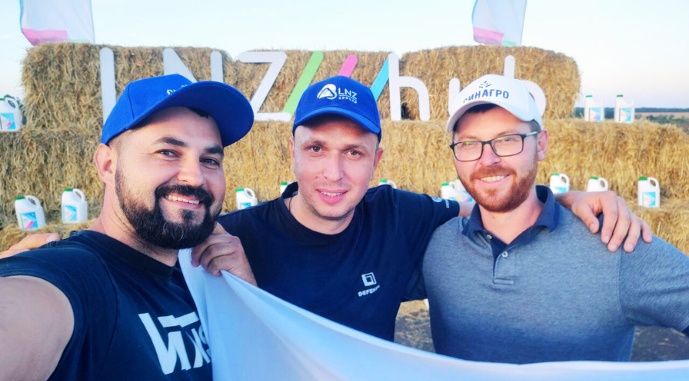 We immediately contacted the DEFENDA manager Oleksii Moliboh, he advised us what should be additionally applied, since we had previously carried out all the necessary treatments.
As a result the problem was quickly resolved. Also this year the cutworm damaged the rapeseed crops, Oleksii brought us a herbicide, we quickly applied it and destroyed the pest.
Overall we carry out plant protection according to an already worked-out scheme.
How long have you been cooperating with the company LNZ Group, in particular with the DEFENDA brand? What can you say about these products, the manager's work?
Dmytro Synenko: We have been working with the DEFENDA brand since we set up our farm, and we are very satisfied with the products. The DEFENDA manager in the Chernihiv region Oleksii Moliboh cooperates with us. He is very attentive, reacts quickly to our requests, always advises what is better to use and in which period. If we buy products, he brings them quickly. This is a very responsible manager and already like a friend to us.
Oleksii always calls us on the eve of the season, offers crop protection products. Last summer we already stocked up on products, thus we are confident that we already have everything necessary, and we can if needed apply this or that product without waiting for delivery.
When and why did the idea to create an oil mill arise?
Dmytro Synenko: We were interested not only in growing crops, but also in processing. We became interested in oil production even before the full-scale war, we started with the search for an oil press, travelled to the equipment production in the town of Khorol, in the Poltava region, studied the experience of oil plants. We understood that the investments in the oil mill would be enormous, we nursed the idea of creating a line for processing sunflower oil for five years, and the dream became reality. However, the war almost stopped us, but our enterprise's accountant offered to help, studied the question of grant assistance and found options. She submitted applications to various foreign organisations that provide non-repayable financial assistance to business.
Tell us about the investments in the oil mill.
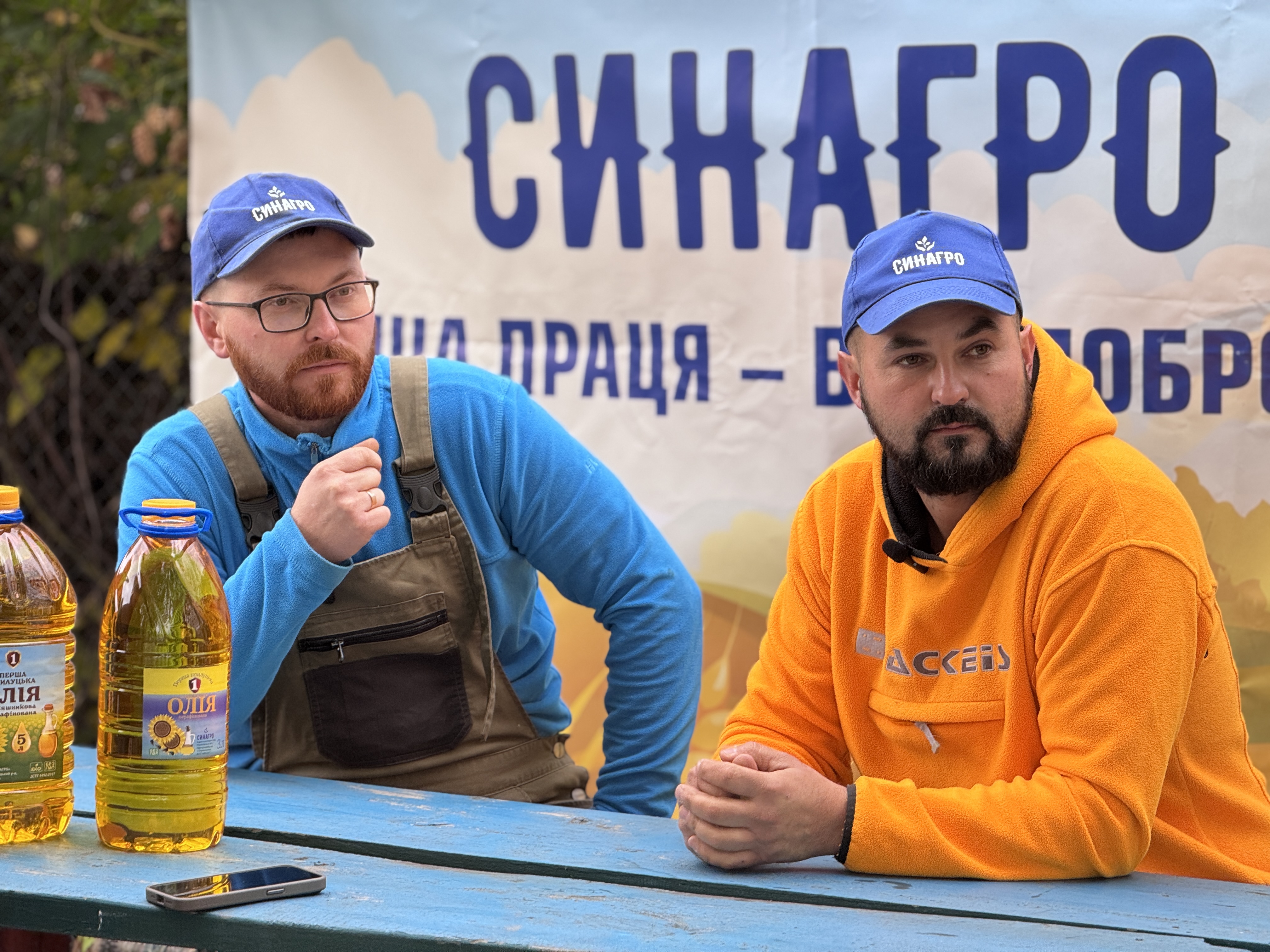 Dmytro Synenko: We managed to obtain assistance from the Mercy Corps humanitarian mission in the amount of UAH 811 thousand. Although we had budgeted a significantly larger sum in the business project — UAH 1.6 million (almost $40 thousand), since it was necessary to repair the premises, purchase and install equipment. Under the terms of the grant assistance, 50% of the funds must be contributed by the grant recipient, so we paid the rest of the sum. That was in 2022, the war had just started. We sold the grain at a low price then. It was very difficult: we owed the shareholders, and 800 thousand UAH had to be invested in the oil mill. Everyone told us to stop and not to start the sunflower processing project, but we consulted with my brother and decided to use the chance that was perhaps given to us once in a lifetime.
How did you start the oil production? Premises, equipment, what else is needed for an efficient production process?
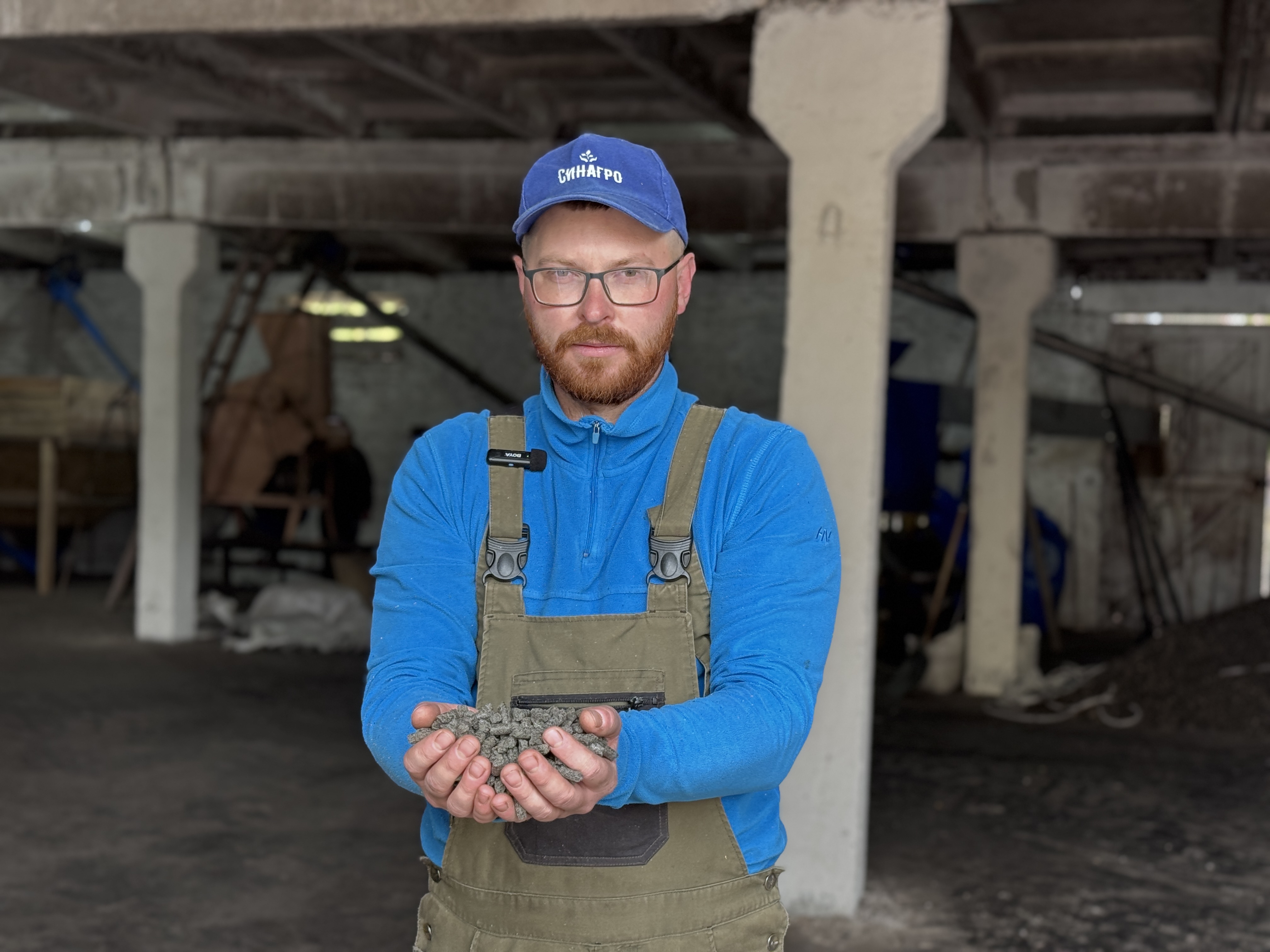
Dmytro Synenko: First of all premises are needed, then equipment. On the eve of setting up the oil mill we once again travelled to the manufacturing plant, looked, found out everything that is needed for efficient production. After some time we implemented the project and began to work. At present we have invested twice as much in the processing as was envisaged, and this is not yet the end. For, in order to reach a high level of production, ultra-modern technologies, one has to invest a lot of money and effort. With the grant of UAH 811 thousand we purchased equipment — a whole processing line (2 presses, augers, filters). We spent our own funds on a front loader, so that it would be possible to bring in the sunflower seed, we also bought a winnower, barrels for the already pressed oil of 30 thousand litres, partly spent money on the repair of the premises.
When we began to work, we understood that this is all only the beginning, since funds are still needed. We want to create a modern production, we plan to invite a commission that grants the right to work according to international standards, so that we can sell our oil abroad. Also we want to make a bottling shop, so that it would be possible to package the oil and export it abroad. You produce sunflower and camelina oil.
Tell us about the production technology.
Dmytro Synenko: The sunflower processing line at its first launch provided 25 t of oil, which we successfully sold to a trader. Beforehand we concluded a contract, our enterprise passed accreditation, all the due inspections, the products meet the quality standards. From the first time we managed to achieve a good result, the equipment turned out to be of high quality. We use both our own sunflower seed for processing and purchase it from other farmers. Besides sunflower oil, we also produce camelina oil, we use only our own raw material. We have learned to grow this crop with quality and we are responsible for its quality. Accordingly, the products come out of quality too, so there is no need to buy camelina from outside enterprises, moreover few grow this crop.
How do you achieve high product quality?
Dmytro Synenko: One must approach every job responsibly, one should always work as well as possible, and it will always come out badly. Therefore, when you approach the business with quality, the result too will be corresponding.
What are the production volumes of sunflower and camelina oil?
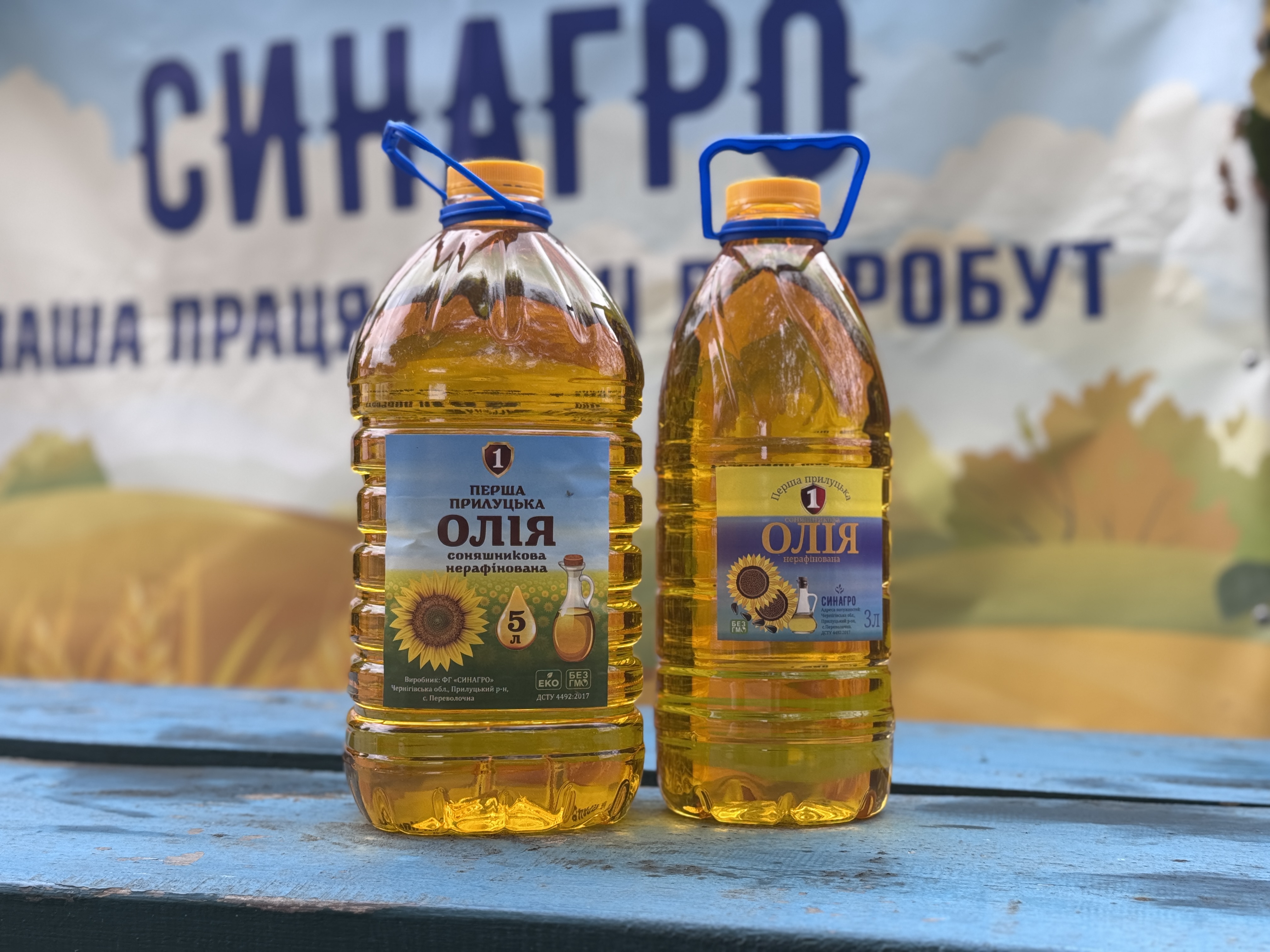 Dmytro Synenko: Our sunflower processing line can process 500 kg of seed per hour and produces cold-pressed oil. From 1 t of sunflower seed 400 kg of oil is obtained. And the equipment that processes camelina on our farm is a collective-farm oil mill (we bought the territory where it was already set up), and here the production technology is somewhat different. First the grain is crushed and roasted on large special pans, after which it is sent to the press, which presses the oil. Next year we want to buy a new pan on which the grain will be roasted, and we will try to produce camelina oil on a new line, then the product output per day will be larger too.
Where do you sell the products?
Dmytro Synenko: We sell sunflower oil to a trader in bulk. With camelina oil we want to enter the Ukrainian market and gain a foothold on it, since today the products are so far represented only in two districts. Also we have started to sell the oil through social networks, so other regions are joining too. Camelina oil is very tasty and healthy. This year we sowed twice as much camelina, produced more oil, and at present there is already none of it, people call every day and buy it all up.
Is this business profitable for you? Thanks to what?
Dmytro Synenko: At the very least — it is the formation of added value of the product. If in Ukraine all the raw material were processed, then more money would remain in our state. Oil is a profitable product, since it can be used for the production of other products — mayonnaise, for example. Also oil is used in the production of chips and so on. That is, it is a raw material from which one can further create added value. Therefore for us the oil mill is a profitable business, and processing in general is economically advantageous.
What other crops do you process or plan to process into oil?
Dmytro Synenko: At our oil mill they press oil from pumpkin seeds. We provide services to outside persons, people come from various districts. That is, we rent out the equipment. For now we are not thinking about processing other crops, we work with sunflower and camelina. In the future, perhaps we will expand the range, but not everything at once.
You work in the Chernihiv region. Is it difficult to run and develop a business? How do you manage to overcome the challenges caused by the war?
Dmytro Synenko: You just need to work, not raise your head up, so as not to look at what is flying in the sky, and something flies every day. We try not to think about the bad, despite everything we make plans, we want to expand production and processing. Perhaps a farm will appear one day too. With oil production we want to achieve stability on the market, increase production volumes, perhaps we will add some more crops to the crop rotation.