2021
There are no significant, or at least no obvious, risks or threats for either agricultural enterprises or landowners in connection with the adopted Law «On Amendments to Certain Legislative Acts of Ukraine Regarding the Conditions of Circulation of Agricultural Land» and the opening of the land market.
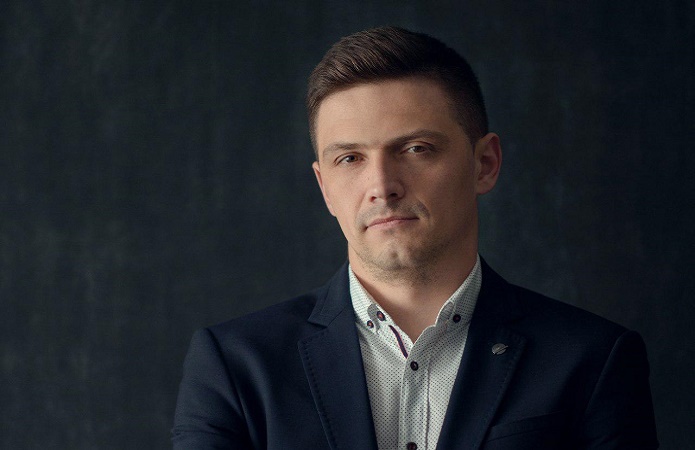 This opinion was expressed by Serhii Yakshyn, First Deputy Chairman of the Supervisory Board for Legal and Land Affairs of LNZ Group.
«I see no reason to reorganize the company's operations, change its strategy or take special measures in preparation for the opening of the land market, because nothing will fundamentally change in the way producers use agricultural land. In essence, there are no special measures in this case. Agricultural producers, like any other business entities, must be flexible in the face of various market changes and new challenges; they need to stay calm and focus on their primary goals, which will allow them to turn any changes to their advantage, including those taking place in the market environment», — notes Serhii Yakshyn.
He emphasizes that today the number of people willing to sell land plots is small. A certain category of people is emerging who plan not to sell but to buy land plots as an investment for the future. Moreover, no one knows for sure how the market price of agricultural plots will be formed or what it will be.
«There are no fundamental changes in LNZ Group's work with lessors of agricultural plots, but trends must be taken into account. The work should be carried out on an ongoing basis, through the most open dialogue possible and constant feedback from lessors about their needs and sentiments», — advises Serhii Yakshyn.
According to him, systematic work to increase the loyalty of agricultural land lessors will potentially lead lessors with long-term contracts to offer their land plots for sale specifically to the company that leases these plots on long-term terms. In this way, the transfer of land plots into the ownership of agricultural enterprises will take place in a virtually natural way.
«In reality, what matters for agricultural producers is the protection of their investments. The optimal production process is one in which the fixed assets, in particular land plots, are owned by the producer. But the format of attracting means of production, in particular land plots, on long-term lease terms is also quite acceptable and understandable for business. For classic agricultural producers, whose main goal is to earn income from agricultural products grown for their own needs or to order, the existing model of land relations, in which land plots are used on lease terms, is also quite optimal. Costs are fixed for a certain period of time, and there is no need to attract additional resources or reorganize enterprises' operations in response to changing market conditions. Both lessors and lessees aim to make a profit with clear costs», — notes Serhii Yakshyn.
He points out that once the land market opens, it will not immediately be clear how it will work; some inconsistencies, contradictions or unresolved issues are possible. As often happens when a law enters into force, some by-laws are missing, or purely technical problems arise, for example, registers do not work or do not work properly.
«For now, we look at the provisions of the Law «On Amendments to Certain Legislative Acts of Ukraine Regarding the Conditions of Circulation of Agricultural Land» as they are. There is no point in making forecasts or assumptions about how the market will work. But if we are to model an enterprise's business plan in market conditions where all agricultural land plots used by the enterprise are offered for sale, agricultural producers should consider the worst-case scenarios and be prepared for them», — believes Serhii Yakshyn.