2026
For years, critical drought in the southern region of Ukraine has forced farmers to reduce sunflower areas or reconsider its growing systems. Producers are choosing more drought-tolerant crops such as flax, winter rapeseed and peas, lentils, and are switching to moisture-conserving technologies.
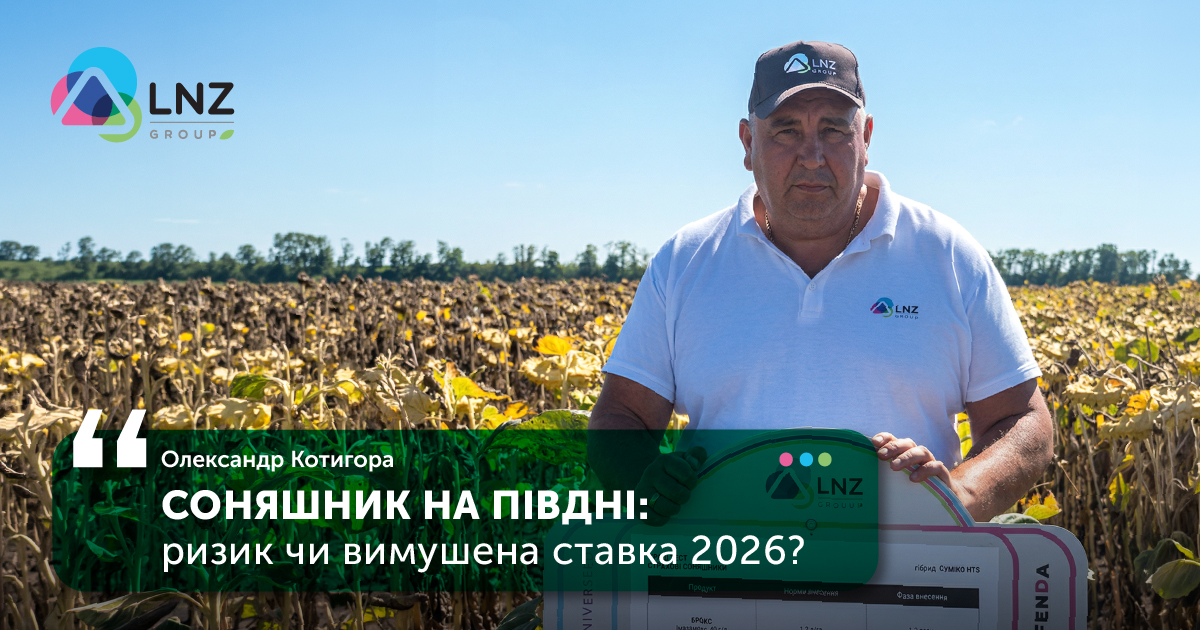 In summer the thermometer readings in the south reached +47-50°C in places, the soils are depleted, diseases spread en masse.
The agri-technology development manager for the Southern region of LNZ Group, Oleksandr Kotyhora, has noticed a trend towards a decrease in sunflower plantings and attributes it to a number of reasons:
- Critical moisture deficit. In 2025 there were more than 100 days without precipitation in spring and summer, and low-snow winters make growing sunflower risky.
- Temperature records (over +50°C) lead to yield shortfalls and deterioration of grain quality.
- Diseases and pests. An over-saturated crop rotation has led to the accumulation of diseases such as sclerotinia, downy mildew, which requires the use of fungicide treatment.
- Soil depletion. Long-term intensive cultivation of sunflower depletes the soils, thereby reducing the crop's yield.
- Economic feasibility. Due to low yields without irrigation, sunflower becomes less profitable than drought-tolerant niche crops.
In the south of the country, due to drought, the lowest sunflower yield indicators were recorded, and in places the complete death of crops, which forced farmers to change the structure of their sown areas. Oleksandr Kotyhora notes that the level of losses depends on the specific farm, but the trend indicates a decrease in average yield of more than 15% in the southern regions.
In 2025, as a result of extreme heat and drought, namely in the Odesa, Mykolaiv and Kherson regions, sunflower yield decreased significantly. The average yield was about 1.5 t/ha, which is approximately 14-20% less compared with the same period of 2024. On some farms in the south of the Mykolaiv region the sunflower burned up almost completely, while in the north of the region the crop showed better results — 2-2.5 t/ha. The same situation developed in the Odesa region. In general, the percentage of sunflower yield lost to drought in the Odesa, Mykolaiv and Kherson regions, in my opinion, was no more than 10%.
Due to the difficult weather conditions in the 2025 season, sunflower quality also somewhat deteriorated. Thus there was a trend towards lower oil content in the overall count. Although professional producers showed high results.
How farmers in the south fight the heat
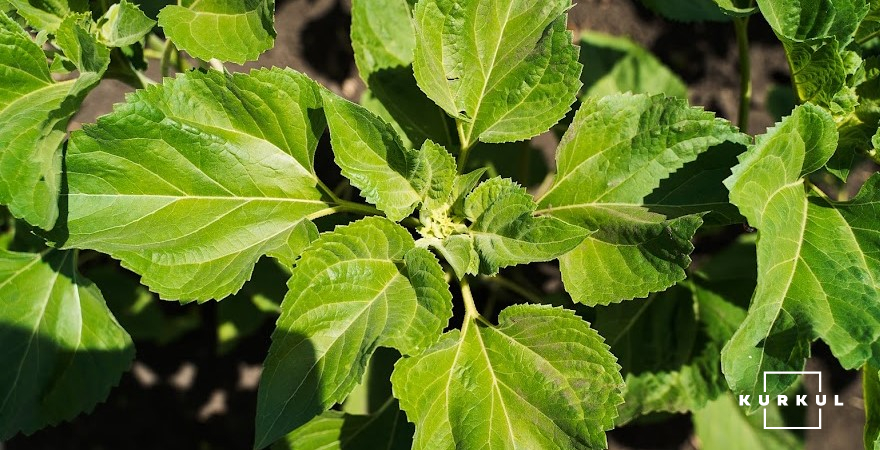 Adapting sunflower cultivation to climate change in the south of Ukraine includes switching to moisture-saving technologies. For example, No-till, Mini-till, the use of early-maturing drought-tolerant hybrids, early sowing dates, reducing crop density on average from 35,000 to 55,000 seed units per hectare, as well as rational nutrition. These measures allow plants to use soil moisture more efficiently.
Crop protection is also changing from purely chemical control to an integrated approach, reducing the pesticide load by means of biological methods.
"The main changes in sunflower protection schemes are related to climatic changes, which make heat-loving pests typical for the crop, the appearance of new fungal diseases and the rapid formation of resistance. Due to warming, the role of spider mites, aphids, thrips, cutworm is increasing. If we talk about diseases, then the spread of root rots, septoria, powdery mildew and other diseases is noted, which became active due to temperature stresses. Thus the formation of resistance in pests to insecticides and diseases to fungicides occurs, which requires frequent changing of active ingredients," notes the agri-technology development manager for the Southern region of LNZ Group.
Pest and disease control should be approached comprehensively
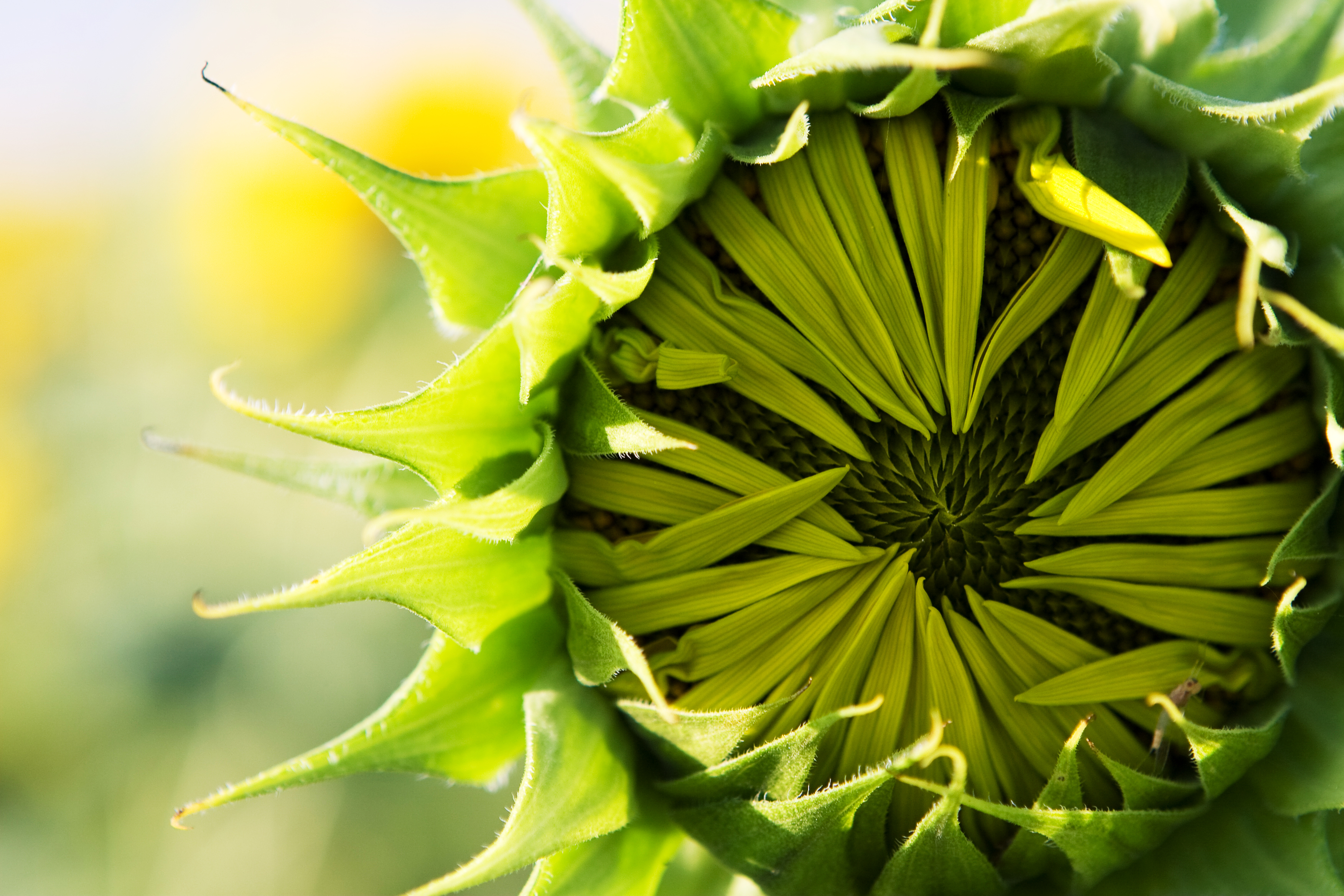 For the effective solution of pest and disease problems on sunflower, LNZ Group proposes applying a comprehensive approach that combines biological, agronomic and chemical methods. The main solutions include crop rotation, the use of resistant varieties, hybrids and biological products, spraying plants with fungicides and insecticides, which reduces the accumulation of pests in the soils, reduces their number and protects plants without harm to the environment.
The greatest effect is given by an integrated approach that combines these methods based on monitoring the state of the crops and the predictability of disease development. According to Oleksandr Kotyhora, in the southern regions the most sought-after products for sunflower protection were the following products from the DEFENDA brand of LNZ Group:
- Herbicides: Idaho, Sora-Net, Novante, Brox.
- Fungicides: Absolut, Paracels, Salto, Split Duo, Stark, Ultralin.
- Insecticides: Bombardier Duo, Kairos, Octant Turbo, Presto, Prosens, Synerid, Cyrkul.
All these products provide comprehensive protection of sunflower against weeds, diseases and pests.
Portfolio update: focus on increasing crop profitability
At the beginning of 2026, LNZ Group continues to actively update its crop protection portfolio, focusing on increasing sunflower profitability. The company offers an expanded line of DEFENDA brand products for intensive growing technology. An expansion of the range of DEFENDA soil herbicides and fungicides for protection against weeds and diseases in the 2026 season.
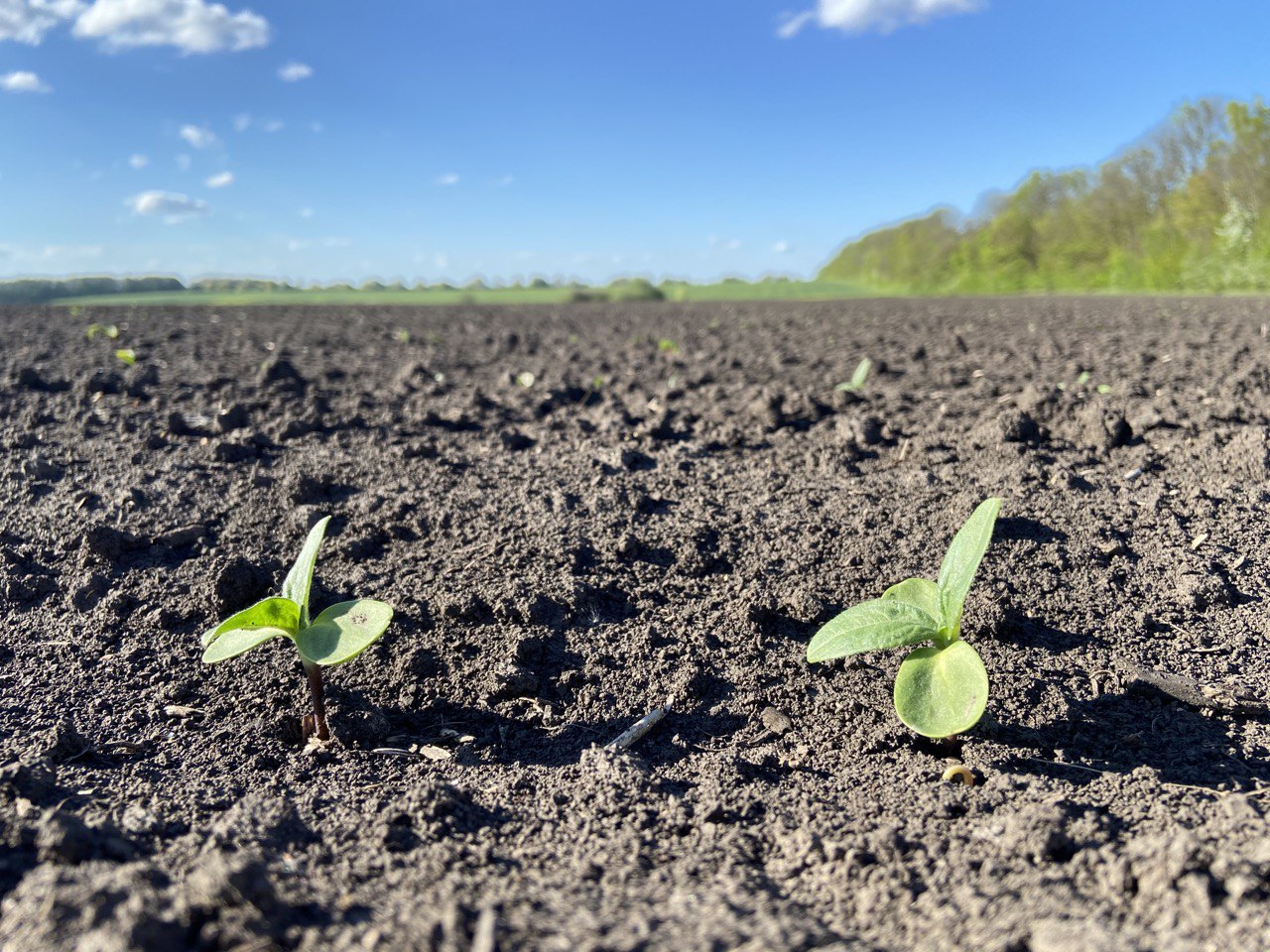 For example, Sahara Super is a modern soil herbicide based on acetochlor with a safener, designed to protect sunflower, corn and soybean. It creates a protective screen in the soil, destroying annual grasses and some broadleaf weeds, does not affect crop rotation and is effective even with a lack of moisture.
The fungicide Radical Neo is a two-component product of systemic action, whose uniqueness lies in the absence of resistance, combined with effective protection against a wide spectrum of pathogens with a long protective effect. Thanks to the active ingredient boscalid, the product is distributed throughout the plant, providing long-term protection against infections. Boscalid inhibits the mitochondrial respiratory chain of fungi, blocking ATP synthesis, which stops disease development. This is an innovative product from LNZ Group, which is a reliable tool for intensive growing technologies.
If we talk about growing sunflower in the south, then I would recommend that farmers definitely include in their growing technological maps the herbicides: Sora-Net (active ingredient propisochlor, 720 g/l), Perun (prometryn, 500 g/l), Sahara Super (acetochlor, 800 g/l with safener). As for herbicides for sunflower under IMI technology, I would recommend: Impreza (imazamox, 33 g/l + imazapyr, 15 g/l), Brox (imazamox, 40 g/l). Post-emergence herbicides, graminicides, for example: Haruma (quizalofop-P-ethyl, 125 g/l), as well as Blade (clethodim, 120 g/l). Backup herbicides: Ailar SC (aclonifen, 600 g/l) — for fighting broadleaf weeds in sunflower crops.
The specialist also notes that fungicide protection of the stem and head will be well provided by: Absolut (carbendazim, 500 g/l), Radical (boscalid, 500 g/l), Radical Neo (azoxystrobin, 250 g/l + boscalid, 150 g/l), Paracels (flutriafol, 250 g/l), Salto (thiophanate-methyl, 500 g/l), Split Duo (difenoconazole, 125 g/l + azoxystrobin, 125 g/l). And also one more product that has shown itself extremely effective, especially in the early stages of sunflower protection — Ultralin (cymoxanil, 300 g/kg + azoxystrobin, 250 g/kg).
"Once you have protected the sunflower from weeds and diseases, insecticide protection will definitely be needed. Of the insecticides I would recommend: Bombardier Duo (imidacloprid, 300 g/l + lambda-cyhalothrin, 100 g/l), Kairos (flubendiamide, 480 g/l) — by the way, this product is safe for bees. Octant Turbo (thiamethoxam, 141 g/l + lambda-cyhalothrin, 106 g/l), Presto (clothianidin, 200 g/l + lambda-cyhalothrin, 50 g/l), Prosens (emamectin benzoate, 100 g/kg), and, of course, also the bee-safe insecticide Synerid (thiacloprid, 240 g/l).
In addition, if you need to dry down the plants in order, for example, to quickly harvest the sunflower from the field, then you should not forget about desiccants. A good choice would be Dikvalan Max (diquat dibromide, 374 g/l) for accelerated ripening of sunflower," advises Oleksandr Kotyhora.
Exclusive on the NK Kondi sunflower hybrid from Syngenta
The classic mid-maturing intensive-type hybrid NK Kondi is known for its high yield potential and record oil content. Maturity group — mid-maturing hybrid, vegetation — 112-115 days, oil content very high — up to 54-55%. Yield potential is assessed as very high — up to 5 t/ha, but the hybrid requires fertile soils and a high agronomic background. Resistance to broomrape — races A-E.
For the southern regions there are certain risks in growing this hybrid.
Firstly — broomrape. In the southern regions broomrape races G and higher are often widespread. Since NK Kondi is resistant only to five broomrape races (A-E), it can be infested by the parasite.
Secondly — drought tolerance. This hybrid has good drought tolerance, however it belongs to the intensive type. This means that under severe drought and on poor soils it will not be able to fully realise its potential.
Thirdly — the agronomic background. The hybrid gives the best return on high agronomic backgrounds, which can be a difficult task under conditions of a critical lack of moisture.
Despite the reduction in sunflower areas in recent years, in 2026 in Ukraine, and in the south in particular, sunflower plantings are expected to grow by an average of 5-20% due to the crop's high economic efficiency and the need to maintain farm profitability. Despite the risks of violating crop rotation, farmers, in particular in the south, choose sunflower as a reliable crop because of its stable demand.
"Sunflower remains one of the most profitable oilseed crops. Its cultivation is also dictated by security risks. In the event of a field being damaged as a result of shelling, the losses from losing sunflower will be smaller than wheat or flax," explains Oleksandr Kotyhora.
The specialist notes that this winter there is quite good soil moistening and sufficient precipitation, so sunflower remains a priority. The growth of areas under high-oleic sunflower inclusive is considered as a tool for supporting the economy of agricultural enterprises under conditions of financial pressure.
Source: agroportal.ua