2025
 In recent years situations often arise when farmers need to manage to sow everything planned in tight timeframes, using the optimal weather and the available moisture in the soil. Since sunflower seed does not swell and germinate as quickly as maize seed, it is believed that it calmly withstands spring frosts. And accordingly sunflower can be sown at early dates without reservations, regardless of the soil temperature.
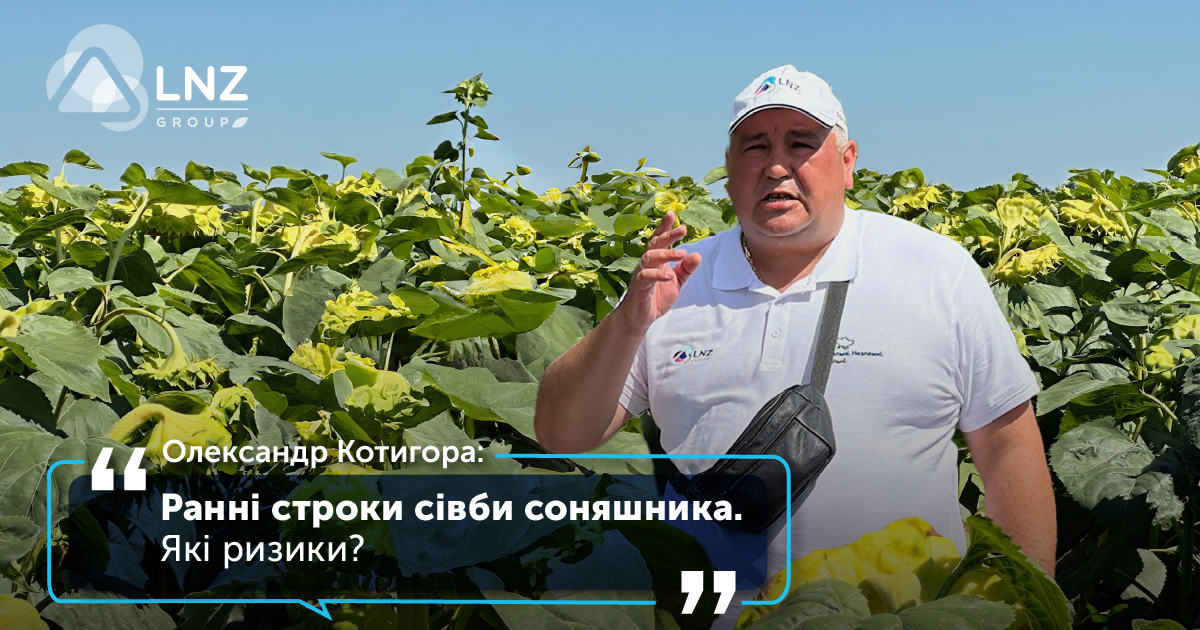
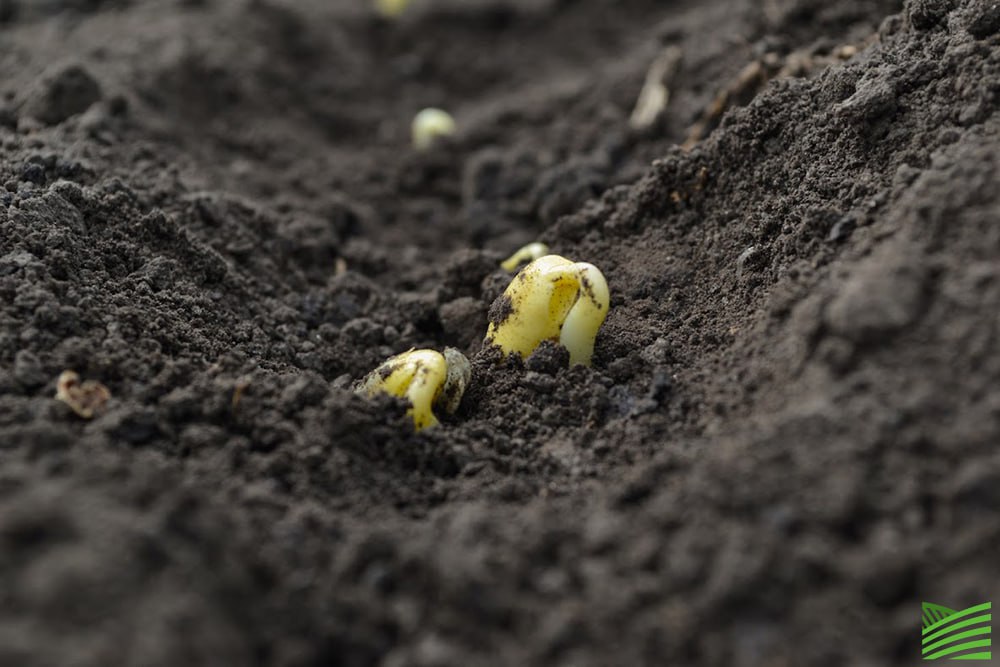 However, as Oleksandr Kotyhora, agri-technology development manager for the Southern region of LNZ Group, noted in a comment for SuperAgronom.com, in reality this is risky. For, in the case of sowing sunflower into cold soil, the risk of losing the field germination increases. Since the seed will lie in the moist and cold soil significantly longer, this can have a negative effect on its sowing qualities, because in these conditions it has more chances of being affected by diseases and pests, which in the end will reduce the field germination of the seed.
A cold start can also lead to the seedlings not managing to develop into an adult plant during the period of action of the protection products with which the seed was treated. This will lead to early disease damage. The greatest damage can be caused by the diffuse form of downy mildew.
"Ultra-early sowing, almost from February in the steppe zone, in general carries a great risk of freezing stress and death of the plants. For no one has cancelled low temperatures and frosts. A somewhat different matter is early sowing. It is far from rare in Ukraine. Although it is also quite problematic: the mean daily temperatures in the period of early spring are stable and unstable, and can fluctuate over a day from +18 °C in the daytime and down to -4 °C at night. That is, early sowing is also a significant risk. Overcooling at this stage negatively affects the germination of the seed and the uniform appearance of the emergence, which is an important prerequisite for obtaining a high sunflower yield," emphasises the expert.
He adds that a long period from sowing to the appearance of the shoots leads to the premature depletion of the internal reserves of the seed, its growth energy. That is, low temperatures significantly lengthen the period from sowing to emergence.
"There are such data that this period can reach 36-37 days and even more at a constant soil temperature of 3-5 °C. Although in some studies there are other data, which may differ. Such discrepancies regarding the study of the duration of the period from sowing to the appearance of emergence, noted in the works of a number of scientists, are usually explained by the genetic differences of the original material. One way or another, the time until the appearance of emergence increases. As a result, weakened plants largely lose the ability to resist the development of weeds, diseases and pests. In particular, specialists of agrochemical companies warn that sunflower seedlings in such a case do not manage to develop during the period of action of the protection products with which the seed was treated," says Oleksandr Kotyhora.
He also notes that one of the factors that has a positive effect on the germination of the seed at low temperatures is its high oil content. This pattern manifests itself at an air temperature below 8 °C, and a soil temperature below 9 °C. At higher temperatures this dependence is practically levelled out.
In general, says the expert, the experience of growing sunflower in Ukraine and the available data indicate that with sowing at later dates in the presence of moisture in the soil, as a rule, higher harvests are obtained. And specialists warn: even if sunflower avoids the obvious risks of overcooling at the early stage of the growing season, negative consequences may still be present. This is both a shortfall in yield per hectare, and the quality indicators of the seed, a reduced oil content, a lower content of oleic acid in high-oleic hybrids and so on.
"So, we draw the conclusions: the optimal sowing dates of sunflower in Ukraine play a key role in ensuring a high yield and quality of the seed. Studies show that the best conditions for sowing are the spring period, when the soil temperature reaches 10-12 °C of warmth. This makes it possible to avoid the risks associated with the drying-out of the soil and uneven emergence. It is also important to take into account the weather conditions, since early sowing ensures better use of the spring moisture. Therefore the sowing dates need to be adapted to the climatic features of each region in order to achieve the maximum result," sums up Oleksandr Kotyhora.