2025
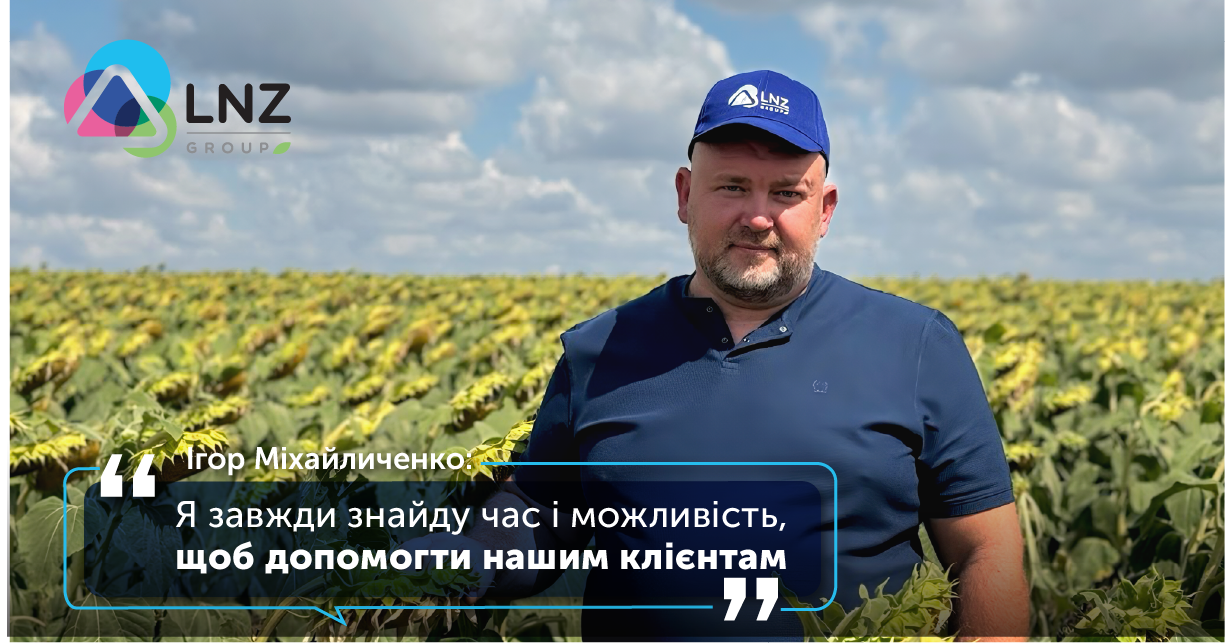 The agronomist-consultant of the Zaporizhzhia and Dnipropetrovsk offices of DEFENDA Ihor Mikhailychenko successfully combines agronomy with the sale of DEFENDA brand plant protection products. He consults his clients and helps them find effective crop-protection solutions for achieving high harvests.
Ihor chose the profession of agronomist consciously, since he was always fascinated by the process of growing plants and observing their development. He derives satisfaction from caring for crops, creating optimal conditions for their growth and seeking new solutions for increasing yield. By the way, Ihor Mikhailychenko earned his first money exactly from the sale of agricultural crops — watermelons and tomatoes. It was exactly this that strengthened his aspiration to work in agronomy and develop his own professional mastery.
A personal visit and an individual approach to each client
Ihor Mikhailychenko is always on the move, he plans his work a week ahead, knows whom he will go to and how he will solve problematic issues. Together with clients he creates technological maps, goes out into the fields, gives recommendations, advises how and what to do.
He considers that live communication is much more effective than a telephone conversation. One can solve many issues by visually seeing the problem.
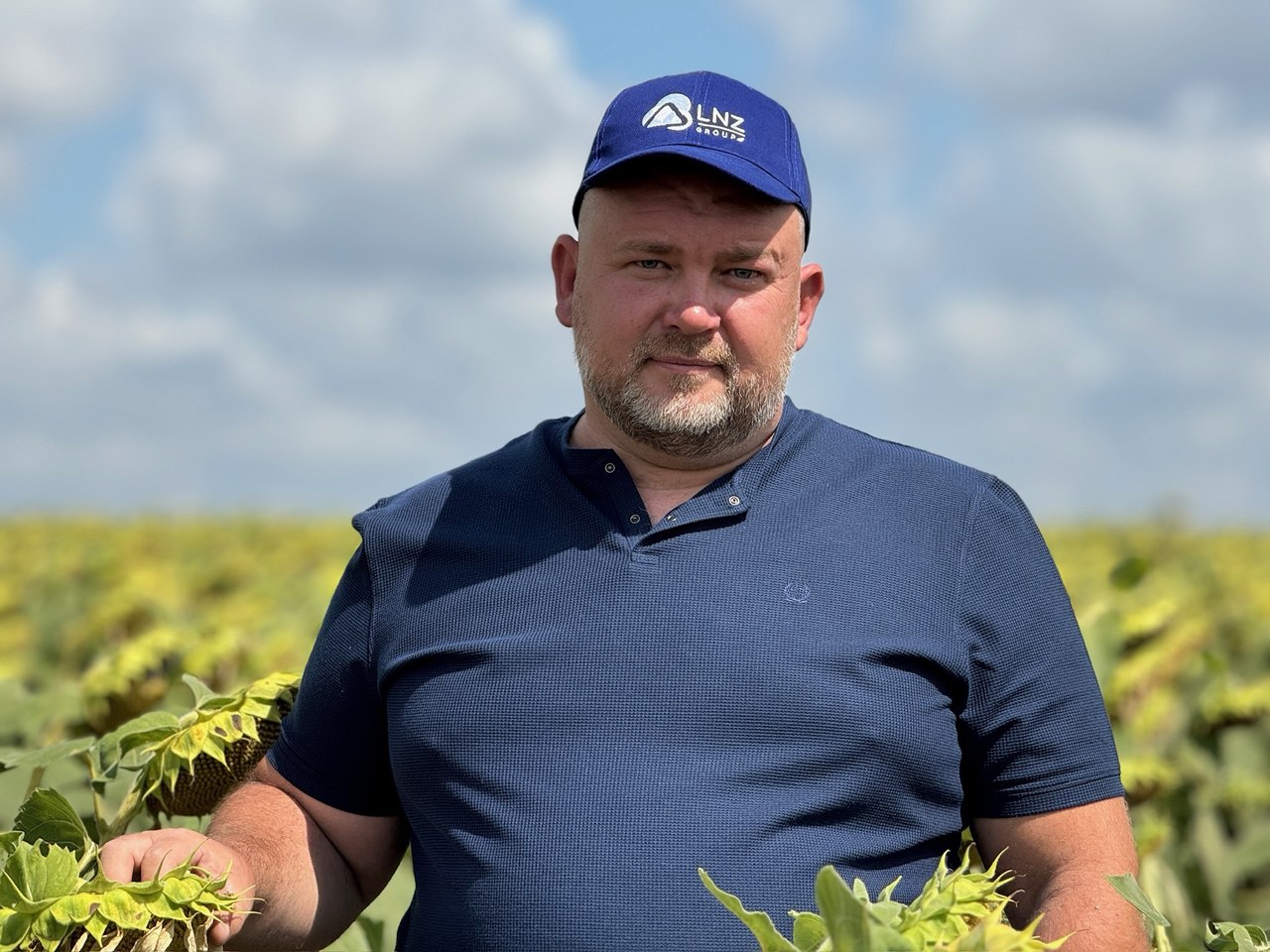 In the Zaporizhzhia and Dnipropetrovsk regions there is not a very large number of farms that have agronomists, so the owners need consultations.
Ihor Mikhailychenko fruitfully cooperates with each client. Sometimes he has to urgently come to a farm in order to help, so he plans his visits so as not to miss anyone and give attention to everyone. In the region there are many farms that work under constant shelling, but the specialist visits them too, providing agronomic services in time, and brings the necessary crop protection products.
Ihor has an individual approach to each client, with some farmers he has been cooperating for over 20 years. Among the clients are many farms that began their activity back in the 90s, and there are new ones too. Farmers need quality products at an affordable price, since the priority now is economy. So the manager offers crop protection products from the DEFENDA product portfolio, which is quite extensive, so there is the possibility of solving any problem in the field — with diseases, and with pests, and with weeds.
Farmers are satisfied with the quality services of the agronomist-consultant and the crop protection products
The owner of the "OLENA-2017" farm Mykola Maksymenko has been cooperating with the company LNZ Group for 4 years now, and all this time has been using DEFENDA brand products. The farmer says that it is very comfortable to work with Ihor Mikhailychenko: he always advises what is needed, when it is needed and offers effective protection for the plants. In addition, he recommends how to apply the products, exactly when and with what rates one should work, in order to achieve the maximum effect.
Ihor Mikhailychenko comes to the farm three times a week during the season, together with the owner they inspect the fields, determine where and which treatments need to be carried out, seek solutions. In general, notes Mykola Maksymenko, he is very satisfied with the cooperation with the manager and the plant protection products.
Last season on the farm's sunflower crops against weeds they applied DEFENDA brand herbicides — Sora-Net and Idaho at a rate of 2 l/ha + 1.5 l/ha respectively. They also used the insecticide Bombardier Duo, and also the fungicides — Ultralin and Dot.
Sunflower on the farm is grown by a special technology: it is sown at 33 cm, which makes it possible to preserve moisture, of which in recent years in the Zaporizhzhia region there is too little.
In connection with the blowing up of the Kakhovka HPP, problems arose with the irrigation of the lands. On the border of the Dnipropetrovsk and Zaporizhzhia regions the sprinkler machines remained — earlier there were approximately 8 thousand ha of lands under irrigation here, they grew maize and soybean under irrigation. Since at present there is no more irrigation, farmers have switched to a moisture-preservation technology, sow crops at a different density, try to get out of the situation by changing technologies. They hope that the Kakhovka reservoir will be rebuilt and irrigation will work again.
According to the owner of the "OLENA-2017" farm, the sunflower growing technology was observed correctly. They carried out growth regulation of the crops, all the necessary treatments, worked ahead of the situation.
As for other crops, then because of the frosts, which in places reached -8 °C in the gullies, the rapeseed got it: the grains in the pods were torn apart, and last year's harvest was not as planned. Rapeseed was also sown for the 2025 season, they preliminarily carried out discing, fought the weeds, applied a broad-spectrum herbicide.
Learning and development — a manager's successful activity
To achieve effective work results, all DEFENDA managers actively cooperate with the heads of subgroups, jointly solve problematic issues, consult and implement the decision made.
As the head of the DEFENDA sales subgroup of the Dnipropetrovsk region Oleh Kimlichenko relates, at the company they developed a special programme, the aim of which is the motivation of the agronomist, which depends on each sales manager. The programme was tested in 2023 and 2024 and they have good results, so they hope that it will be so in the following seasons too.
Sales managers study a lot, lay out trials, observe the growing season of the crops. For example, maize is sown by different methods: last year they sowed 45-50 thousand seeds per hectare. They work out such a system over years, so they achieve high harvests given the hot climate.
At the company LNZ Group there is always something to grow towards, notes Ihor Mikhailychenko. To young agronomists who are still studying, he recommends working at a farm for 1-2 years, and then one can go to work at a company as an agronomist or sales manager. To become a good agronomist, one needs to go through the appropriate school, since here the main thing is practice.