2025
 In the Cherkasy region the eighth season of the LNZ Hub 8.0 agricultural demonstration platform has started. This is over 200 trials, crop crash tests, excursions to plants and live discussions of solutions for farms, writes SuperAgronom.com.
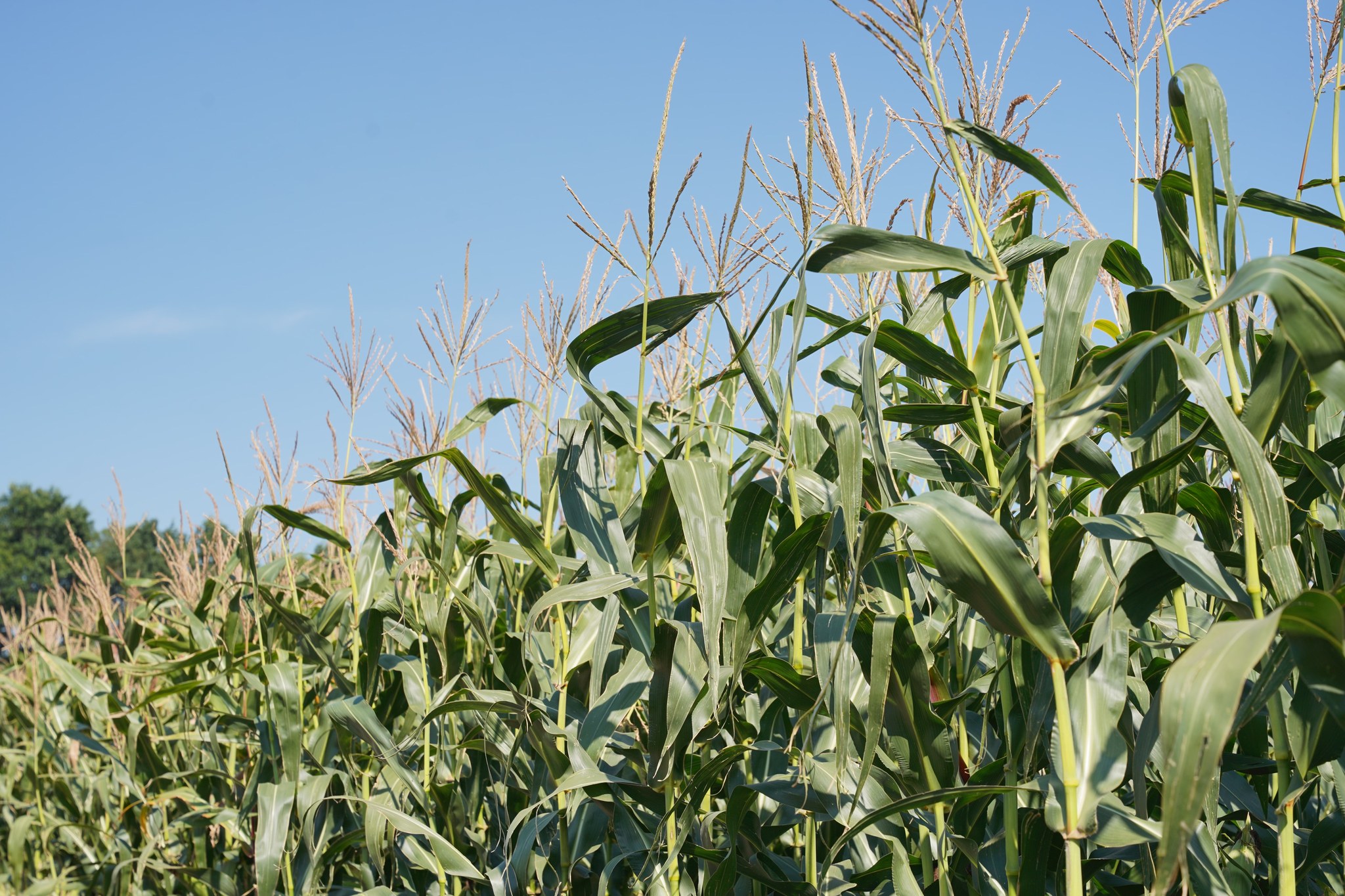 As the head of the LNZ Group agro department Oleksandr Khmeliuk related, the features of the current season affected maize the most. In particular, because of the spring frosts and temperature fluctuations, problems with the action of herbicides were noted.
"In the 2025 season, because of the fairly cool conditions at the end of April and at the beginning of the third decade of May, when night temperatures dropped below 10 °C, down to 2-4 °C, on early sowings there was often a need to apply post-emergence herbicides during this period, especially in fields where the main (soil) herbicides were not applied. As a consequence, we quite often observe a manifestation of sabre-shape of the plants and a reduction of rows on the maize cobs, where near the base of the cob there may be 18, and towards the top only 8-10, so the cob has a pyramidal shape," the expert related.
Also, according to him, the current year was quite tense for maize in terms of pests.
"In maize crops in the central, southern and south-eastern regions a significant load of lepidopteran pests was observed — the European corn borer and the meadow moth, the cotton bollworm and the winter cutworm. In some regions 20-30 individuals per night were recorded in traps, which significantly exceeds the harmfulness threshold. Such development was promoted primarily by the mild winter and the dry and hot weather in June-July in these regions," noted Oleksandr Khmeliuk.
He added that, given the weather conditions, the significant development of lepidopteran pests, including the winter cutworm, on maize and sunflower crops, one can forecast an increase in the amount of grain that is in the zone of risk of infection with fusarium, and the degree of damage will depend on the weather conditions during the ripening period of the harvest and on the harvesting dates.
As for the locusts, which this year showed abnormal activity primarily in the southern regions, the expert noted the reality of the threats and the difficulty of fighting this pest.
"When information about phenomena of active spread and migration of locusts began to appear on social media, we received many appeals from clients, and the calls were also from the northern regions, and not only from the southern ones. In this case the matter is not about the products, because most of those available will be effective — both contact and systemic. The problem is the quantity of locusts and their appetite, this 'herd' needs to be fed. That is, one needs to treat with insecticides vast territories ahead of them along the course of their movement, including not only agricultural land, which practically makes such treatment impossible," emphasised Oleksandr Khmeliuk.