2021
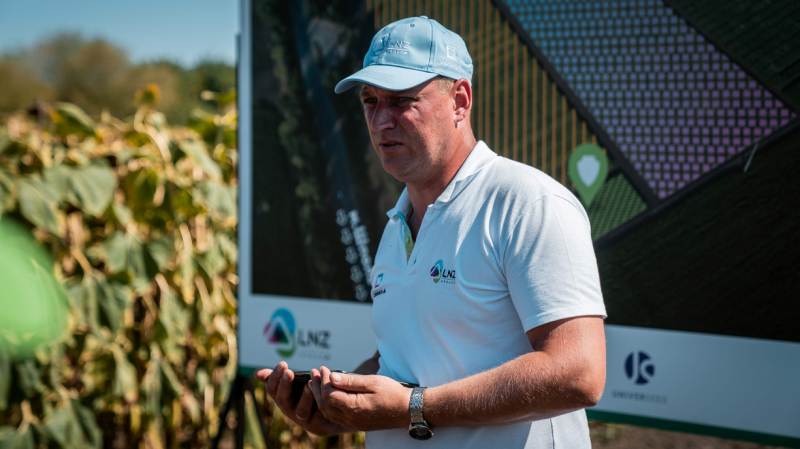
The choice of products depends first and foremost on the goal. Using crop protection products is an investment that must pay off. This is the view of Oleksandr Khmeliuk, agrotechnology development manager for the western region at LNZ Group, agronomist and Candidate of Agricultural Sciences.
So SuperAgronom.com talked with Mr. Oleksandr to learn about his path in agronomy and his view on the current challenges facing specialists in this field.
Oleksandr Khmeliuk has been in agriculture for almost 30 years. He studied at what was then the Kamianets-Podilskyi State Farm Technical School in the «Agronomy» department, and later at the Podillia State Agrarian and Technical Academy at the «Faculty of Agronomy». He began his career in 1999 as a seed-production agronomist at the Dzerzhinsky collective agricultural enterprise in Kamianets-Podilskyi district, Khmelnytskyi region, and to this day all his experience has been connected in one way or another with agriculture, particularly agronomy.
SuperAgronom.com: You have worked as a lecturer at educational institutions. What experience did teaching give you? How would you assess the training of future specialists then and now?
Oleksandr Khmeliuk: I worked as head of the educational and research field of the PDATU College, where students gained practical experience in agronomy. While still a postgraduate student, alongside my research work, I began teaching: I was assigned the course «Plant Physiology». I had to devote a lot of time and attention to preparing for classes, since I had trained as an agronomist, not a biologist. I never aimed for students to «memorize» definitions or rules; my goal was to teach them to understand the processes of plant growth and development. This approach also prompted me to rethink my approach to crop cultivation technology and agronomy as a whole. After all, the purpose of a technology is to meet the needs of the crop. Knowing the biological characteristics of a crop and its environmental requirements, and comparing what is needed with what we have, we arrive at what needs to be done, that is, the technology.
Training modern agricultural specialists is a rather labor-intensive and knowledge-intensive process. Today we have a situation where students lack practice in modern agricultural production conditions; there is often a lack of self-motivation and a failure to understand the value and importance of student years in shaping a future career.
SuperAgronom.com: In your observation, who is more flexible in making decisions and applying new technologies — young agronomists or experienced ones?
Oleksandr Khmeliuk: Flexibility in decision-making comes with experience, which should be diverse. As for applying new technologies, in my opinion, the decisive factor is not age but the desire to learn something new and to develop. Of course, young people find it easier to master various gadgets, but these are only tools. Fundamental things remain unchanged, such as crop biology, the influence of environmental factors and their interaction.
SuperAgronom.com: Which tillage technologies do you prefer? Do you test no-till or strip-till, or do you lean towards classical methods?
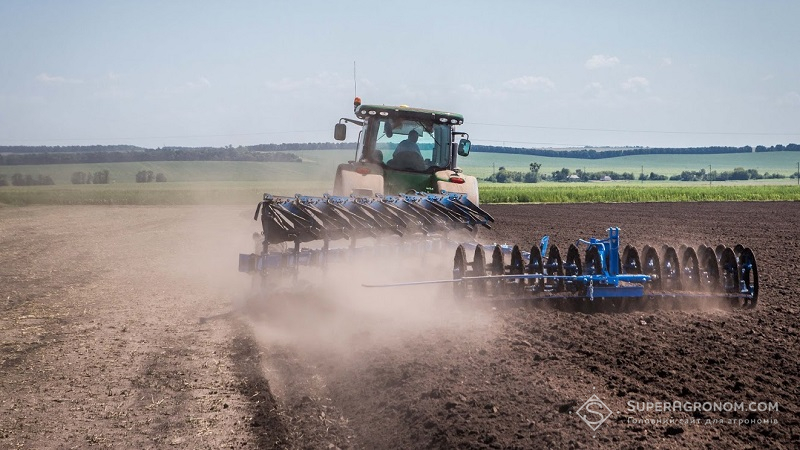
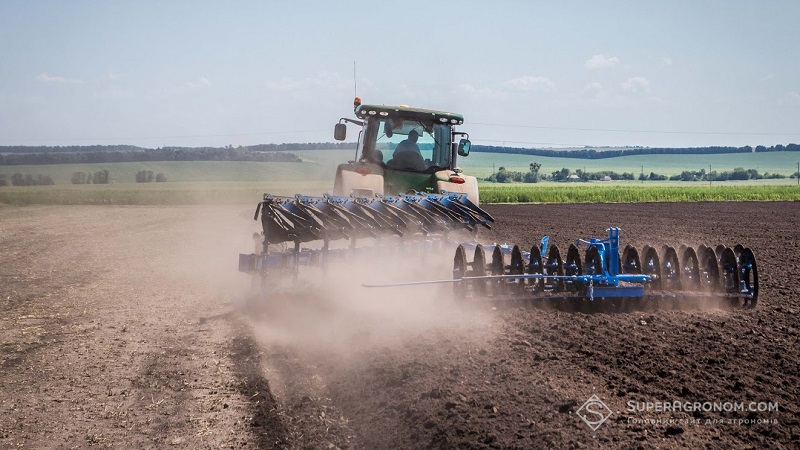
Oleksandr Khmeliuk: I do not favor any single tillage method. Each has its advantages and disadvantages, and it should be chosen based on the specific conditions of the farm, or better yet, the field. Tillage intensity depends mainly on soil texture: the heavier the soil, the more intensive tillage it requires, and vice versa. About 15 years ago, many farmers switched to no-till, but when they did not get the desired result, they were forced to return to the classical tillage system. They had not taken all factors into account. For example, the natural bulk density of heavy soils is 1,4-1,6 g/cm3 and sometimes higher, while most of our crops require 1,2-1,3 g/cm3. It would have been worth working on the soil first, in particular increasing the organic matter content, but this is a long process that can take 5-10 years or more.
The main reason for abandoning ploughing is the climate change we are seeing today, in particular the sharp decrease in precipitation. However, the solution is not to abandon ploughing and switch to surface tillage. To overcome this problem, we need to increase the soil's ability to accumulate and retain moisture in the deepest possible horizon. To do this, the soil structure must be improved and its capillaries restored, through which moisture will descend (accumulate) in the autumn-winter period and rise during the crop growing season. In all other cases it will run off the surface, and the efficiency of the already scarce precipitation will be low.
SuperAgronom.com: What criteria do you recommend for choosing crop protection products?
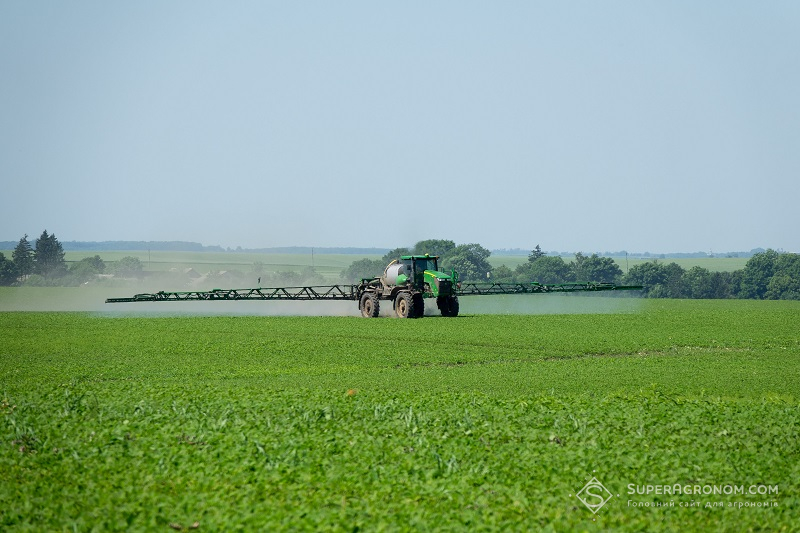
Oleksandr Khmeliuk: The choice of products depends first and foremost on the goal. Using crop protection products is an investment that must pay off. Profit is the difference between the value of the harvest and its production cost. Value is what will be in the future, while production cost is what we influence now. Therefore, investment in crop protection products should be approached carefully. The use of crop protection products can be divided into two approaches:
1. When we work preventively.
In this case, we need to correctly forecast the risks that await us, taking into account the condition of the field, the crop, the previous crop, weather conditions, expected harmful organisms and more. This approach is mainly used by large companies that have to purchase crop protection products in advance.
2. When we work once harmful organisms appear.
In this case, we can select the product or active ingredients most precisely, taking into account the crop, its growth stage, weather conditions and the harmful organism itself. The use of single-component products, in particular from the DEFENDA brand, becomes especially practical, as it makes it possible to optimize costs significantly.
This method is more suitable for farms that have close, well-established ties with suppliers able to deliver the necessary products at short notice. One such partner is LNZ Group, which has a network of regional warehouses and representative offices and qualified agronomic support to help with product selection.
SuperAgronom.com: How should one approach the choice of seeds and specific hybrids/varieties, given climate change?
Oleksandr Khmeliuk: Choosing a variety or hybrid is one of the key elements of cultivation. For crops grown from hybrid seed, long-term trials show that the share of the hybrid's (genetics') influence on yield equals that of the cultivation technology and amounts to approximately 30 %. For crops grown from varieties, the influence of the variety (genetics) is much smaller, and the technology applied is more important.
Thus, the choice of hybrid should be approached more carefully, taking into account all factors: the climate zone (precipitation and the sum of effective temperatures for the crop), the soil and its potential, the phytosanitary condition of the field, the potential sowing and harvesting dates, the tillage system and more.
The climate changes we have observed recently indicate that we should choose hybrids with a somewhat shorter growing season, which are highly adaptive (Flex hybrids) and can make full use of the available moisture, have high drought and heat tolerance, flower early and so on.
SuperAgronom.com: Name the main components of a successful cultivation technology that, in your opinion, every farm should have.
Oleksandr Khmeliuk: There is no single right solution that could guarantee success for everyone. Each farm or field will have its own successful technology. The approach I like best is a conditional division of the technology into three components:
- The «Foundation», which covers the period from harvesting the previous crop up to and including sowing, where we must meet all the crop's requirements for soil and nutrition and ensure uniform emergence. This is when the potential is laid down, and it is practically impossible to increase it afterwards. It determines at least 70 % of the future harvest.
- The «Frame» is the actual plant growth period from emergence to flowering.
- The «Roof» — is the period from flowering to harvest.
In the second and third periods, it is important to maintain (protect) the potential laid down and to prevent its significant reduction (although it will definitely decrease); it is no longer possible to substantially increase the yield potential at these stages. During the growing season and up to flowering, the negative impact of harmful factors, in particular weeds, diseases and pests, must be controlled.
 SuperAgronom.com: Which cases from your work do you remember most?
Oleksandr Khmeliuk: Over the course of my career there have been quite a few curious cases. One of them was when, in soybean crops where potatoes had been the previous crop, we fought volunteer potatoes with the help of the Colorado potato beetle. We were in no hurry to destroy it; when it had almost finished eating, we applied insecticides. In this way we got rid of the volunteer potatoes and then of the beetles, which had «gathered» in one block of fields. As a result, that same year we also had far fewer problems with this pest in our potato crops.
SuperAgronom.com: Have you ever experimented with crop protection products, rates or application timing? What were the results of such experiments?
Oleksandr Khmeliuk: Yes, experiments with crop protection products are an integral part of my work. The results varied. Some were positive and were taken further into production, while others were negative and became a warning against such use. An example of this is our LNZ-Hub platform, where we demonstrate this to our clients.
SuperAgronom.com: Do you have a personal favorite crop? Why that one?
Oleksandr Khmeliuk: I don't like awned forms of wheat and barley, they «bite»... Just kidding. I can't single out one crop that I like most, especially since not that many are grown in our country. Each of them is interesting in its own way and has its own biological characteristics and needs. By studying them I broaden my horizons and gain experience.
SuperAgronom.com: What advice can you give other farmers based on your own experience?
Oleksandr Khmeliuk: Before deciding to apply a particular technology or technological operation, find out all the circumstances (conditions) in the field and its condition, compare them with the needs of the crop and the effect this will have on it, and only then make a decision. It is well known that the most wrong question is the one not asked, so don't be shy about asking others about their experience.