2026
Despite many years of experience and already established optimal corn growing technologies, farmers in 2025 did not obtain the planned yield. Weather conditions stood in the way: at first the crop did not accumulate the necessary sum of effective temperatures, and the prolonged autumn rains did not allow it to be harvested on time. So there are problems not only with volumes, but also with drying the corn, which significantly affects the cost price of the grain.
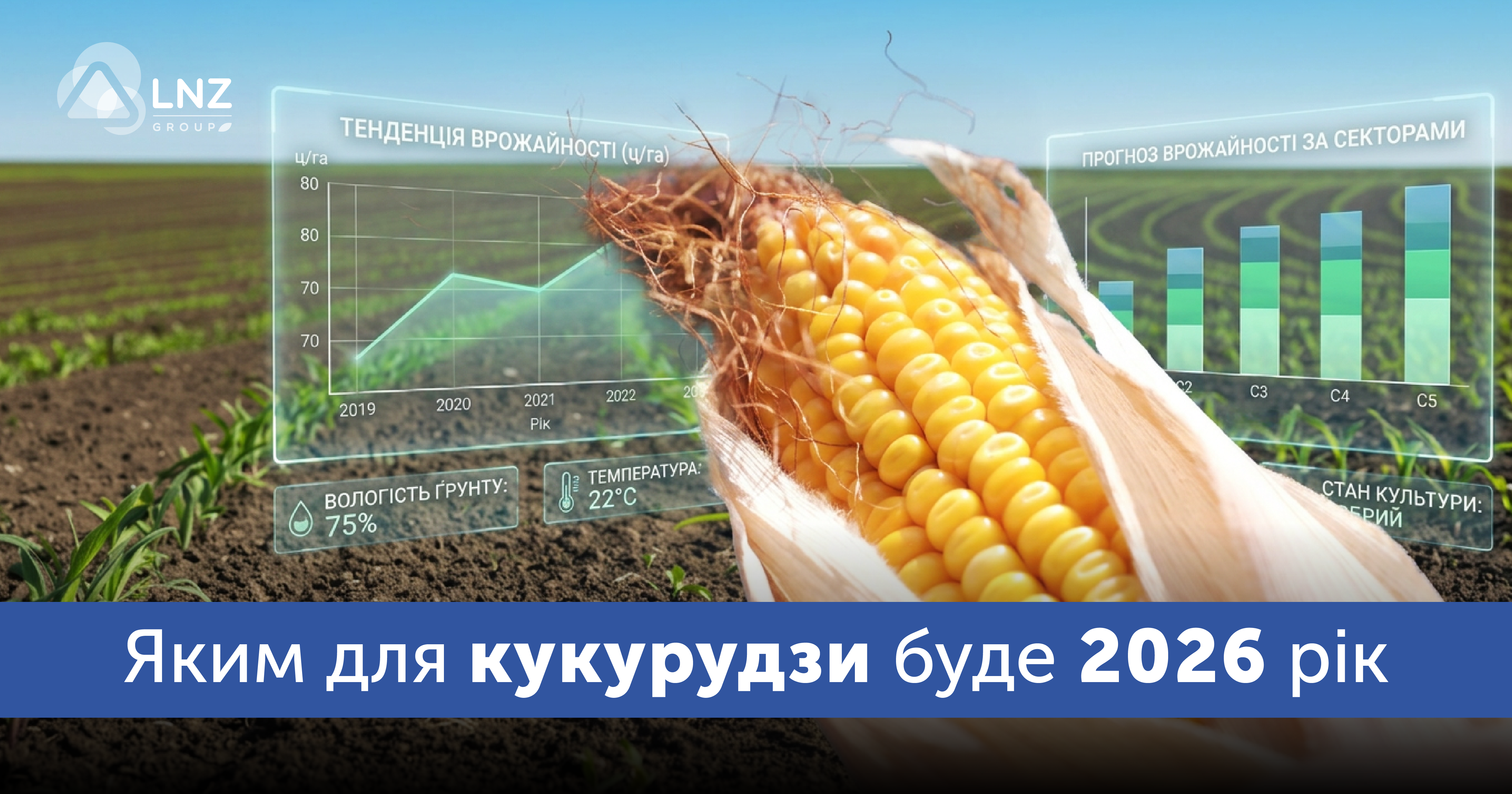 According to the Ministry of Economy, Environment and Agriculture, corn harvesting is still continuing in Ukraine. As of 15 January the gross grain harvest is estimated at 28.9 million t at an average yield of 71.7 c/ha.
The agri-technology manager of LNZ Group in the Ternopil and Lviv regions, Serhii Uvarov, confirms that on some farms the corn is still not harvested:
"For producers there were difficult weather conditions in the autumn-winter period, namely when it was time to harvest the crop from the field. High moisture, 31-40% depending on the maturity group, affected drying, producers had to spend a lot of resources on bringing the corn grain to the base moisture content."
Farmers select the most adapted hybrids
Every season, climate change becomes a test for producers, for which it is practically impossible to prepare. The agri-technology manager of LNZ Group explains that, although farmers cannot in any way influence the weather conditions, they have already learned to select the most adapted hybrids depending on the zone and growing conditions.
"The most optimal approach would be to choose several hybrids with different maturity groups and high resistance indicators to stress factors that affect obtaining a high yield in certain growing conditions."
He adds that there are examples where the corn growing technology on a farm is the same in all fields, and the different yield is linked to the amount of precipitation and the sum of active temperatures. According to LNZ Group, in the Ternopil region a hybrid with an FAO of 350 showed a yield of from 15.6 to 18.2 t/ha at a moisture content of 31-34%. Where there was enough moisture and it was warmer, the highest yield for one hybrid was obtained — 18.2 t/ha.
Without moisture we reduce the seeding rate
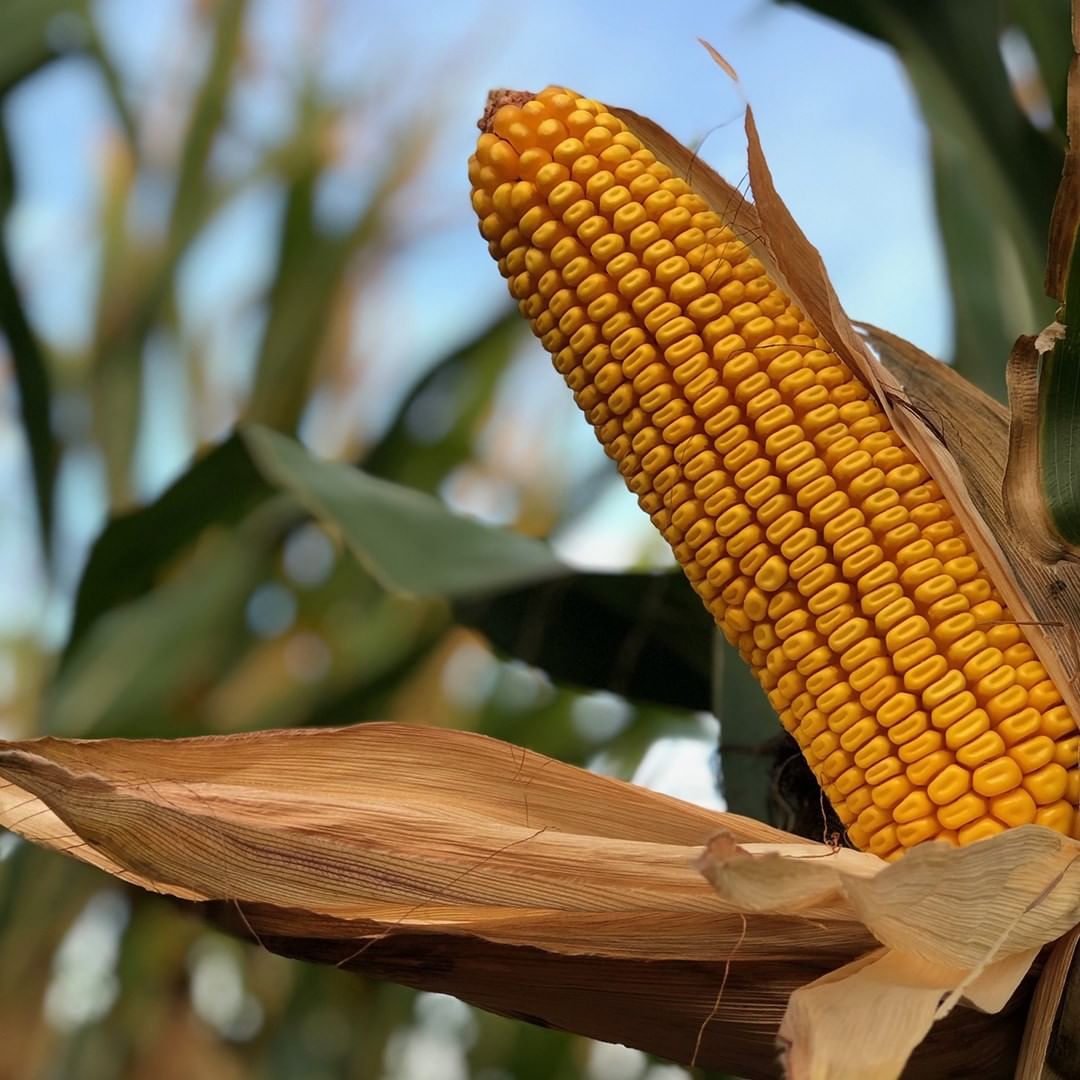 The corn seeding rate depends on the moisture conditions of the growing region. Serhii Uvarov explains that when there is enough moisture in the soil, farmers sow one seed unit per hectare, i.e. 80,000 seeds. Some add another 2,000-4,000 seeds — this depends on the sowing dates, the previous crop, plus a correction for field germination.
"In regions where the reserves of productive moisture are small and there is little precipitation during the season, the rate is adjusted downwards. The seeding rate also depends on the recommendations of the seed producer, which they offer for a certain hybrid depending on the moisture conditions."
LNZ Group has for several years in a row been the exclusive partner of Limagrain Ukraine. Within the framework of the cooperation this season, LNZ Group received exclusive rights to supply corn hybrids:
- LG 31263 (FAO 270) — a mid-season hybrid that combines high yield potential and resistance to stress conditions. It is recommended for growing in zones with a moderate heat regime and moderate humidity.
- LG 31332 (FAO 310) — a mid-season hybrid that has high growth energy and high yield potential, tolerant to European corn borer damage and smut diseases.
Seed can be purchased from LNZ Group representatives.
So that pests do not come as a surprise
LNZ Group emphasises that today corn is the only crop where fungicides are not applied during vegetation. The main fungicide protection of corn crops is quality seed treatment.
Serhii Uvarov explains that in the herbicide protection this season, a combination of soil and post-emergence herbicides worked effectively. The fields were clean, the corn plants had no competition for nutrient elements, water and light.
- In particular, farmers from the DEFENDA brand product portfolio used a tank mix of soil herbicides to fight broadleaf weeds — Idaho (terbuthylazine, 500 g/l) at an application rate of 1.5 l/ha and the pre-emergence selective soil herbicide for fighting annual grasses and some broadleaf weeds Sora-Net (propisochlor, 720 g/l) at an application rate of 2.0 l/ha.
- During vegetation at the 3-5 leaf phase of corn, the product Musson (nicosulfuron, 40 g/l) was applied for the control of annual and perennial grasses at a rate of 1.25 l/ha.
- In the fight against broadleaf weeds, the post-emergence herbicide Primus (2-ethylhexyl ester of 2,4-D, 452 g/l + florasulam, 6.3 g/l) at a rate of 0.5 l/ha was used.
As for pests, they almost did not exceed the harmfulness threshold, so some farms mostly worked preventively.
"In 2025 there were favourable conditions for pest development: cutworm was observed, in places — the flight of the European corn borer. This was not a surprise for producers, since they include insecticide treatments of corn crops in their technology. The correct selection of active ingredients needed to control certain categories of harmful objects made it possible to maximally protect the corn crops."
He adds that in view of the field problems, namely — where there was a flight of the European corn borer, the combination of the systemic insecticide Kairos (flubendiamide, 480 g/l) for fighting the larvae of lepidopteran pests and the translaminar insecticide Prosens (emamectin benzoate, 100 g/kg), aimed at reliable control of concealed- and open-living lepidopteran pests, became effective.
According to the expert, the selection of crop protection products depends on the development of the pathogens that need to be fought. By correctly diagnosing the pest, disease or weeds, the active ingredient that is needed can be selected most effectively.
"The LNZ Group team moves forward in the search for new solutions to maximally provide producers with effective products during corn growing. Thus, in the DEFENDA brand product line a new herbicide has appeared for controlling a wide spectrum of annual broadleaf and grass weeds — the product Paldis (tembotrione, 200 g/kg). Its advantages lie in a wide application window, from 2 to 8 visible corn leaves, and the absence of a phytotoxic effect on cultivated plants."
Adapting to modern corn growing conditions and having a large number of products from the DEFENDA brand, LNZ Group managers will effectively select the right solution depending on the need.
The 2026 season: what areas corn will occupy
Farmers are already preparing for sowing and first of all deciding on the selection of the hybrid composition and buying seed. Most producers postpone the purchase of crop protection products, and only a few are currently procuring products for the crop protection system.
Serhii Uvarov notes that corn remains one of the profitable crops, thereby pushing producers to increase plantings. However, across the country, areas will depend on the moisture conditions in the regions.
"Some farmers are considering reducing soybean planting areas in favour of corn. In the western regions, where corn shows a stable harvest and high profitability, accordingly, the areas for sowing will increase. In the south-eastern regions, where conditions are dry, corn is being abandoned altogether," says Serhii Uvarov.
How to increase the crop's yield?
In the expert's opinion, to achieve more, producers need to move towards improving the entire growing technology.
- Carry out quality tillage and soil preparation for sowing.
- Make a quality and more correct hybrid selection for a certain growing region. Farmers are recommended to pay attention to the Limagrain hybrids LG 31263 (FAO 270) and LG 31332 (FAO 310), which this year are exclusively offered by LNZ Group.
- Select the most effective fertilisation system and crop protection system.
Serhii Uvarov emphasises that it is important to maximally influence all elements of the technological process during crop growing. If you change only one element, it is impossible to obtain the desired result.
Source: agroportal.ua