2025
The changeable weather conditions of this spring affected the course of the sowing and the plans of farmers, since because of the excessive frosts at the end of April and the beginning of May, some crops will have to be resown.
Bringing the plants out of stress: what should be done
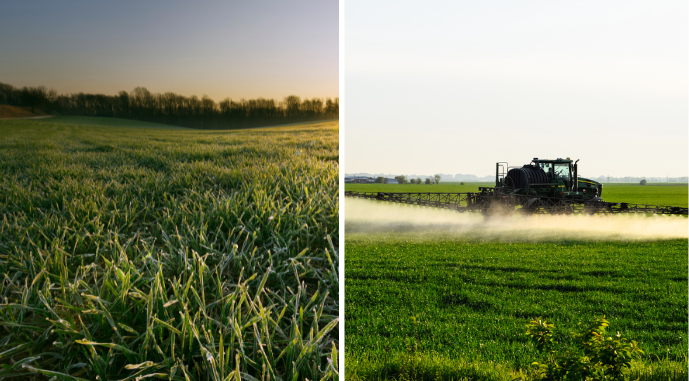 The technology development manager in the South-eastern region of LNZ Group, Serhii Korniushenko, relates that in some districts of the Donetsk, Dnipropetrovsk and Zaporizhzhia regions the flowering rapeseed came under frosts and was severely damaged. Such a situation is especially characteristic in regions where the temperature dropped to -6 °C. These areas will definitely have to be resown. Early crops of sunflower, maize, wheat, spring barley were also damaged.
"With partial damage to maize, agricultural producers will keep the crops and try to 'pull through' the plants. There are chances, for instance if the maize had three leaves and they froze out, but the growing point remained alive, then after the resumption of vegetation with the appearance of the first leaf one can give amino acids, which stimulate a quicker recovery of the plants. This should be done 7-10 days after the resumption of vegetation, earlier there is no sense, since the plant will not accept them. It is necessary for at least a little leaf mass to grow and for the plant to begin to work from its own root system."
Pests: which products should be kept in reserve
He also advises carrying out foliar nutrition of the plants. The choice of fertilisers will depend on the state of development of the plant at the moment of the stress — either nitrogen-phosphorus, or phosphorus-potassium. In the South-eastern region farmers are going to resow the damaged crops with sunflower, millet, sorghum or there is another option — buckwheat, or they will leave them under fallow for the future sowing of winter wheat.
For maize in these regions the sowing dates have already ended. Serhii Korniushenko relates that already now the sand darkling beetle is appearing on the sunflower emergence. Later, various species of cutworms will appear on maize and sunflower.
"Last year there were pyralids and cutworms in the crops, and since the winter was quite mild, that is favourable for the overwintering of pests, we will very soon have an emergence of cutworms. For wheat it is difficult to forecast anything, everything depends on the further weather conditions: if rains pass, this will slow the emergence of pests, if it is dry and warm, then aphids, mites will appear. Let us not forget that last year there was a surge of thrips and in the future we do not rule out that it will be present."
He adds that the period of pest emergence will be drawn out. A shift of the temperature regime relative to last year by a week to a week and a half earlier is also observed, so the surge of pests can be sudden, everything depends on the further temperatures. So the specialist advises farmers to purchase insecticides in advance to fight the common pests.
In particular, against all species of mites Serhii Korniushenko recommends the product DEFENDA Mirald. This is a highly selective contact acaricide that completely destroys all mobile stages of the mite's development (larvae, nymphs, imago). Against cutworms the systemic insecticide for fighting the larvae of lepidopteran pests DEFENDA Kairos will work effectively. It provides a quick "knockout" effect and is safe for entomophages and pollinators.
As for other pests — one should work with systemic products such as Turbo, Presto.