2025
The main factor that affected the yield of agricultural crops in 2025 was moisture. This was related during the UCAB Agro-technologies 2025 conference by the head of the LNZ Group Agro Department Oleksandr Khmeliuk, writes SuperAgronom.com.
"The situation across all crops is more or less the same — the key determining factor this year is moisture. This is, without exaggeration, factor number one," he says.
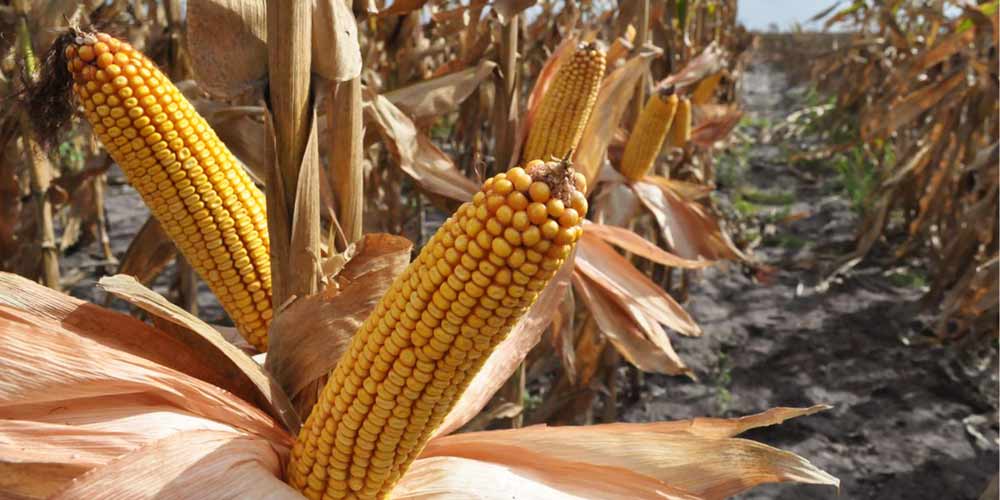 According to him, the differences in the amount of precipitation during the growing season — from 150 to 200 mm — significantly affected the harvest even within a single region. The yield of wheat, for example, could differ not depending on the variety or the sowing date, but exclusively because of the amount of precipitation. In addition, the previous crop also has an influence, not from the point of view of allelopathy, but specifically which moisture reserves remained in the soil. Fields where sunflower was grown before wheat gave a yield 2 t lower. The reason is the deep depletion of moisture reserves.
"Sunflower took the moisture from the deep horizons. And the spring precipitation was no longer able to compensate for it," explains Oleksandr Khmeliuk.
During a trip from Ternopil to the Dnipropetrovsk region, Oleksandr Khmeliuk recorded a sharp change in the state of the crops.
"In the central, northern and western regions in the first half of summer everything looked promising — the fields were green, with hope for a harvest. But already from Uman towards the south-east the situation is significantly worse, one might say catastrophic," he relates.
According to him, in the Dnipropetrovsk region, in the south of the Kirovohrad and Poltava regions, maize did not form a cob at all, soybean is underdeveloped, and in many fields there will be no harvest at all. Some farms have already begun the main tillage on the dry and yellowed fields, which in appearance resemble September ones.
Sunflower is being forced to lose ground in the south
The worst situation is in the south. There, according to Khmeliuk, farmers have already abandoned the growing of maize and are gradually abandoning the growing of sunflower in favour of winter wheat.
"A farmer in the Odesa region told me: 'I haven't sown sunflower for three years now.' And this is now not an exception, but a trend."
Sunflower, although it remains one of the most profitable crops, can no longer withstand the change in climatic conditions. In such regions the more or less reassuring crop remains winter wheat — because of its ability to use the moisture reserves of the autumn-winter period and the spring precipitation, whereas late crops have the greatest need in July-August, in the driest period.
"Winter cereals carry the lowest risks. We can at least hope for precipitation in autumn and in the winter period. This creates a certain reserve for yield formation in April-May," noted the specialist.
However, farmers remain in a trap of economic feasibility. Despite the climatic risks, they need to grow at least two of the three main crops — maize, sunflower, soybean or wheat — in order to avoid losses.