2025
Experience is the best school, since only by learning independently, making mistakes and improving technologies can one find exactly that method of obtaining the result that one strives for. LNZ Group has been engaged in berry growing for more than 5 years, so they have plenty of practice in this field. In addition, the company diversified its knowledge into a plant for freezing berries, vegetables and fruit, which works under the Tevitta brand. This production is certified and meets the requirements of the Global G.A.P. standard, which provides for the safety of the products and the entire processing cycle.
The company's specialists successfully manage to grow harvests not only of strawberry or raspberry, but also of blackberry. Although in Ukraine blackberry belongs to the little-widespread crops, there are still gardeners who grow it and obtain a decent profit. So today in the Kurkul.com material, the associate professor of the department of horticulture and viticulture of the "Podillia State University", candidate of agricultural sciences Vitalii Lapchynskyi related how to grow blackberry without diseases.
Large-fruited blackberry varieties often suffer from low winter temperatures and spring frosts. Therefore, to avoid such troubles in autumn, after harvesting, the old shoots are cut off, and the young ones are laid on the soil and covered with reed mats. On top a net against the wind is added. In early spring the mats are removed, dried and stored for further use. The annual shoots are raised and tied to the trellis. To obtain stable harvests of quality products, blackberry is grown on drip irrigation.
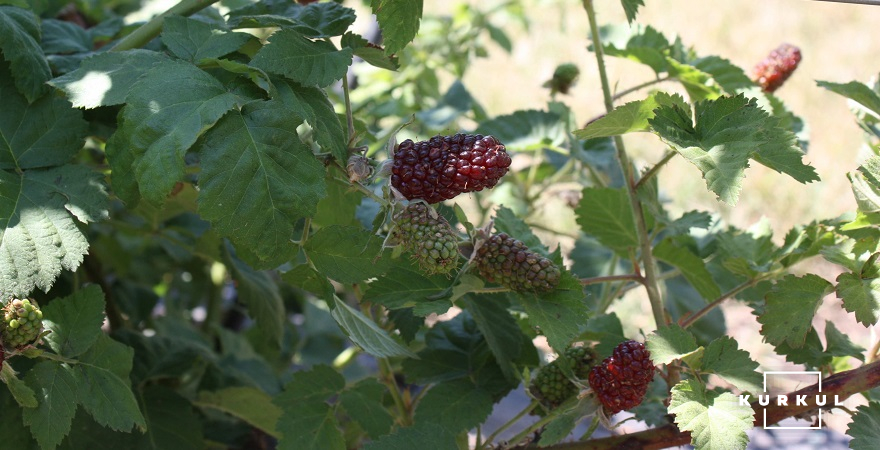
Diseases of blackberry
Compared to raspberry, blackberry is distinguished by better resistance to diseases. To reduce yield losses, great attention should be paid to preventing damage by harmful organisms. In particular, this concerns powdery mildew and rust. Sometimes the berry is infected with grey mould and other harmful objects. Fungal diseases account for 80% of the total list of diseases to which the crop is prone. With strong affection, the plants are delayed in growth and bear worse, and the harvest becomes little suitable for sale. To reduce the risks of diseases, one should grow certified planting material, and remove and burn infected stems in time.
Powdery mildew. This is a fungal disease that affects the berries, the growing points of the shoots in individual non-resistant forms and the young leaves on both sides, especially in wet and warm weather. On the affected berries a white coating appears. They become as if sprinkled with flour. The affected berries become unattractive and unsuitable for fresh consumption and for processing.
Against this disease the fungicide Kitch WG from DEFENDA is applied, which provides a quick stop-effect and has a powerful curative action.
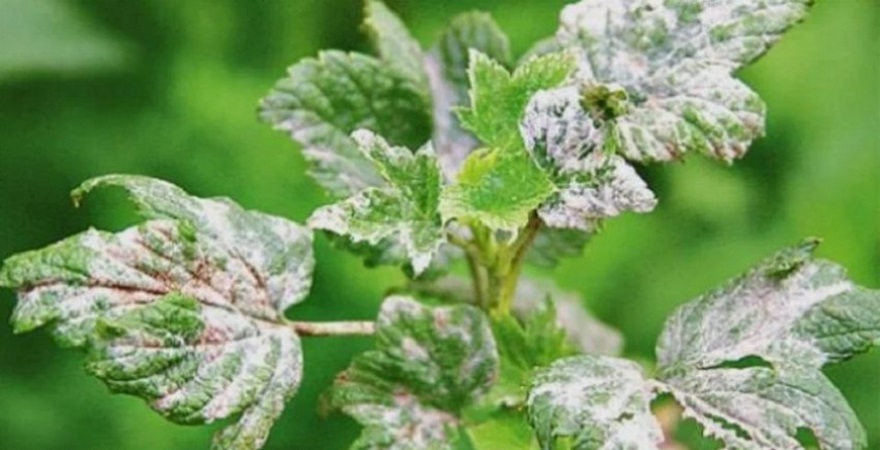
Rust. It affects the leaves, the petioles, the large leaf veins and the young shoots. Intensive development of the disease takes from 30 to 60% of the harvest. The disease manifests itself on blackberry at the beginning of summer in the form of a mass of small orange-brown dots (the spermogonia of the fungus). In them spermospores form, which as they ripen fly apart and cover with a sticky mass of spores the affected area of the stem, the leaf blade, the large leaf veins and the shoot. The lower part of the stem browns, and lesions of a light colour appear on it, in the centre of which the orange pads of the aecidia are located. Severely affected leaves fall off in midsummer, which leads to the loss of the berry harvest in the following year too. The disease more strongly affects powerful, well-developed and well-lit leaves and bushes in a wet and warm summer.
Therefore it is very important to take all the measures for fighting rust in time. The main practice: raking up the fallen leaves and removing the first leaves with signs of affection. Leaves severely infected with rust are burned, and the ash is used as fertiliser. Rust affects blackberry also with a shortage of moisture in the soil, so in a drought irrigation is necessary.
Blackberry can be sprayed with sulphur products. For 10 l of warm water 100-150 g of colloidal sulphur is taken. The feature of sulphur products is their high effectiveness against rust and other fungi, aphids and mites at an air temperature no lower than 16...18 °C. In cool weather sulphur is not applied.
For the prevention of the disease treatment with 1% Bordeaux mixture is permitted. It is applied first on the young leaves, and then after harvesting too.
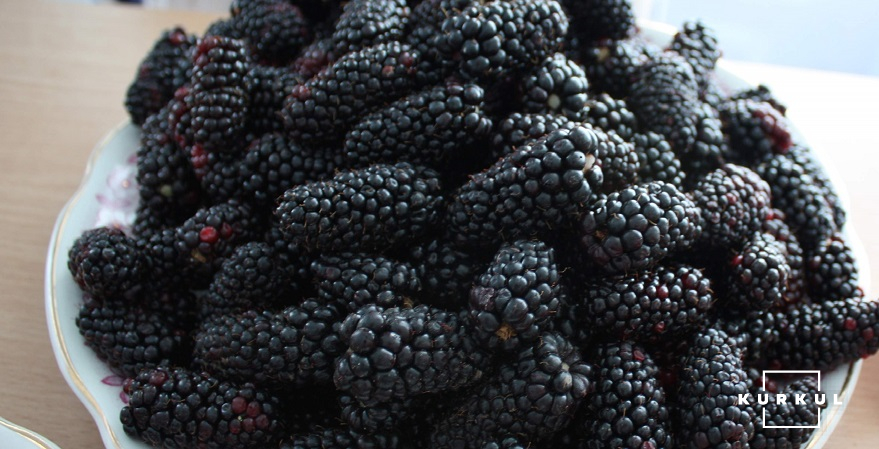
Grey mould. It causes rotting of the berries when they are stored for more than a day. The spores of the Botrytis fungus settle on the petals of the flower and penetrate into it. The fungus develops especially quickly in wet weather, as a result of which the berries rot. Such blackberry cannot be eaten fresh, and it is unsuitable for processing too.
To prevent the development of the infection, the berries immediately after harvesting are placed in a refrigerator and only after this are sold. Other measures of fighting are: sparse planting, growing blackberry on ventilated trellises, using the fungicide Kitch WG from DEFENDA during flowering. Foliar application of calcium fertilisers also promotes the post-harvest resistance of the berries to grey mould pathogens.
The fungicide Kitch WG from DEFENDA (active ingredients cyprodinil, 375 g/kg + fludioxonil, 250 g/kg) provides a contact-penetrating action, which makes a quick stop-effect and a powerful curative action. Treatment of berry plantations is carried out during the growing season and until harvesting. The first spraying — in the first phase of flowering, the second — after flowering. The product is not phytotoxic.
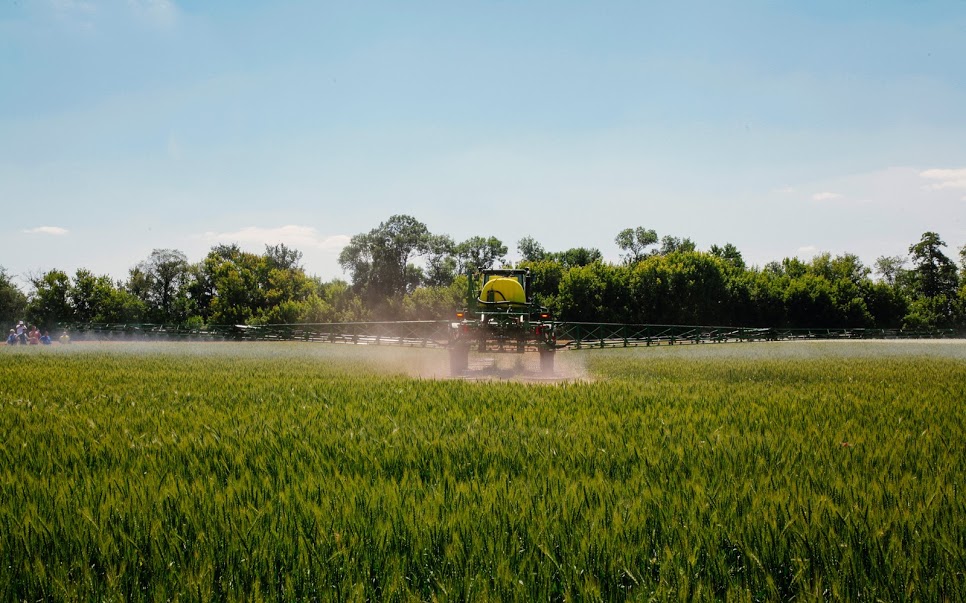
In addition, Kitch WG is registered as a product for strawberry against grey mould, brown spot, white spot and powdery mildew, and also for raspberry and blackberry against grey mould. It is permitted for use in fruit and grape plantations and vegetable growing. The consumption rate of the fungicide is 0.75-1.0 kg/ha (10 g/5 l of water). The waiting period after treatment is 10-30 days. The number of treatments is 2, but it is better to discuss all the details individually. So contact the Agro Department of LNZ Group. The company's specialists are ready to consult you.
It is worth remembering that blackberry is an extremely vulnerable crop. One can protect the plants only with proper care, and if there were problems earlier associated with the parasitising of any pest or disease, then one should certainly strike the enemy pointwise, for preventive protection.