2025
Inspection of crops: the main monitoring rules
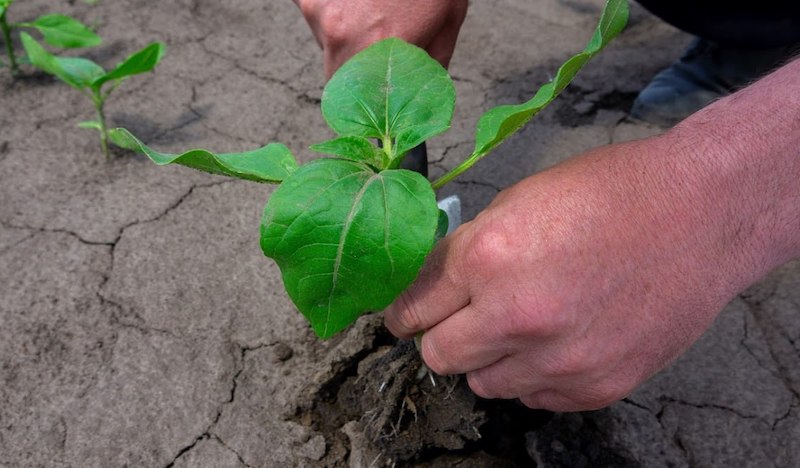 Sunflower is perhaps the most profitable crop to grow in most regions of Ukraine. For example, in 2024 sunflower became the absolute leader in profitability in Ukraine — 106% with a net profit of almost UAH 40 thousand/ha. Thanks to the high grain prices, the demand from processors and a number of other economic factors, sunflower is among the TOP-3 most profitable crops, and the areas under it in 2025 are forecast to grow to 5.5 million ha.
But for the successful growing of sunflower all the factors of influence on the plants in the crop should be taken into account. In order not to lose a single percent of the potential harvest, one needs not only to observe the growing technology, but also to constantly monitor the state of the plants in the field and the factors that can affect them.
Inspection of crops: the main monitoring rules
For this it is necessary to regularly monitor the crops in order to assess the development phase, the state of the plants and, if necessary, to take measures in order to preserve the potential of the hybrids. Monitoring should be carried out as follows: Choose plants in several places. To choose plants, move across the field in a zigzag. To avoid the influence of underdeveloped plants on the overall picture of the field, one should avoid selecting plants at the field edges, the entrance to the field and in dips and hollows. When determining the development phase of the field, it is necessary to assess the average development of the majority of the plants. In the case of sunflower branching, the assessment is given for the main shoot/head. To determine the development for the phases of grain formation and filling, use healthy heads without signs of disease. V (the number of leaves) is determined by counting the number of true leaves, at least 4 cm in length, at the vegetative stage (for example, V-1, V-2, V5 and so on). In the development of sunflower from sowing to full ripening the following phenological phases are distinguished: emergence, the first pair of true leaves, head formation, flowering, ripening.
The duration of the inter-phase periods in the most widespread mid-season group of sunflower hybrids is:
- from sowing to emergence 14-16 days,
- from emergence to the beginning of head formation 37-43,
- from the beginning of head formation to flowering 27-30,
- from flowering to ripening 44-50 days.
In early-ripening forms the inter-phase periods are shortened, in mid-late ones — lengthened.
Seed (sowing) and germination. Macrostage 0 This development phase of sunflower (BBCH 00-09) begins with the preparation of the seed for sowing (seed treatment) and ends with the appearance of the emergence on the soil surface.
00 — dry seed;
01 — beginning of seed swelling;
03 — full seed swelling;
05 — emergence of the embryonic root from the seed;
06 — embryonic root lengthened, formation of root hairs;
07 — hypocotyl and cotyledons have broken through the seed coat;
08 — hypocotyl breaks through the soil surface;
09 — emergence: cotyledons break through the soil surface.
"In this period the application of soil (pre-emergence) herbicides against annual dicotyledonous weeds and annual grass weeds is usually carried out. Such an agronomic practice ensures a reduction of the harmful competition in the initial development phases (up to 30-40 days), and under favourable conditions until the end of the sunflower growing season," notes Valentyn Vydybura, technology development manager for the Central region of LNZ Group.
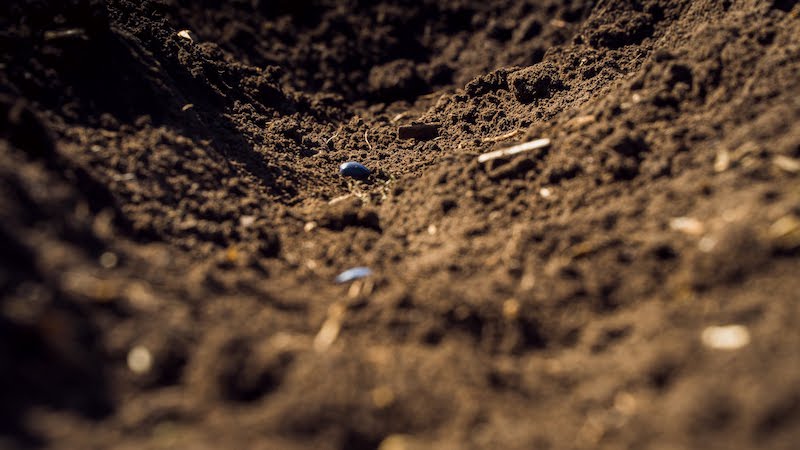 So for the control of grass weeds the expert advises using the following herbicides: Double Try (metolachlor, 960 g/l) at a rate of 1.3-1.6 l/ha; Sora NET (propisochlor, 720 g/l) at a rate of 2.0-3.0 l/ha. For the control of annual dicotyledons apply: Perun (prometryn, 500 g/l) at a rate of 2.0-4.0 l/ha; Idaho (terbuthylazine, 500 g/l) at a rate of 1.5-2.5 l/ha; Ailar (aclonifen, 600 g/l);
"Or for the simultaneous combination of the control of dicotyledonous and grass weeds we apply the herbicide Starlent (propisochlor, 360 g/l + terbuthylazine 190 g/l) at an application rate of 3.8-4.5 l/ha or the herbicide Novante (S-metolachlor, 312.5 g/l + terbuthylazine, 187.5 g/l). When applying soil herbicides it is necessary to take into account the level of moisture supply, the humus content and the acidity of the soil," emphasised Valentyn Vydybura.
This is one of the most important stages of sunflower growing, correct sowing lays the basis for obtaining phenotypic uniformity of the crop plants. At this stage the number of plants per unit area (the first component of the yield) is determined. In this period the stand density (the number of plants per m²) is laid down. The main factor of external environmental influence at this stage is the soil temperature. At a low temperature (below +5 °C) the activity of enzymes in the seed is inhibited, which can lead to a slowing of the embryo growth. Moisture is also an integral part of the seed germination process.
Formation of leaves (main shoot). Macrostage 1
The duration of this phase (BBCH 10-19) is 20-24 days. Its beginning is the full opening of the cotyledons, and its end — the appearance of the 9th true leaf. During this phase the formation of all the vegetative organs of the plant occurs.
10 — cotyledons fully opened;
12 — 2 true leaves opened;
14 — 4 true leaves (two pairs) opened;
16 — 6 true leaves (three pairs) opened;
18 — 8 true leaves (4 pairs) opened;
19 — 9 true leaves opened.
"Starting from the emergence phase, one can observe wilting of the sunflower plants, which may be caused by the presence of soil pests. To prevent this problem one needs to sow seed treated with an insecticidal seed treatment. As a seed treatment one can use the product Latina (clothianidin, 600 g/l) at a rate of 4.5-7 l/t or Metaksa (thiamethoxam, 350 g/l) at a rate of 6-10 l/t," advises Valentyn Vydybura.
In the first development period (until the formation of 2-3 pairs of leaves) sunflower grows comparatively slowly. At this time the main root, which forms from the embryonic root, grows intensively into the depth, outstripping the growth of the stem by 2.7-2.9 times. Then the stem growth increases, reaching a maximum (3-5 cm per day) in the period from head formation to flowering.
In the BBCH 12 phase sunflower has high frost resistance, but gradually the sensitivity to cold increases significantly.
In the BBCH 14-18 phases the main part of the pesticide protection of sunflower takes place. If one considers herbicide protection, then the wide choice of herbicides makes it possible to remove the weeds both in classic sunflower and, for sunflower under the Clearfield and Express technologies, will make it possible to create a protection scheme for each specific field and each individual hybrid.
- Protection of sunflower by the Clearfield technology includes the application of the herbicide Impreza (imazapyr, 15 g/l + imazamox 33 g/l) at a rate of 1.0-1.2 l/ha or the herbicide Brox (imazamox, 40 g/l). They are applied to fight a broad spectrum of dicotyledonous and grass weeds in the sunflower 4 true leaves phase. When using these active ingredients attention should be paid to observing the crop rotation in the following year, since imazamox has a partial soil action and a negative influence of the active ingredient on the following crop may manifest itself, noted the expert.
- Protection of sunflower by the Express technology provides for the application of the herbicide Sheriff (tribenuron-methyl, 750 g/kg) with the adjuvant Macho (isodecyl alcohol ethoxylate, 900 g/l). The application rate of Sheriff is 0.03-0.05 kg/ha, in the sunflower phase from 2 to 8 leaves.
"To fight against annual and perennial grass weeds in this period one can use herbicides based on the a.i. clethodim or quizalofop-P-ethyl. The herbicide Blade (clethodim, 120 g/l), depending on the type of weed, is applied at a rate of from 0.4 to 1.8 l/ha. The application rate of the herbicide Haruma (quizalofop-P-ethyl, 125 g/l) also depends on the type of weed and ranges from 0.4 to 1.2 l/ha. The application of all types of herbicides is united by the fact that the treatment should preferably be carried out at the early development phases of the weeds, namely: dicotyledonous weeds in the 2-4 leaves phase, annual grasses in the 2-3 leaves phase, perennial grasses at a height of no more than 10-15 cm. At later development phases the weeds become more resistant to herbicides due to the formation of a larger layer of wax," related Valentyn Vydybura.
Fungicide and insecticide protection of sunflower
Also in this period the first fungicide protection against septoria, downy mildew, rust, powdery mildew may take place. Depending on the manifestation of the disease, the corresponding active ingredients are selected, both separately and in combination.
"For example, with manifestations of such a disease as downy mildew, we use the fungicide Ultralin (cymoxanil, 300 g/kg + azoxystrobin, 250 g/kg) at a rate of 0.3-0.5 kg/ha. With manifestations of septoria one can consider the application of the fungicide DOT (cyproconazole 80 g/l + propiconazole 250 g/l), at a rate of 0.5 l/ha. With manifestations of rust the fungicide Mecenat (propiconazole, 250 g/l) will perform best, at a rate of 0.5 l/ha. The list of DEFENDA fungicides makes it possible to approach each disease or their complex individually and one can select an active ingredient or ingredients in order to close the question of the first application with quality," noted the expert.
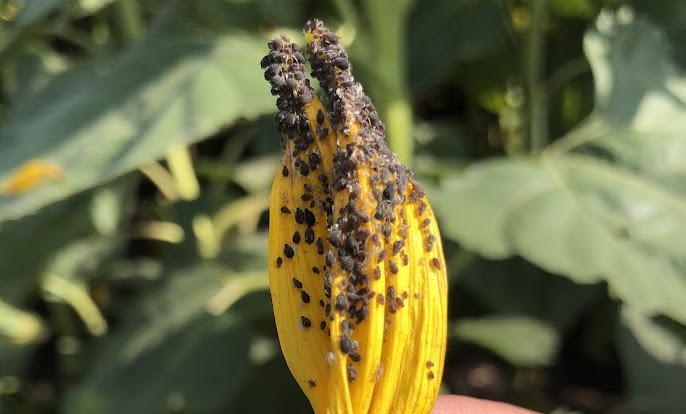 To fight pests, insecticides based on thiamethoxam (Octant) at a rate of 0.1-0.15 l/ha, imidacloprid (Bombardier Aqua) at a rate of 0.25-0.3 l/ha, clothianidin and lambda-cyhalothrin (Presto) at a rate of 0.3-0.4 l/ha, alpha-cypermethrin (Alpha Super) at a rate of 0.1-0.3 l/ha and others are applied.
"One cannot fail to note that 2024 turned out to be favourable for the reproduction of the spider mite specifically on sunflower. The acaricide Mirald (fenpyroximate, 50 g/l) at a rate of 0.7-1.15 l/ha performed very well, which destroys all mobile stages of the mite (larvae, nymphs, imago)," added Valentyn Vydybura.
5 Macrostage 2 — Macrostage 3. Stem growth
- 30 — beginning of growth in length;
- 31 — 1 elongated internode visible;
- 32 — 2 elongated internodes visible;
- 33 — 3 elongated internodes visible;
- 39 — 9 and more elongated internodes visible;
The phase (BBCH 30-39) — stem growth. Its beginning is the active growth of the sunflower in length, and its end — the formation of the inflorescence. The duration of the phase is 26-28 days. During this phase the sunflower intensively builds up vegetative mass and the root system. Throughout the entire stem growth the sunflower leaves increase their surface. With the beginning of the plant laying down the head, the growth of the above-ground part slows. However, the root system continues to grow, especially in the case of an insufficient amount of moisture.
"In this period, as a rule, the next stage of sunflower fungicide protection takes place. Besides septoria, alternaria, downy mildew, signs of phoma and phomopsis may manifest themselves. Diseases that manifest themselves, especially after rains, by the formation of black spots along the edges of the leaves. Then, if not controlled, the spots spread to the stem. In this case one can also propose several protection options: Salto (thiophanate-methyl, 500 g/l) at a rate of 1.2-1.4 l/ha, Split Duo (difenoconazole, 125 g/l + azoxystrobin, 125 g/l), at a rate of 0.5-1 l/ha," says Valentyn Vydybura.
We also monitor the sunflower crops for the presence of pests. The sunflower longhorn beetle, the spined weevil may colonise the fields. Under favourable conditions the caterpillars of the meadow moth and species of cutworms may appear.
6 Macrostage 4 — Macrostage 5. Development of flower buds
- 51 — the bud of the inflorescence is visible between the young leaves (star phase);
- 53 — the inflorescence separates from the true leaves, the bracts are clearly distinguished from the true leaves;
- 55 — the inflorescence is separated from the upper leaf;
- 57 — the inflorescence is clearly separated from the upper true leaf;
- 59 — the inflorescence is still closed. The ligulate flowers are visible between the bracts.
The next phase (BBCH 51-59) — budding. This is the shortest phase, which begins with the appearance of the bud (star) and ends with the full-fledged formation of the inflorescence. During the budding phase the sunflower plant forms the generative organs. The leaves of the lower tiers at this stage of plant development begin to die off.
It is characterised by active growth of the root system, which develops significantly faster than the above-ground part of the plant. It ends with the transition of the apical bud from the vegetative stage to the reproductive one. After the passage of the meristematic changes one can determine the total number of leaves that will appear on the plant. In this period the number of flowers on the plant is laid down.
7 Macrostage 6. Flowering of sunflower
- 61 — beginning of flowering. The ligulate flowers are vertical on the disc, the tubular flowers are noticeable in the outer third of the head;
- 63 — the tubular flowers in the outer part of the head are flowering, the anthers and stigmas are free;
- 65 — full flowering;
- 67 — flowering that is finishing;
- 69 — end of flowering. All the tubular flowers have finished flowering. In the outer and middle third of the head the formation of fruits is noticeable. The ligulate flowers have dried up or fallen off.
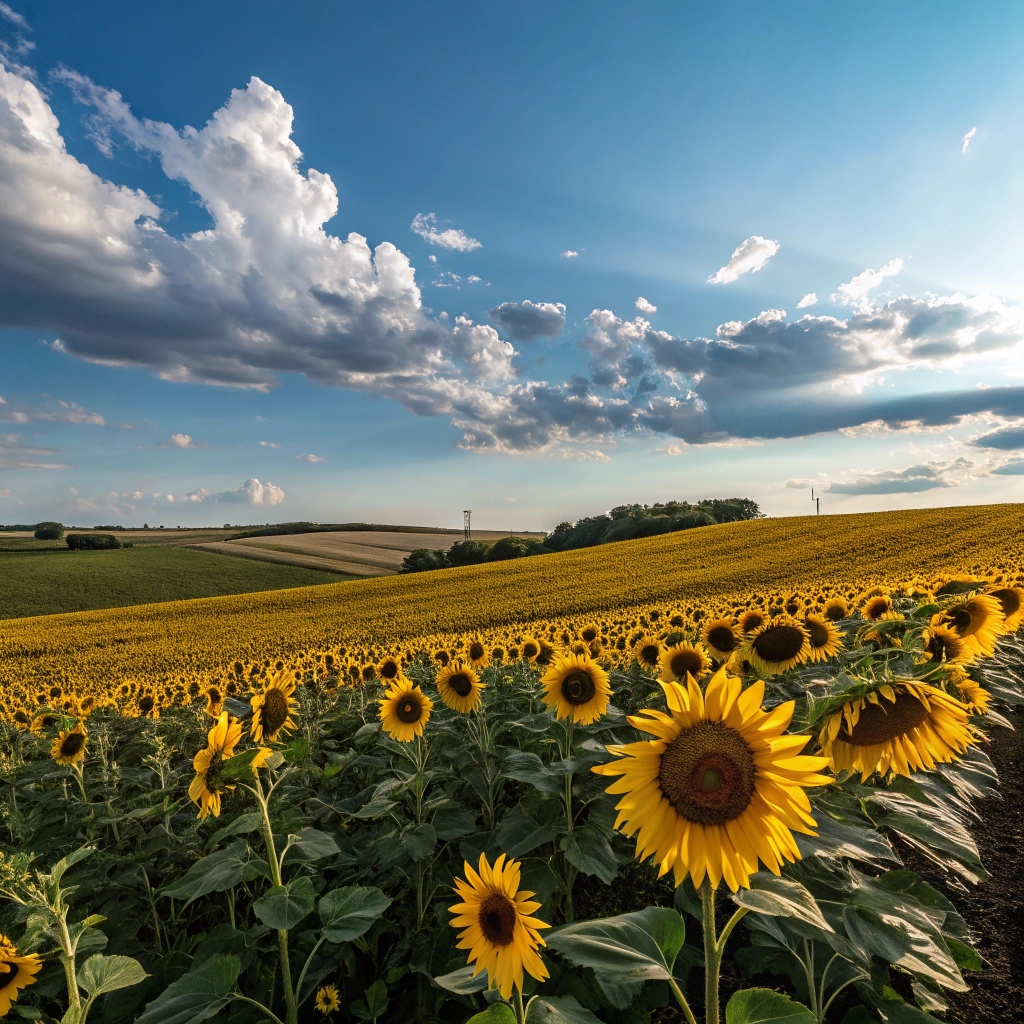 The sixth phase (BBCH 61-69) — flowering. On average it lasts 14-16 days (from the appearance of the tubular flowers in the outer third of the head to the setting of fruits). During this phase pollination of the flowers occurs.
Flowers form and the potential number of seeds in the head is determined. Active development of the root system and growth of the leaves continues, the length of which depends on the hybrid, the temperature and the photoperiod. At higher temperatures the rate of flower differentiation increases, but the duration of the stage during which this process occurs is shortened.
In this phase the influence of external factors will be as follows:
- Moisture: prolonged periods of cloudiness and rain can lead to a decrease in the percentage of flower pollination and increase the risk of disease damage.
- Diseases: in this period damage by the most harmful diseases is likely: sclerotinia, phomopsis, phoma, alternaria.
- Pests: the danger from leaf-eating pests remains.
The presence of apiaries nearby will increase the percentage of pollinated flowers. With pollination by bees the number of developed seeds in sunflower is 87-93%, without pollination — 76-78%. The sunflower grain yield with pollination by bees increases by 15-20%.
"For the effective fight against lepidopteran pests we apply the insecticide Prosens (emamectin benzoate, 100 g/kg) at a rate of 0.2-0.25 kg/ha or the very effective product Kairos (flubendiamide, 480 g/l), at a rate of 0.1-0.15 l/ha," advises Valentyn Vydybura.
VT — Bud formation. The covering and generative organs of the flowers form. The floral tubercle divides into the lower part, from which the ovary forms, and the upper one, from which the perianth forms. At this time the rudimentary head has the appearance of a facet. At the end of the period the flowers are almost fully formed. Active development of the root system and growth of the leaves continues. The leaves of the lower tier reach their maximum size.
The use of herbicides in this phase will significantly reduce the yield. It is advisable to apply a fungicide if it was not applied earlier.
R1 — The inflorescence becomes visible surrounded by immature stipules in the form of a star.
R2 — The immature bud rises above the nearest leaf by 0.5 – 2 cm.
R3 — The bud rises above the nearest leaf by more than 2 cm. In this period the number of seeds on the plant is laid down. Moisture: a shortage causes a decrease in the potential number of seeds and a reduction of the leaf area. Nutrient elements: in this period nitrogen is most necessary. Pests: the most dangerous at this time are leaf-eating pests. In the flowering period (phases R5 and R6), which lasts 7-10 days, the number of set seeds is determined (the second component of the yield).
8 Macrostage 7. Formation of fruits
71 — the seeds at the edge of the head are grey in colour;
73 — the seeds in the outer third of the head are grey in colour;
75 — the seeds in the middle part of the head are grey in colour;
77 — the seeds in the inner part of the head are grey in colour.
The seventh phase (BBCH 71-79) — development of fruits, which lasts from the appearance of the seeds to their formation in all parts of the head. In fact, it is exactly in this phase that the formation of the future harvest occurs. During the time between phases R6 and R9, carbohydrates, fatty acids and proteins accumulate in the seeds, which determine the weight of the seed and the percentage of oil content. The phase is divided into sub-phases depending on the percentage of head flowering. For example, R5.3 — if 30% of the head surface is flowering.
9 Macrostage 8. Ripening of fruits and seeds
- 80 — beginning of ripening. The seeds at the edge of the head are black, the seed coat is hard, the back side of the head is still green;
- 81 — the seeds in the outer third of the head are black and hard, the back side of the head is still green;
- 83 — lemon ripeness. The back side of the head is yellowish-green. The bracts are still green. The seed moisture is about 50%;
- 85 — continuing seed ripening. The seeds in the middle third of the head are black, the edges of the bracts are brown, the back side of the head is yellow. The moisture is about 40%;
- 87 — physiological ripeness. The back side of the head is yellow. The stipules are ¾ brown. The seed moisture is about 15%;
- 89 — full ripeness. The seeds in the inner part of the head are black. The back side of the head is brownish-marbled. The moisture is about 15%.
The eighth phase (BBCH 80-89) — ripening of fruits and seeds. The beginning of the phase is the change of the seed colour from light-grey to black with a gradual hardening of the fruit coat. The end — full ripening of the seed (at this moment its moisture is 15%). During the fruit ripening phase the oil content of the seed and the content in it of oleic and linoleic acids are laid down.
In phases R7-R8 the formation and filling of the grain occurs. In this period the seed forms. The husk of the seed is soft and white in colour. Intensive accumulation of nutrient elements in the seed goes on. The potential harvest, formed at the previous stages, will be possible to obtain under the condition of sufficient moisture supply. A moisture deficit will lead to a decrease in the weight of 1000 seeds and a decrease in the oil content. The presence of phosphorus and molybdenum may also affect the yield indicators.
In phase R9 physiological ripeness sets in. The stipules become brown.
10 Dying-off. Macrostage 9
92 — full ripeness. The seed moisture is about 10%;
97 — the plant is dry, dead;
99 — harvesting.
The ninth phase (BBCH 92-99) — dying-off. The beginning of the phase — moisture less than 11%, and the end — the dying-off of the plant. It is exactly in this period that the harvest is gathered.
The main criterion for the start of sunflower harvesting is the seed moisture, which depends on the ripening phase and the weather conditions. The ripeness of sunflower is determined by the colour of the head. Three degrees of ripeness are distinguished:
- Yellow: the leaves and the back side of the head are lemon-yellow in colour. The head has a moisture within 85-88%, the seed moisture — 30-40%.
- Brown. The head is dark-brown in colour. The head moisture is 39.5-50%, the seed — 10-12%.
- Full. Drying-out of the plant. The head moisture — 19-20%, the seed — 7-10%.
The optimal harvesting dates set in when 20-25% of the whole crop has a yellow and yellow-brown colouring, and the other plants are dry and brown in colour. At this stage the degree of seed moisture drops to 11-13%, of the heads — to 69-75%, of the stems — to 60-70%. For the purpose of quicker (by 5-7 days) ripening of the seed and quality harvesting, desiccation is applied — an indispensable element of the growing technology of many agricultural crops, in particular, sunflower too. The optimal time for carrying out desiccation is the time when the seed moisture is 20-25% and the plants are in the stage of physiological ripeness. After reaching lemon ripeness desiccation becomes necessary at a seed moisture of about 30%. For the application of desiccants a mean daily temperature of +13-14 °C should be chosen, when their action is most effective.
"The choice of desiccant depends on the aim of the treatment. If it is necessary to dry the crop down to the standard moisture, it is recommended to use the desiccant Diquavan Max (diquat dibromide, 374 g/l) from the DEFENDA brand. In the case when before harvesting there are weeds in the field and the plant moisture exceeds 30%, it is better to opt for products based on glyphosate, such as Napalm (isopropylamine salt of glyphosate, 480 g/l (360 g/l in acid equivalent)) or Napalm Super (potassium salt of glyphosate 663 g/l (540 g/l in acid equivalent)). Diquat is the fastest-acting desiccant and provides an effect within 4-7 days, whereas glyphosates require 12-14 days to achieve the maximum result," sums up Valentyn Vydybura.