2025
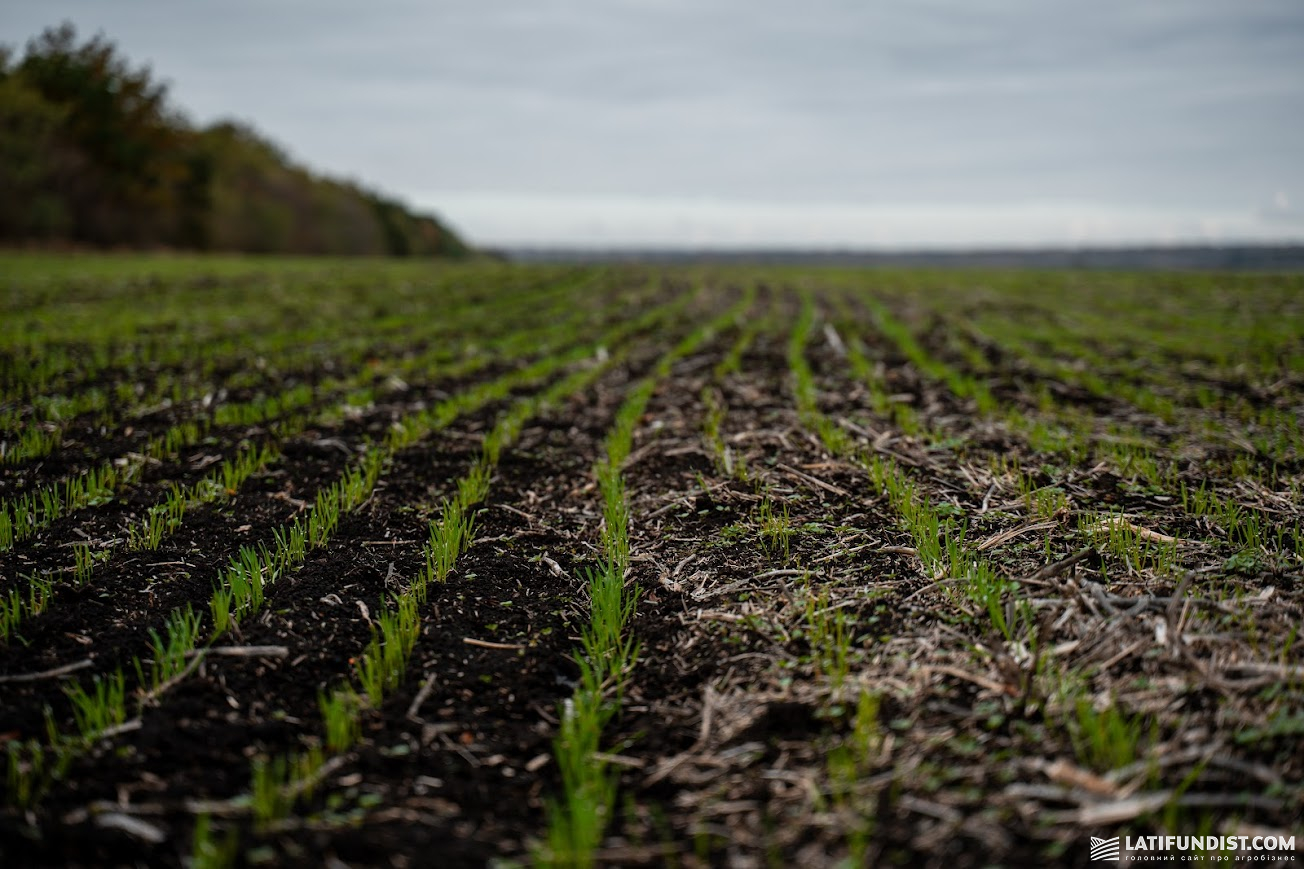 At LNZ Group they have not abandoned ploughing, although its share is gradually decreasing, says the head of the Agro Department of LNZ Group, Oleksandr Khmeliuk. For the most part they use deep looseners or disc-tine units. The main reason for such changes is the improvement of moisture accumulation in the soil in the autumn-winter period and its preservation in the spring-summer one.
"But the abandonment of layer turning and the switch to non-mouldboard tillage methods will, as a consequence, definitely lead to an increase in field infestation with perennial, rhizome and root-sprouting weeds, which in turn requires a review of the protection system to control them, an increase in the use of non-selective herbicides."
He also notes that the increase in the presence of post-harvest residues on the soil surface requires equipping the seeder sections with residue clearers to ensure quality sowing. This also affects the soil temperature and, accordingly, the sowing dates, and moreover the probability of spring frosts should be taken into account.
To the question of whether changes in the soil structure had been noticed during this time, Oleksandr Khmeliuk says that there are no significant changes so far, because a fairly short period of time has passed. But the first and main thing that is noticeable is better moisture preservation in the summer period.
"This is not a panacea, but a hope for a harvest at a time when late crops can burn up completely and not form a harvest," notes Khmeliuk.
What is advised to farmers who are nevertheless thinking about switching away from ploughing?
Oleksandr Khmeliuk says there is no single absolutely correct and universal solution, the approach must be systematic. The first thing that will determine your systematicity is crop rotation. Having a more or less established crop alternation, you can develop a weed control system, especially of perennial, rhizome and root-sprouting weeds, because the possibilities of controlling them in different crops with post-emergence herbicides are very different, sometimes it is generally impossible to control them in a crop. Therefore, it will be necessary to combine: the tillage method, sometimes once every 3-5 years using ploughing too, with the use of non-selective herbicides.