2020
This year's season turned out to be completely unlike all previous ones for both grain producers and exporters. Currency turbulence and the prolonged strengthening of the hryvnia forced farmers to hold back their harvest, and traders to look for ways to make producers attractive price offers.
The market did not expect such a trend. Overall, however, grain exports are proceeding at a considerable pace: as of early February, Ukraine had exported over 16 million t of wheat and about 17 million t of corn.
At the same time, the difficulties with the shortage of grain wagons, which were one of the main bottlenecks in grain logistics, are losing their relevance. The private fleet is growing, and wagon turnover is increasing. And the rates currently offered by «Ukrzaliznytsia» suit market participants.
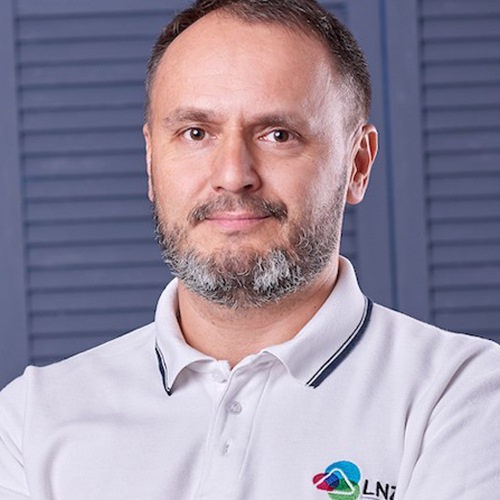
AgroPortal.ua spoke with Vitalii Krasiuk, Head of the Trading Operations Department at LNZ Group (LNZ Trade division), about the specifics of the current season and plans and expectations for 2020.
Grain trading is a new line of business for LNZ Group. Why did the need to introduce it arise?
Vitalii Krasiuk: Grain trading is another diversification opportunity for our company. In this, LNZ Group pursues an integrated goal. First, the market requires the development of this line within the agricultural holding to provide a comprehensive offer for producers. We offer crop protection products and seed or mineral fertilizers, and in return we develop special programs and give clients the opportunity to make an advance payment or settle their debt for product supplies with their harvest.
At the same time, we are trying to introduce FRM (Financial Risk Management) products. They involve the use of financial instruments that will allow medium and large holdings to receive an additional premium to the price of their goods.
To carry out grain trading operations, we have the necessary infrastructure: elevators with a total storage capacity of over 200 thousand t, our own truck fleet and a fleet of grain wagons.
Which crops do you work with? Tell us about the geography of your purchases.
Vitalii Krasiuk: Mostly the grain group: corn and wheat of all classes. Occasionally we buy sunflower, soybeans and rapeseed. We are not placing a big bet on oilseeds yet. Although the abolition of the so-called «soybean amendments» may make this crop more attractive than it is now.
We make deliveries on CPT and DAP terms.
The geography of purchases is unlimited and covers all of Ukraine. Our anchor elevators are our own in Bilopillia and Mykolaivka (Sumy region) and Lebedyn (Cherkasy region). We also work with many other elevators, most actively in the Khmelnytskyi, Poltava, Kharkiv and Kirovohrad regions.
Earlier, LNZ Group expanded its grain storage capacity by commissioning a powerful elevator complex in the Sumy region. Do you have plans for further expansion?
Vitalii Krasiuk: Yes, we have plans to expand and reorganize our elevator facilities, but they are still at the development and design stage.
Please tell us, what difficulties accompany grain trading on the Ukrainian market?
Vitalii Krasiuk: The main difficulty is working in unstable conditions. In the current marketing year, currency turbulence related to the strengthening of the hryvnia noticeably weakened the producer's position. Producers were not ready to sell at market prices if they had the option of storage. It is quite difficult for us to offer more favorable terms. Grain is an export position, so we also depend on the exchange rate. No one on the market expected such a trend.
For example, over the last 5 years there was a shortage of rolling stock on the railway. But the private wagon fleet is gradually growing and is even becoming a surplus. Of course, over time this situation will also stabilize due to the decommissioning of technically outdated «Ukrzaliznytsia» wagons.
In addition, the situation with traction is still unclear. This issue is especially problematic in Western Ukraine. All volumes offered to us in the western region were considered very cautiously. Unless these were shuttle routes, wagon turnover took a long time. There were situations in the Khmelnytskyi region when empty wagons stood idle for up to 20 days due to a lack of locomotives.
The state must resolve the issue of private traction at the legislative level. It is not a panacea, but when the rules are clear to all market participants, it will be possible to build a purchasing strategy.
LNZ Trade has its own fleet of grain wagons. How large is it now and does it meet current needs?
Vitalii Krasiuk: This season we purchased an additional 108 grain wagons. There are now 216 — 4 moving trains of 54 wagons each. LNZ Group has a large land bank, so our own fleet is 100% utilized. We practically do not use «Ukrzaliznytsia» wagons to transport our own grain.
What about road transport? How much is it involved in logistics?
Vitalii Krasiuk: Up to a certain distance from the final destination (ports), using trucks is effective. Of course, we will not haul from the Chernihiv or Sumy region, because it would be much more expensive than by rail. Moreover, «Ukrzaliznytsia» has reduced its appetite, and today's rates are quite acceptable for all market participants.
The amount of grain transported by road depends on the season and yields.
We adapt to the prevailing market conditions and offer producers attractive port prices. When we buy at elevators, it is mostly at those with a rail connection.
Share your plans for 2020. What indicators (qualitative and quantitative) do you expect to achieve in grain trading? What transport volumes do you plan to provide this year?
Vitalii Krasiuk: Every year LNZ Group sets itself the task of exceeding the previous year's result. There is a certain limit on grain transportation that we can provide with our own fleet. But shuttle routes are now being formed that quickly deliver goods to the port and just as quickly return. Such wagon turnover allows us to provide about 70 thousand of monthly transportation of corn or wheat.
We would like to take part in river transportation, and we are even now considering this opportunity in partnership. But this is still at the discussion stage.
In 2019, Ukrainian farmers were struck by negative price trends for rapeseed, sunflower and soybeans and fairly low prices for corn and wheat. In your opinion, can we expect prices for the main crops to rise in 2020?
Once every four to five years, the market situation should pleasantly surprise us (smiles). Yes, we expect growth. But we would like high prices to be achieved not at the expense of a poor harvest.
Nataliia Rekunenko, AgroPortal.ua